Silent

  • Dziga Vertov – Kino-Pravda No. 5 (1922)

    Documentary1921-1930Dziga VertovSilentUSSR

    29f7c043f76a2bde437fd0d52a185152

    Quote:
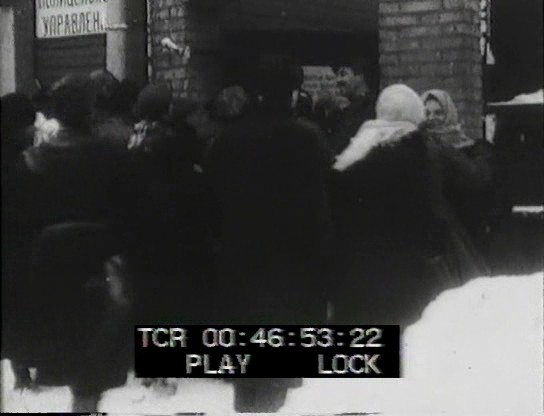
    Between 1922 and 1925, a total of 23 issues of Dziga Vertov’s newsreel series Kino-Pravda (Kino-Truth) appeared (albeit irregularly and in very few copies). Vertov’s goal was to create a kind of “screen newspaper”; the title is a tribute to the newspaper Pravda founded by Lenin. Just like the Kinonedelja newsreel series (1918–19), the Kino-Pravda issues offer a fascinating insight into the early Soviet Union and demonstrate the rapid development of Vertov’s film language.

    The 22 surviving issues (No. 12 is lost) have been digitized and subtitled in German and English by the Austrian Film Museum in 2017/18 and are now available online.Read More »

  • Dziga Vertov – Kino-Pravda No. 4 (1922)

    1921-1930DocumentaryDziga VertovSilentUSSR

    29f7c043f76a2bde437fd0d52a185152

    Quote:
    Between 1922 and 1925, a total of 23 issues of Dziga Vertov’s newsreel series Kino-Pravda (Kino-Truth) appeared (albeit irregularly and in very few copies). Vertov’s goal was to create a kind of “screen newspaper”; the title is a tribute to the newspaper Pravda founded by Lenin. Just like the Kinonedelja newsreel series (1918–19), the Kino-Pravda issues offer a fascinating insight into the early Soviet Union and demonstrate the rapid development of Vertov’s film language.

    The 22 surviving issues (No. 12 is lost) have been digitized and subtitled in German and English by the Austrian Film Museum in 2017/18 and are now available online.Read More »

  • Allan Dwan – The Ranchman’s Vengeance (1911)

    1911-1920Allan DwanShort FilmUSAWestern

    29f7c043f76a2bde437fd0d52a185152

    Lorenz Pedro, a Mexican half-breed, owns a small sheep ranch, and lives happily with his wife Marie and little daughter Lois. One exceedingly hot afternoon, Tom Flint, riding across the ranch looking for work is overcome by the heat, and Pedro, acting the part of a good Samaritan, takes him to his home, where Marie, through careful nursing, soon has him quite himself again. Pedro is out daily with his flock, leaving Marie and Flint together, offering an opportunity which Flint ungratefully takes advantage of, resulting in his completely winning Marie’s love. Manuelito, Marie’s father, is suspicious and comes upon them while Flint is declaring his love. He goes to Pedro in the field and tells what he has seen and heard. Hastening home he finds his wife in Flint’s embrace, and in his great love for Marie bids Flint take her, but warns him his life shall pay the penalty should he ever find him shamefully abusing both mother and child. Manuelito sends a telegram to Pedro, who is working …

    Written by Moving Picture World Read More »

  • Peter Delpeut – Diva Dolorosa (1999)

    1991-2000ArthouseExperimentalNetherlandsPeter Delpeut

    29f7c043f76a2bde437fd0d52a185152

    Quote:
    “A rarity-packed treat for opera and silent-film buffs!”
    – Variety

    In this mesmerizing collage of silent Italian melodrama, found-footage filmmaker Peter Delpeut (Lyrical Nitrate) affectionately captures the spirit of the World War One-era cinema diva. In all-but-lost gems such as La donna nuda (1914), and Tigre reale (1916), superstars such as Lyda Borelli and Pina Menichelli portrayed heroines teetering dangerously between defiant indulgence in sexual passion and hysterical remorse at their own cruelties. Delpeut’s inventive celebration of Black Romanticism is both striking and heartbreaking in its composition —a beautifully woven narrative of tempted fate and self-torment, elegantly guided by Loek Dikker’s original score. Zeitgeist Films is proud to present Delpeut’s stunningly experimental work in all its heaving bosomed, luridly tinted glory.Read More »

  • Dziga Vertov – Kinoglaz AKA Kino Eye (1924)

    1921-1930DocumentaryDziga VertovSilentUSSR

    29f7c043f76a2bde437fd0d52a185152

    Quote:
    This documentary promoting the joys of life in a Soviet village, centers around the activities of the Young Pioneers. These children are constantly busy, pasting propaganda posters on walls, distributing hand bills, exhorting all to “buy from the cooperative“ as opposed to the Public Sector, promoting temperance, and helping poor widows. Experimental portions of the film, projected in reverse, feature the un-slaughtering of a bull and the un-baking of bread.Read More »

  • Ewald André Dupont – Moulin Rouge (1928)

    Drama1921-1930Ewald André DupontSilentUnited KingdomUSA

    29f7c043f76a2bde437fd0d52a185152

    No relation to the 1952 Toulouse Lautrec biopic of the same name, Moulin Rouge was produced, directed and written by German-filmmaker E. A. Dupont. Olga Tschechowa plays the star dancer of Paris’ famed Moulin Rouge nightspot. Her daughter Eve Gray is in love with impressionable Jean Bradin. Alas, Jean adores another – Eve’s own mother. A blessed relief from the usual turgid, slapped-together British films of the period, Moulin Rouge has visual moments that approach the brilliance of Dupont’s previous backstage melodrama, the German Variety. ~ Hal Erickson, All Movie GuideRead More »

  • Alfred Hitchcock – The Ring (1927)

    Drama1921-1930Alfred HitchcockSilentUSA

    29f7c043f76a2bde437fd0d52a185152

    A 1927 British silent sports film directed and written by Alfred Hitchcock and starring Carl Brisson, Lillian Hall-Davis and Ian Hunter. It is one of Hitchcock’s nine surviving silent films. The Ring is Hitchcock’s only original screenplay although he worked extensively alongside other writers throughout his career.Read More »

  • Aleksandr Dovzhenko – Arsenal (1928)

    1921-1930Aleksandr DovzhenkoDramaUSSRWar

    29f7c043f76a2bde437fd0d52a185152

    Set in the bleak aftermath and devastation of the World War I, a recently demobbed soldier, Timosh, returns to his hometown Kiev, after having survived a train wreck. His arrival coincides with a national celebration of Ukrainian freedom, but the festivities are not to last as a disenchanted.

    In Arsenal, Alexander Dovzhenko, perhaps the most radical of the Soviet directors of the silent period, altered the already extended conventions of cinematic structure to a degree greater than had even the innovative Sergei Eisenstein in his bold October. The effect of this tinkering with the more or less accepted proprieties of motion picture construction produced a work that is actually less a film than it is a highly symbolic visual poem. For example, in a more linearly structured piece like October, the metaphors, allusions, and analogies that arise through the construction of the various montages replace rather than comment on essential actions within the film. In Arsenal, however, the symbolism is so purposely esoteric, with seemingly deliberate barriers established to block the viewer’s perception, that the relationship of individual symbols or sequences to the various actions of the film is not immediately clear.Read More »

  • Ernst Lubitsch – Ich möchte kein Mann sein AKA I Don’t Want to Be a Man (1918)

    1911-1920ComedyErnst LubitschGermanySilent

    29f7c043f76a2bde437fd0d52a185152

    A teenaged tomboy, tired of being bossed around by her strict guardian, impersonates a man so she can have more fun, but discovers that being the opposite sex isn’t as easy as she had hoped.

    Quote:
    I Don’t Want To Be A Man is like The Oyster Princess an early example of Ernst Lubitsch’s comic skills, and it also shares The Oyster Princess’ star, the irrepressible comedienne Ossi Oswalda, who in both films lends her name to the characters she plays. Here she plays a wild, rambunctious late teen barely under the control of her guardian/uncle and governess. (In reality it takes a while to work out that this middle-aged couple glaring disapprovingly out the window at Ossi’s mild antics outside are not her parents; they seemed rather coded as such.)Read More »

Back to top button