Silent

  • Ernst Lubitsch – Ich möchte kein Mann sein AKA I Don’t Want to Be a Man (1918)

    1911-1920ComedyErnst LubitschGermanySilent

    29f7c043f76a2bde437fd0d52a185152

    A teenaged tomboy, tired of being bossed around by her strict guardian, impersonates a man so she can have more fun, but discovers that being the opposite sex isn’t as easy as she had hoped.

    Quote:
    I Don’t Want To Be A Man is like The Oyster Princess an early example of Ernst Lubitsch’s comic skills, and it also shares The Oyster Princess’ star, the irrepressible comedienne Ossi Oswalda, who in both films lends her name to the characters she plays. Here she plays a wild, rambunctious late teen barely under the control of her guardian/uncle and governess. (In reality it takes a while to work out that this middle-aged couple glaring disapprovingly out the window at Ossi’s mild antics outside are not her parents; they seemed rather coded as such.)Read More »

  • Carl Theodor Dreyer – Du skal ære din hustru AKA Master of the House (1925)

    Drama1921-1930Carl Theodor DreyerDenmarkSilent

    Quote:
    Victor Frandsen is a domestic tyrant. His wife Ida has to work as a slave for him and the rest of the family. She rises early to prepare everything for the day, she toils all day long, and she is often up also in the night, doing some sewing to earn extra money for the household. In daytime she is supported by an old woman called Mads, who was Victors’ nanny when he was a child. Mads is filled with loathing for Victor’s behavior towards his wife, and calls him a brute. She understands that Ida is on the verge of a serious breakdown, and persuades Ida’s mother, Mrs. Kryer, to take Ida away.Read More »

  • Joe Francis – La revue des revues AKA Parisian Pleasures (1927)

    1921-1930DramaFranceJoe FrancisSilent

    29f7c043f76a2bde437fd0d52a185152

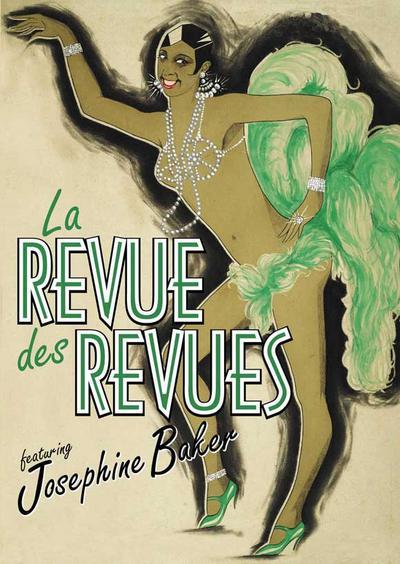
    Gabrielle, an ambitious but innocent would-be young chorine, trumps a music hall publicity stunt to become the new Parisian nightclub Cinderella. But this lighter-than-champagne-bubbles story is only a pretext for LA REVUE DES REVUES’s white-hot, non-stop procession of outrageously and scantily attired exotic dancers, showgirls, and acrobats including the Tiller’s Follies Girls, Ruth Zackey and the Hoffmann Girls, and danseuse russe Lila Nikolska. But it’s Josephine Baker, “the high priestess of primitivism”, who triumphs in two show stopping numbers in which “her clownish backfield-in-motion Charleston shimmy is unlike anything else in the movie and perhaps unlike anything anyone ever did”.Read More »

  • Alexandre Promio – Enfants pêchant des crevettes (1896)

    1891-1900Alexandre PromioFranceShort FilmSilent

    Catalogue Lumière wrote:
    Vue N° 45

    “Des enfants traînent leurs filets sur la plage à mer basse : les fillettes, les jupes relevées, rivalisent d’entrain avec les garçons dans cet exercice.”

    – Un des personnages porte un panier sur lequel est inscrit “Shrimp” [crevette].- Une vue supplémentaire et non cataloguée représente le même sujet.

    Thierry Frémaux commented and wrote:
    Ce film a été tourné en été par Alexandre Promio qui fut l’un des plus grands opérateurs Lumière. La scène se passe sur une plage d’Angleterre en 1896. Pieds nus dans l’eau, sous le regard de leurs mères en habit, des enfants munis d’épuisettes pêchent des crevettes. Mais le vrai sujet du film, c’est sa beauté.Read More »

  • Carl Theodor Dreyer – Præsidenten AKA The President (1919)

    Drama1911-1920Carl Theodor DreyerDenmark

    Quote:
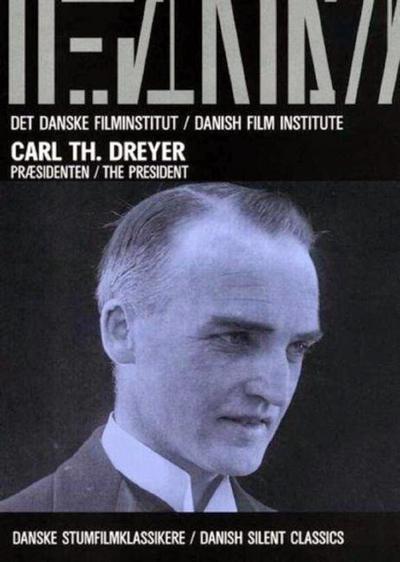
    It perhaps comes as no surprise, given Carl Theodor Dreyer’s lifelong, idealized melancholy over his own unresolved parentage, that the scenario selected for his first film, The President would involve three generations of children conceived out of wedlock, and thematically crystallize on the legacy of their unreconciled paternity in the resolution of their own disparate lives. For Dreyer, this expurgation of such deep-seated trauma was not only manifested in the naïve idea of restoring the virtue and honor of a “fallen” woman (an archetypal surrogate for his own idealized, unwed, biological mother) through transcendence, but also in confronting the innate cruelty of the very institutions that socially (and inequitably) stigmatized such human transgressions through codified notions of morality and class division. Read More »

  • Carl Theodor Dreyer – Der var engang AKA Once Upon a Time (1922)

    Drama1911-19201921-1930Carl Theodor DreyerDenmarkFantasy

    29f7c043f76a2bde437fd0d52a185152

    Quote:
    Once upon a Time (a.k.a. Der var engang) is an atypical film for the Danish filmmaker Carl Theodor Dreyer, a departure from his more usual realistic dramas into the realm of fantasy and fairytale. It was the only film that Dreyer made for the independent film producer Sophus Madsen, a Danish film enthusiast whose only other production was Laurids Skands’s all but forgotten Livets Karneval (1923). The film was adapted from a play by Holger Drachmann, written in 1885, that was itself based on Hans Christian Andersen’s fairytale Svinedrengen and Shakespeare’s The Taming of the
    Shrew. From the outset, this was conceived as a lavish production, but it soon ran into financial difficulties. Even though some scenes were cut – including an extravagant market sequence – the film still ended up with a 150 per cent overspend on its 90,000
    kroner budget.Read More »

  • Henri Desfontaines – Belphégor (1927)

    France1921-1930Henri DesfontainesSilentThriller

    29f7c043f76a2bde437fd0d52a185152

    Restored by “La Cinémathèque Française” in 1988

    Plot :
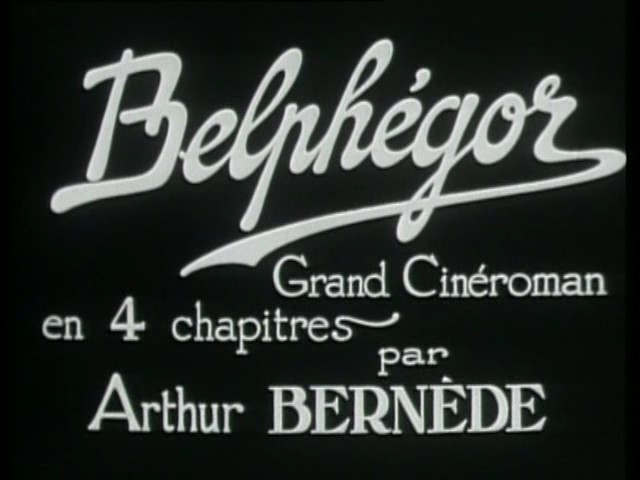
    A ghost has been seen during the night in the Louvre Museum (Paris), and a guard is found dying near the statue of Belphégor, a god of Moabites and Ammonites. A young reporter, Jacques Bellegarde, begin to investigate but soon he’s being threatened by some letters sent by … Belphégor

    It’s a silent mini-serie in 4 parts, after a popular book of Arthur Bernède, in the style of the 1st Fantômas (in fact, René Navarre was Fantômas in the Louis Feuillade’s movie)

    Nearly 40 years later, a remake of this serie was made with Juliette Greco and met a great success in France, and is much better known that this one.Read More »

  • Jean Epstein – Coeur fidèle AKA The Faithful Heart (1923)

    1921-1930DramaFranceJean EpsteinRomance

    29f7c043f76a2bde437fd0d52a185152

    Quote:
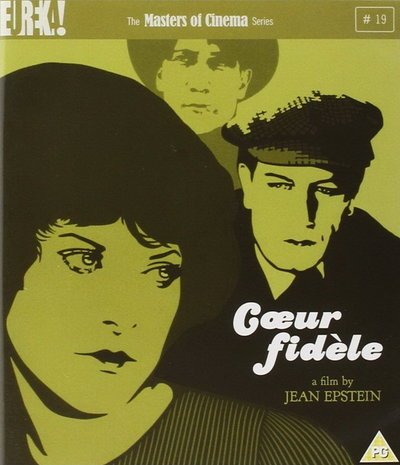
    In Coeur Fidèle’s accompanying 44-page booklet, Jean Epstein, at a 1924 address, argues his film as “romantic” rather than”realist”, the label with which Italian poet Ricciotto Canudo assigned it before his death. The truth is that Epstein’s largely unknown masterpiece provides a fascinating agreement of the two styles, oscillating with seamless precision between reverie and sincerity. Marie (Gina Manès) is in love with Jean (Léon Mathot), a kind-hearted man who works on the Marseille docklands, but Marie’s adoptive parents want to marry her off to the obnoxious and unemployed drunk Petit Paul (Edmond Van Daële), and the scene is set for a sensational melodrama to unfold.Read More »

  • D.W. Griffith – The Painted Lady (1912)

    Drama1911-1920D.W. GriffithSilentThe Birth of CinemaUSA

    A lonely young woman lives with her strict father who forbids her to wear make-up. One day at an ice cream social, she meets a young man you seems interested in her. However, unknown to her, he is a burglar who is only interested in breaking into her father’s house. One night she is awakened by a noise. Grabbing a pistol, she enters her father’s downstairs office where she confronts a masked intruder . . . Read More »

Back to top button