

Description: Footage of the aftermath of the January 14 1931 Earthquake in Oaxaca, Mexico.Read More »
Description: Footage of the aftermath of the January 14 1931 Earthquake in Oaxaca, Mexico.Read More »

Raoul Walsh had just come off The Birth of a Nation both as one of Griffith’s assistant directors and as an actor (most prominently as John Wilkes Booth), when he made this film. In his autobiography, Walsh credits Griffith with “teaching” him not only about much of the art of fiction filmmaking, but also about production management technics that aided him in taking full advantage of many of New York City’s most pictorial exterior locations. The locations play an important role in adding to the naturalism of an otherwise highly melodramatic plot with the high society young woman turned heroine social worker (much overplayed by a major star of the 1910s, Anna Q Nilsson) and the regeneration of the one-time Lower Manhatan gang leader. The wonder of this film is the performance of the male “star”, Rockliffe Fellowes, who played in over a dozen nearly unremembered films until he died in 1950. His performance is so subtly varied and electrically alive that one is reminded of Brando in his early 1950s films.Read More »

Quote:
Roddy, first son of the rich Berwick family, is expelled from school when he takes the blame for his friend Tim’s theft. His family sends him away and all of his friends leave him alone. Roddy decides to go to Paris where he spends what little money he has and starts working as a dancer. He soon becames a victim of alcoholism. Roddy manages to move to England’s colonies but some sailors send him back to his rich family hoping for a reward.Read More »

Synopsis
On a streamer bound for Algeria, Pierre Hofer meets and is enchanted by the beautiful Claudie Duvernet, who is travelling to Algeria to collect her vast inheritance. Claudie is being pursued by some unscrupulous relatives, including the cruel Manuel, who intend to rob her of her new-found fortune. Fortunately, Pierre is on hand to thwart their schemes…Read More »

Quote:
R-1 (Ein Formspiel)
“The title R-1, EIN FORMSPIEL VON OSKAR FISCHINGER survives on two different films, one composed entirely of STAFFS … and one composed of small fragments of many different experiments – wax, model planets, atoms, etc. – including a great deal of STAFFS footage. For convenience, I will use the title R-1 to refer to this second, mixed film which appears to be a revised version of the first ….Read More »

When farmer Rog dies, his son Peter stays, but Johannes can not be satisfied with such a condition (and servant Maria’s love) and finds a job as old Count Rudenberg’s secretary. His ambition leads him to charm Gerda, the Count’s unique daughter. But when he discovers that Count’s second wife Helga will soon inherit a field that only he knows his underground is full with petroleum, he changes his allegiance… Greed and death.Read More »

Quote:
The Tramp meets a poor blind girl selling flowers on the streets and falls in love with her. The blind girl mistakes him for a millionaire. Since he wants to help her and doesn’t want to disappoint her, he keeps up the charade. He befriends a drunk millionaire, works small jobs like street sweeping, and enters a boxing contest, all to raise money for an operation to restore her sight.
CHAPLIN HILARIOUS IN HIS ‘CITY LIGHTS’; Tramp’s Antics in Non-Dialogue Film Bring Roars of Laughter at Cohan Theatre. TAKES FLING AT “TALKIES” Pathos Is Mingled With Mirth in a Production of Admirable Artistry.
Charlie Chaplin, master of screen mirth and pathos, presented at the George M. Cohan last night before a brilliant gathering his long-awaited non-dialogue picture, “City Lights,” and proved so far as he is concerned the eloquence of silence. Many of the spectators either rocking in their seats with mirth, mumbling as their sides ached, “Oh, dear, oh, dear,” or they were stilled with sighs and furtive tears. And during a closing episode, when the Little Tramp sees through the window of a flower shop the girl who has recovered her sight through his persistence, one woman could not restrain a cry.Read More »
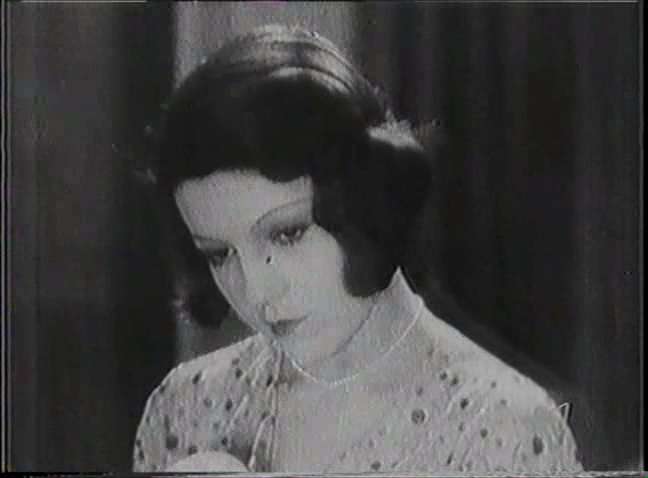
A young honeymooning couple are lured away to a seaside resort by a high-society sleazeball, who has plans to seduce the girl, while at the same time her hubby in desperation stakes all his money on the roulette wheels.Read More »

Description:
This short film shows the contrast between the good conditions in which a rich woman makes a abortion and the miserable and dangerous condition in which a poor woman has to do an abortion.Read More »