Silent

  • Oskar Fischinger – R-1 (Ein Formspiel) (1927)

    Experimental1921-1930GermanyOskar FischingerWeimar Republic cinema


    Quote:
    R-1 (Ein Formspiel)

    “The title R-1, EIN FORMSPIEL VON OSKAR FISCHINGER survives on two different films, one composed entirely of STAFFS … and one composed of small fragments of many different experiments – wax, model planets, atoms, etc. – including a great deal of STAFFS footage. For convenience, I will use the title R-1 to refer to this second, mixed film which appears to be a revised version of the first ….Read More »

  • F.W. Murnau – Der Brennende Acker AKA Burning Soil (1922)

    Drama1921-1930F.W. MurnauGermanySilentWeimar Republic cinema


    29f7c043f76a2bde437fd0d52a185152

    When farmer Rog dies, his son Peter stays, but Johannes can not be satisfied with such a condition (and servant Maria’s love) and finds a job as old Count Rudenberg’s secretary. His ambition leads him to charm Gerda, the Count’s unique daughter. But when he discovers that Count’s second wife Helga will soon inherit a field that only he knows his underground is full with petroleum, he changes his allegiance… Greed and death.Read More »

  • Charles Chaplin – City Lights (1931)

    USA1931-1940Charles ChaplinComedySilent

    29f7c043f76a2bde437fd0d52a185152

    Quote:
    The Tramp meets a poor blind girl selling flowers on the streets and falls in love with her. The blind girl mistakes him for a millionaire. Since he wants to help her and doesn’t want to disappoint her, he keeps up the charade. He befriends a drunk millionaire, works small jobs like street sweeping, and enters a boxing contest, all to raise money for an operation to restore her sight.

    CHAPLIN HILARIOUS IN HIS ‘CITY LIGHTS’; Tramp’s Antics in Non-Dialogue Film Bring Roars of Laughter at Cohan Theatre. TAKES FLING AT “TALKIES” Pathos Is Mingled With Mirth in a Production of Admirable Artistry.

    Charlie Chaplin, master of screen mirth and pathos, presented at the George M. Cohan last night before a brilliant gathering his long-awaited non-dialogue picture, “City Lights,” and proved so far as he is concerned the eloquence of silence. Many of the spectators either rocking in their seats with mirth, mumbling as their sides ached, “Oh, dear, oh, dear,” or they were stilled with sighs and furtive tears. And during a closing episode, when the Little Tramp sees through the window of a flower shop the girl who has recovered her sight through his persistence, one woman could not restrain a cry.Read More »

  • Mario Camerini – Rotaie aka Rails (1929)

    1921-1930DramaItalian Cinema under FascismItalyMario CameriniSilent

    http://img444.imageshack.us/img444/8472/vlcsnap4056820.png

    29f7c043f76a2bde437fd0d52a185152

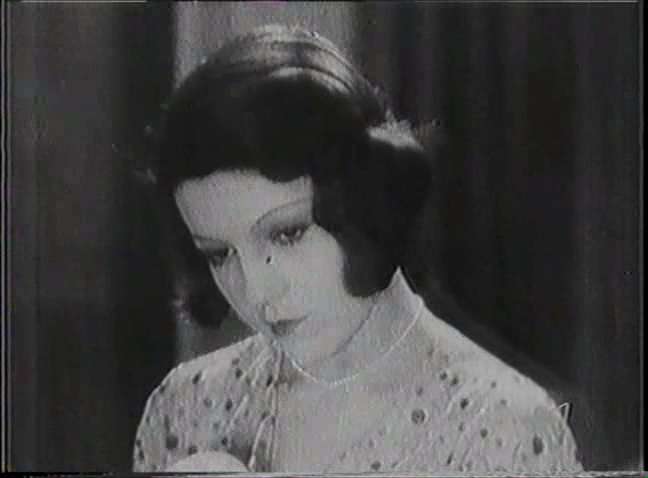
    A young honeymooning couple are lured away to a seaside resort by a high-society sleazeball, who has plans to seduce the girl, while at the same time her hubby in desperation stakes all his money on the roulette wheels.Read More »

  • Eduard Tisse – Frauennot – Frauenglück AKA Misery and Fortune of Women [Excerpt] (1929)

    1921-1930DramaEduard TisseSergei M. EisensteinShort FilmSwitzerland

    Free Image Hosting at www.ImageShack.us

    29f7c043f76a2bde437fd0d52a185152

    Description:
    This short film shows the contrast between the good conditions in which a rich woman makes a abortion and the miserable and dangerous condition in which a poor woman has to do an abortion.Read More »

  • Vsevolod Pudovkin – Konets Sankt-Peterburga AKA The End of St. Petersburg (1927)

    1921-1930DramaSilentUSSRVsevolod Pudovkin

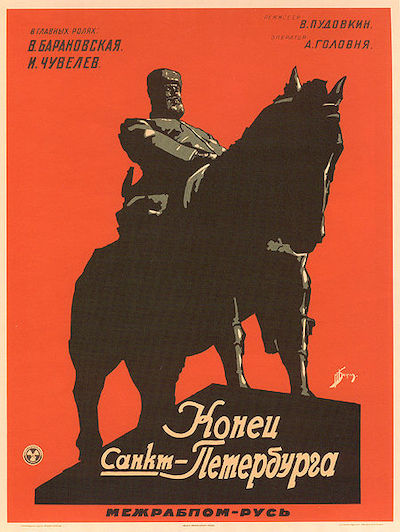
    Filmed to commemorate the tenth anniversary of the 1917 Russian revolution, End of St. Petersburg was the second feature-length effort of director V. I. Pudovkin. Utilizing many of the montage techniques popularized by his contemporary Sergei Eisenstein, Pudovkin details the fall of St. Petersburg into the hands of the Bolsheviks during the revolution. Unlike Eisenstein, Pudovkin concentrates on individuals rather than groups (his protagonist is a politically awakened peasant played by Ivan Chuvelyov) humanizing what might otherwise have been a prosaic historical piece. The mob scenes, though obviously staged for ultimate dramatic impact, are so persuasive that they have frequently been excerpted for documentaries about the Russian Revolution, and accepted by some impressionable viewers as the real thing. Filmed just after his 1926 masterwork Mother, The End of St. Petersburg was followed by the equally brilliant Storm Over Asia.
    — allmovie.comRead More »

  • Alfredo De Antoni – Il processo Clémenceau (1917)

    1911-1920Alfredo De AntoniCrimeDramaItaly

    29f7c043f76a2bde437fd0d52a185152

    Quote:
    It is ironic that the very few references to this excellent film that I was able to find online all referred simply to the fact that this was Vittorio De Sica’s first film!? And, it is true of course that the young De Sica appears in the film briefly as the son of the Clemenceaus, but the film has so much more to offer… Based on Alexandre Dumas fils’ novel, the film stars Francesca Bertinini as Iza in this tragedy of a woman trapped in a loveless marriage. At 107 minutes, this was a lengthy film for 1917. It is divided into two parts, chronicling the life of Iza as a girl or young woman, and her life as an adult. The story is told through the pen of her husband, and this is in several ways important in appreciating the subtle weight of what could on the surface look like a “typical” Diva film of the era, but which does in fact carry more psychological weight, and was inspired by the more complex dramas that Asta Nielsen starred in during the early teens.Read More »

  • Lawrence B. McGill – How Molly Malone Made Good (1915)

    1911-1920ComedyLawrence B. McGillSilentUSA

    29f7c043f76a2bde437fd0d52a185152

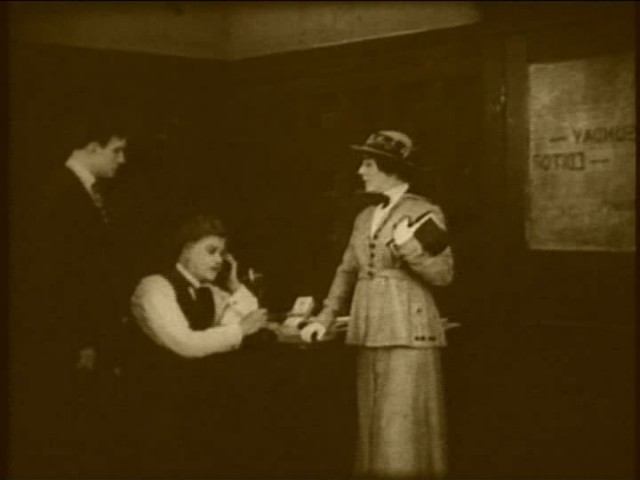
    This 1915 film stars Marguerite Gale as the title character, a journalist trying to make her name by interviewing celebrities for the New York Tribune. Picture quality is quite good, although the print is a little dark on the whole. A number of celebrities play themselves, including noted drag performe Julian Eltinge, and burlesque star Mabel Fenton. Read More »

  • Robert F. McGowan – Mary, Queen of Tots (1925)

    1921-1930ComedyRobert F. McGowanSilentUSA

    29f7c043f76a2bde437fd0d52a185152

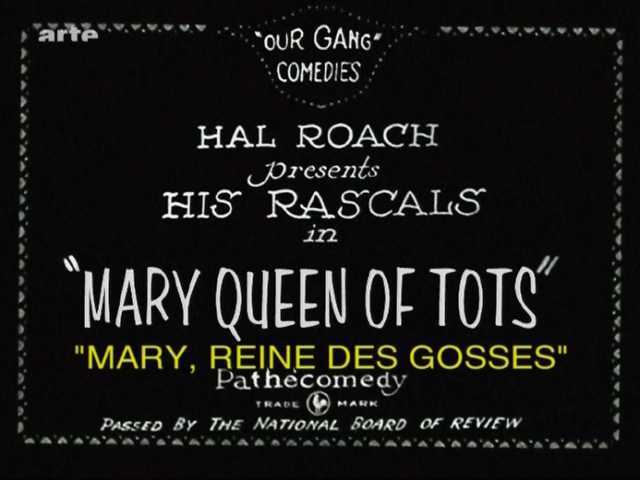
    A couple makes dolls modeled on neighborhood kids. A gardener at a mansion buys four of them for Mary, the girl of the house. He’s her only friend: her parents neglect her for work and card games and her governess is humorless. Mary loves the dolls and dreams of them during her nap. While Mary sleeps, the governess throws the dolls in the dust bin. Mary wakes and goes searching – outside she runs into the very same four kids who were the dolls’ models, and she thinks she’s still dreaming. She invites them back to the mansion where she’ll either make fast friends or the gang will need to make a fast getaway when the governess finds them.Read More »

Back to top button