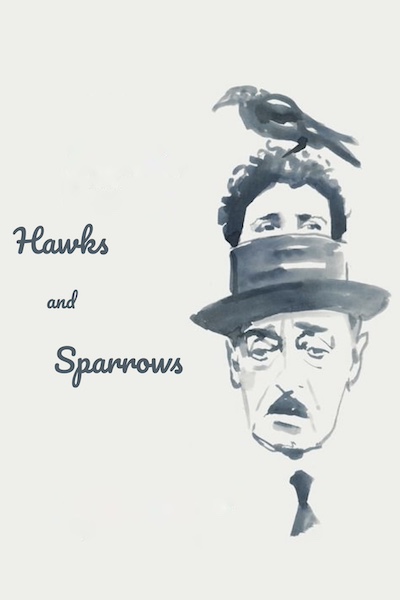

A man and his son take an allegorical stroll through life with a talking bird that spouts social and political philosophy.Read More »
A man and his son take an allegorical stroll through life with a talking bird that spouts social and political philosophy.Read More »

Synopsis from Imdb:
Tintin travels to Peru to rescue some archaeologists from an old Inca curse.
Wikipedia:
Tintin and the Temple of the Sun (original title Tintin et le temple du soleil) is a 1969 animated film produced by Belvision Studios. A co-production between Belgium, France and Switzerland, it is an adaptation of Hergé’s two-part Tintin adventure The Seven Crystal Balls and Prisoners of the Sun.
Coming after the success of the Belvision cartoon series, Hergé’s Adventures of Tintin, there was a lot of publicity for the movie (which was the first of two animated films, the second being 1972’s Tintin and the Lake of Sharks).Read More »

Four men are gathered to play a game of bridge, when the conversation turns to unnatural and occult events, while the scientist among them tries to give the experiences a natural explanation.Read More »

For generations, two rival French villages, Longueverne and Velrans, have been at war. But this is no ordinary conflict, for the on-going hostilities are between two armies of young schoolboys. Their idea of war may be less damaging than that practiced by their elders, but it is prosecuted with just as much spirit and determination. One year, the two armies decide to confiscate the buttons, shoelaces and belts of anyone they capture from the opposing side; victory will go to the army which manages to accumulate the greatest quantity of these spoils. When he is beaten by his father for having lost his buttons, the leader of the Longueverne army, Lebrac, has an idea which will give his side the advantage: next time, he and his brave soldiers will go in battle without their clothes…Read More »

Agnes (Ingrid Thulin), daughter of the goddess Indra, has come to Earth to learn about what it means to be human. She meets many people in her journey. The figures that guide her most are Alfred (Uno Henning), an officer who becomes a doctor; Axel (Allan Edwall), the lawyer that she weds, and the poet (Olof Widgren) who may be the author of her dreams. What she observes and experiences makes her pity mankind.Read More »

mk2 (a bit revised) wrote:
Jeanne and Jean, a sensitive young man, have one last rendez-vous at the “Pan Coupé”, the little café where they always meet. A few weeks later Jean flees, disappears… Jeanne confides in her friend Pierre and his father. They all begin an investigation of their own into the young man’s disappearance. Disillusionment, poetry and dark romanticism combine to create a compelling film in urgent need of rediscovery.Read More »
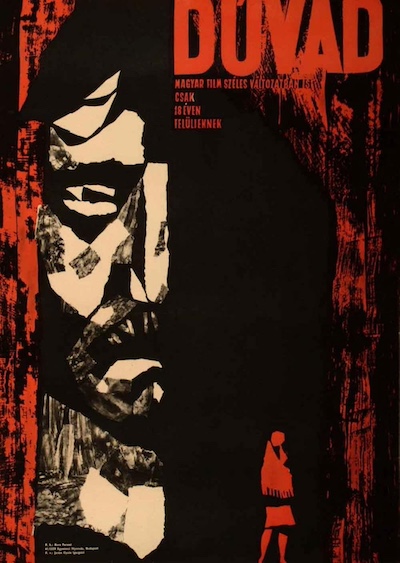
The setting is the countryside, where an independent, landowning farmer busies himself in his free time by bedding down the women on his farm and then tossing them aside. One such ill-treated lass ends up marrying a young man who is in charge of a communal farm, a farm the womanizing “beast” of the title is later forced to join. The arrogant, formerly independent farmer does not reform his ways and is soon chasing after the young manager’s wife, the woman he dropped not that long ago.Read More »

The events just before, during and after World War Two have little direct effect on the inhabitants of the village inGeorgia where Zuriko lives. A schoolboy, Zuriko goes to the schoolhouse with his previously unlettered grandmother, who is receiving an education alongside him. He has some loyal, if slightly addled friends in the person of a myopic hunter named Illarion, and a one-eyed man named Illiko. So nearsighted is Illarion that on one occasion he shot Zuriko’s dog because the took it for a rabbit. The loyalty of his friends is proven after the war, when they sell the cow they all own in order to send Zuriko to college in Tblisi. This black and white film is notable for several things: its loving portrayal of the Georgian country people and countryside, and the fact that it was made by (Tenghiz Abuladze, who went on to make the extremely significant, award-winning 1984 film Monanieba, also known as Pokayaniye, or Repentance.Read More »
