1960s

  • Mikhail Shvejtser – Zolotoy telyonok AKA The Golden Calf (1968)

    1961-1970ComedyMikhail ShvejtserUSSR

    This Russian comedy is the sequel to The Twelve Chairs, which told of a madcap search by a con-man and a nobleman in post-communist Russia for a chair containing a king’s ransom in hidden diamonds. Presumably dead at the end of the first film, charming con-man Ostap Bender is alive and kicking and looking for another way to get rich. He discovers an underground Soviet millionaire, Alexander Koreiko, and begins blackmailing him in an attempt to accomplish his lifelong goal of having one million rubles. With that amount of money, he believes he could fulfill his dream of moving to Rio de Janeiro. In the pursuit of his many schemes, he uses an ill-assorted gang of fellow miscreants: Shura the simple-minded young ex-convict, Panikovsky an older con man, and the unusually unlucky driver Adam Kozlevich. He has many wild adventures in his quest. The witty and satirical novel on which this movie is based, written in 1930, was prohibited until the 1950s, when it became a cult novel in the USSR.Read More »

  • Henry Hathaway – North to Alaska (1960)

    1951-1960ComedyHenry HathawayUSAWestern

    Quote:
    John Wayne is generally credited with having directed only one picture, the 1960 version of The Alamo, but according to several reports, Wayne also “lent a hand” in getting his other 1960 film, the raucous if unfocused and overlong North to Alaska, shot as well. North to Alaska had a rather troubled pre-production history, which in fact included Wayne’s involvement with The Alamo, which delayed production of this film for several months. Those delays may have at least contributed to a rather convoluted revolving door of producers, directors and co-stars, and by many accounts, there was no completed script ready when North to Alaska finally started shooting in mid 1960. The film has serious structure issues, and indeed often seems to have been cobbled together out of set pieces, with no real thought given to through line or that oft-lamented concept of character arc. Read More »

  • Yves Boisset – Un condé AKA Blood on My Hands (1970)

    France1961-1970CrimeThrillerYves Boisset

    ‘Dassa, a bar owner who refuses to sell drugs to his customers, is killed by men working for Tavernier, a gangster known as Le Mandarin. Dassas’s sister Hélène is also in danger, for the same reasons. Inspector Favenin and the young inspector Barnero are put in charge of the case. Dan Rover, one of Dassa’s friends, engages the services of a man named Viletti to kill Tavernier. Another man, Raymond, is willing to provide an alibi if necessary. Barnero has grown disillusioned with his job and wants to leave the police service, but first he intends to arrest Tavernier. One day, Favenin and Barnero fail to prevent Viletti from killing Tavernier, and Barnero gets himself killed in the process. Favenin is given permission by his superior to continue the investigation alone. What nobody realises is that Favenin is ready to act without mercy and employ some very unconventional methods to achieve his aims…’
    – Henri WillemsRead More »

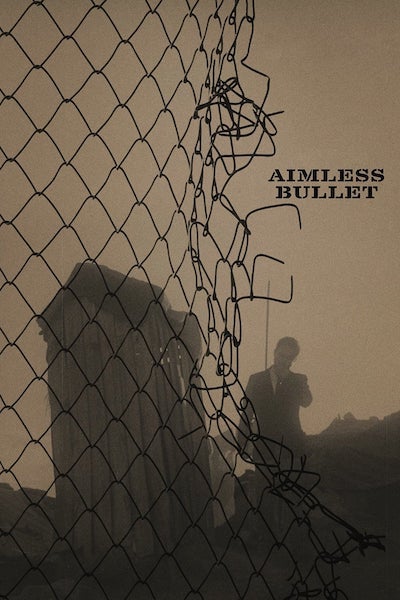
  • Yu Hyun-mok – Obaltan AKA Aimless Bullet (1961)

    1961-1970ArthouseDramaSouth KoreaYu Hyun-mok

    A pressured accountant, his war veteran brother and their dysfunctional family struggle with integrating into post-War Korean society.Read More »

  • Tony Palmer – Omnibus: Benjamin Britten and His Festival (1967)

    Documentary1961-1970Tony PalmerUnited Kingdom

    Tony Palmer’s classic behind the scenes look at the Aldeburgh Festival and the opening by the Queen of the new concert hall at Snape.

    This was the first film made by the BBC ever to be networked in the USA, and the first of Tony Palmer’s three portraits of the great composer, the others being the Italia Prize-winning ‘A Time There Was’, and the multi-award winning ‘Nocturne’, made for the 100th anniversary of Britten’s birth.

    “A superb film (which) may well achieve the status of a classic, repeated again and again over the years… the brilliant editing (was) of the highest quality, making a natural partnership of music and picture.” – Sean Day-Lewis, The Daily TelegraphRead More »

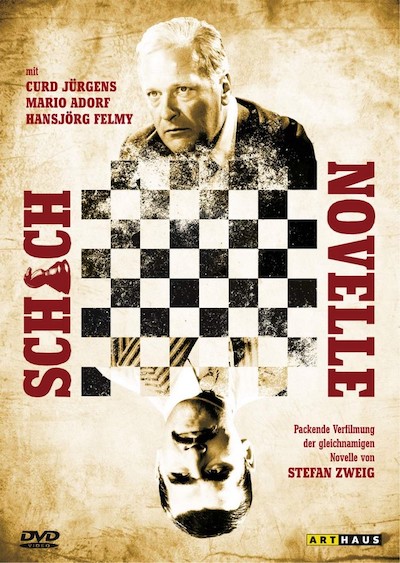
  • Gerd Oswald – Schachnovelle AKA Brainwashed (1960)

    1951-1960DramaGerd OswaldGermanyWar

    Synopsis:
    In 1938 Austria shortly after the Nazi occupation, a prominent Viennese intellectual, Werner von Basil, is arrested for smuggling art treatures out of the country and imprisoned by the Gestapo in a hotel room without any mental sustence of any kind to break him down to make him talk while a young ballerina, named Irene Adreny whom is the lover of the SS officer Berger playing mind games on von Basil, tries to intervene and help the poor intellectual keep his mind intact.Read More »

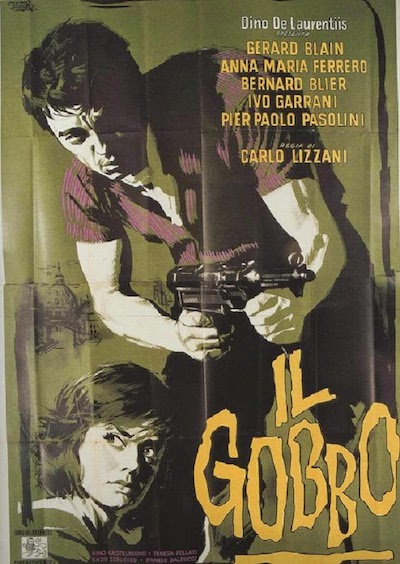
  • Carlo Lizzani – Il gobbo (1960)

    1951-1960Carlo LizzaniClassicsDramaItaly

    Il Gobbo (internationally released as The Hunchback of Rome) is a 1960 Italian drama film directed by Carlo Lizzani. It is loosely based on the real life events of Giuseppe Albano, an Italian partisan that was one of the protagonists, from 1943 to 1945, of the Roman Resistance against German occupation. (From Wikipedia)Read More »

  • Serge Bard – Fun and Games for Everyone (1968)

    1961-1970ExperimentalFranceSerge BardThe Films of May '68

    Quote:
    “Fun and Games (for Everyone): a pitch black and milky white film shot during one of Olivier Mosset’s exhibition openings. A psychedelic game of improvisation joins the Zanzibar group with Salvador Dalí, Barbet Schroeder and Jean Mascolo… the solarized image reminiscent of thick strokes of a paintbrush.” – PHILIPPE AZOURYRead More »

  • Ken Russell – Omnibus: Dante’s Inferno (1967)

    1961-1970ArthouseDramaKen RussellUnited Kingdom

    Quote:
    Like the dissertation on Duncan, Russell’s look at painter/poet Rossetti and his own personal Hell (a clear allusion to the Dante of Divine Comedy fame) can be tough going at times. His relationship with Elizabeth Siddal is very upsetting, especially when we learn of her terminal illness and Rossetti’s mere indifference to it. There is also another woman, a dark haired succubus who seems to bring out the worst in the artist, constantly turning causal outings into turmoil even where situations finally seem settled. As mentioned before, Russell seems obsessed by the way women of the age interacted with men. There is a contemporary twist of course, but the overall interpretation seems wrapped up in an intricate combination of need, nurturing, and novelty. As played by Reed, Rossetti is a ruthless cad, treating everyone with determined disdain. At least in this situation, we see how the personalities of everyone involved influenced the art.Read More »

Back to top button