Quote: After killing his employer when said employer tries to cheat him out of his payment, a man becomes an outlaw and starts following a self-proclaimed saint.
Reehan Miah wrote: Glauber Rocha’s Aesthetics of Hunger – a 1965 essay which attempts to explicate the Cinema Novo – reads like a convoluted mass of allegations, opacities and rhetoric (none of which are necessarily without substance). Somewhere within these imbroglios however, one stumbles upon an assertion that’s especially jarring:Read More »
Quote: A film about a love triangle between a theater director, an actress and an actor. Exchanges take place between fiction and reality, the stage and life. The actress one day leaves the theater director for the actor. But after a few days, she begins to doubt her new relationship.Read More »
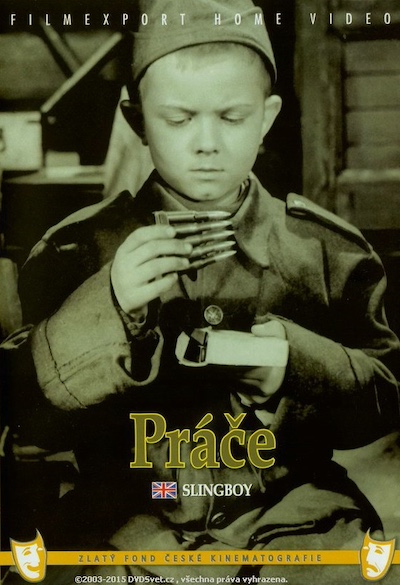
A touching story of a Czech boy who is liberated from a concentration camp and then picked up by a Czechoslovak Army laundry unit under Soviet command. He becomes the unit’s mascot, and is given the nickname “prace” or “slingshot bearer” after Czech boys who had fought with slingshots in the Czech Hussite armies of the 15th century. The boy, along with a little Slovak girl whom the unit also rescues up along the way, participate in the liberation of his homeland.Read More »
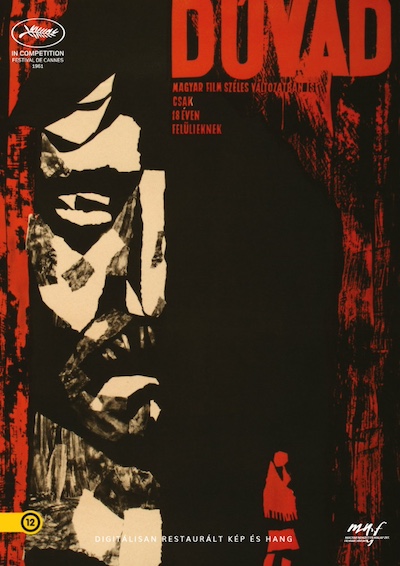
A landowning farmer busies himself in his free time by bedding down the women on his farm and then tossing them aside. The farmer does not reform his ways and is soon chasing after the young manager’s wife, the woman he dropped not that long ago. The results are disastrous.Read More »
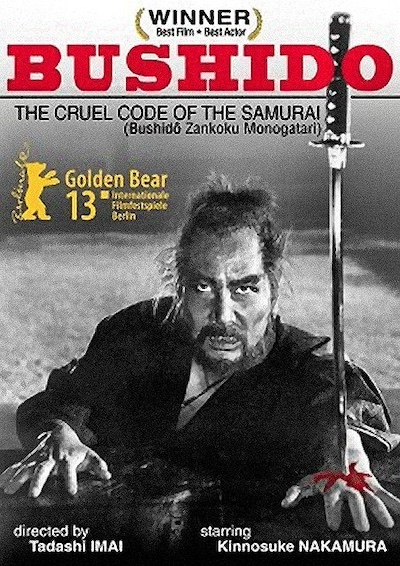
PLOT: The attempted suicide of his fiancée prompts a Japanese salary-man to read his family chronicles and look back at the life of his ancestors. They were samurai, the military nobility caste who carried out acts of violence at the behest of feudal lords, but suffered even more so under their cruelty, often forced into ritual suicide (seppuku). The women were under constant threat of kidnapping and rape, and the men subjected to arbitrary disfigurement and homosexual slavery … In a radical departure from the usual romanticisation of the samurai, director Tadashi Imai – using period sets and sometimes graphic images – made a film fundamentally critical of medieval Japan’s feudal system and the inhumane samurai code called bushido. In addition, the final two of the eight episodes in the film draw parallels between that and kamikaze pilots of World War II, as well as Japan’s modern achievement-oriented society. Bushido zankoku monogatari was awarded the Golden Bear at the 1963 Berlin International Film Festival.Read More »
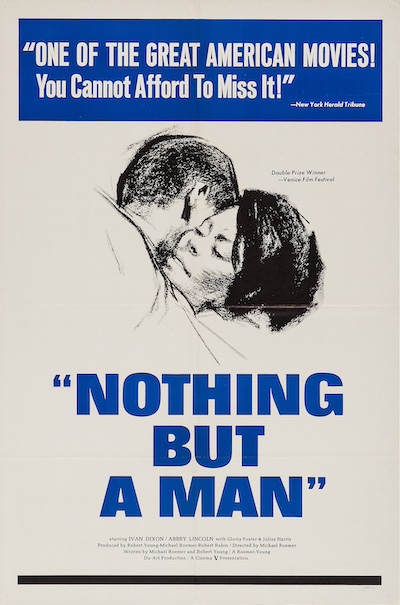
Directed by Michael Roemer, a Jewish refugee from Nazi Germany, it tells the story of railway worker Duff and teacher Josie falling in love in segregated Alabama.Reputed to be Malcolm X’s favourite film, Nothing But a Man is a poignant exploration of the effects of racism on human relationships.Read More »
Arindam, a matinee idol, is going by train to collect an acting award. On the train, he is confronted by Aditi, a journalist who somewhat unwillingly starts to take his interview. Arindam, won over by Aditi’s naivete, starts to disclose his past, his fears and his secrets.Read More »
In 1789, when the Revolution went on, a bandit named “Black Tulip” held the
surroundings of village Roussillon in fear. The poor people respected him as Robin Hood,
who declare himself a revolutioner but Count Guillaume de Saint Preux “plays” this
benefactor. When he fought with Mouche, the policeman he was wounded … Read More »