

Synopsis:
A young woman joins the army in place of her sick father, and she becomes a true heroine of the Chinese people.Read More »
Synopsis:
A young woman joins the army in place of her sick father, and she becomes a true heroine of the Chinese people.Read More »
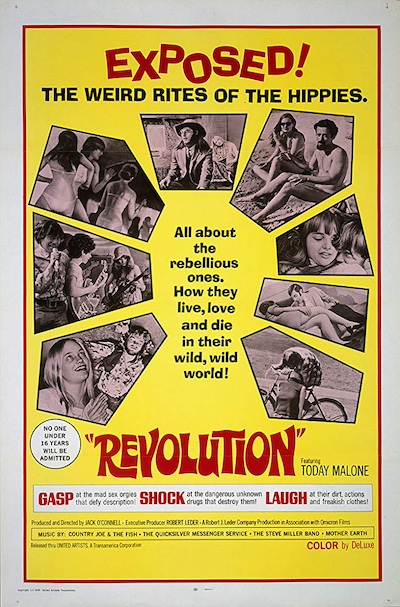
A documentary that explores the counterculture of San Francisco in the mid-1960’s. In HD.Read More »

In 1919, a group of Japanese immigrants arrives in Hawaii. Among them Yoshio Inoue and his wife Kishimo and Sumi, a young woman ready to get married soon. With the soil that is hard to work and the subtroipical climate, the immigrants have to cope with a hard life. But after years of hard work, Yoshio finds work as a teacher while his wife manages to open a small grocery store. But with the war around the corner, life becomes more and more complicated for the Japanese immigrants in a foreign country.
Zenzo Matsuyama’s second feature film, starring Takahiro Tamura and Matsuyama’s wife Hideko Takamine.Read More »

La ragazza in vetrina was supposed to be a turning point in Emmer’s cinema but it went on to become a cursed film. In accordance with the evolution of Italian cinema, the director chose a story by Rodolfo Sonego which combines a tough theme, Italian migrants working in Dutch and Belgian mines (the tragedy in Marcinelle, near Charleroi, which left 262 dead, half of which were Italian, took place only four years earlier), with a raunchy one, about the red light district in Amsterdam. It combines his love of wandering and the sketch with a harsh new gaze, bolstered by the black-and-white cinematography of Otello Martelli, fresh from La dolce vita. The first half-hour of the film depicts the difficult lives of the miners; then it concentrates on two characters, one timid, the other self-confident, but both lonely and unhappy, as they meet two prostitutes. Read More »
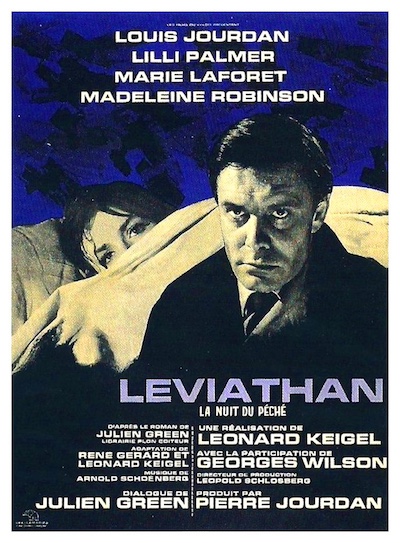
In this movie based upon Julian Green’s novel, we follow Paul’s downfall as he is torn between his love for Angele, a local prostitute, as he finds out too late, and Madame Grosgeorge’s love for him.Read More »

Pour la suite du monde, or “when cinema recreates life, old gesture and future…”
Film Reference Library wrote:
For centuries the inhabitants of Île-aux-Coudres, a small island in the St. Lawrence River, trapped beluga whales by sinking a weir of saplings into the offshore mud at low tide. After 1920 the practice was abandoned.
In 1962, Michel Brault and Pierre Perrault, and a team of filmmakers from the NFB, arrived on the island to document life on Île-aux-Coudres and the resumption of the traditional whale trapping practice.Read More »

Markku Kuoppamäki wrote:
Magazine editor Jussi and his girlfriend Leena, an airline stewardess, share an apartment with Jussi’s sister Eeva. During a fashion shoot Jussi meets Telle, a professional model who has just returned to Helsinki after years in Paris. Looking for a place to stay, Telle gets Eeva’s room while Eeva goes to Stockholm for a few days. Jussi and Telle start an affair while still working on fashion features for the magazine.Read More »

Google translate:
A masterpiece of crime suspense where a seasoned prosecutor uncovers the perfect crime committed by a young lawyer. In addition to director Hiromichi Horikawa’s direction, you can also enjoy the skills of first-class filmmakers, such as the screenplay by Shinobu Hashimoto and the shadowy imagery of cinematographer Hiroshi Murai. Lawyer Hamano kills the wife of his former teacher who had an affair. After that, Wakita, a thief, was arrested, and after being pursued by prosecutor Ochiai, Wakita confessed to murdering her wife. Hamano gets involved with Ochiai, saying, “The real culprit must be someone else,” out of remorse.Read More »

Quote:
The Sin of Jesus was based on the story of Isaac Babel, a woman on a chicken farm who spends her days working at an egg-sorting machine. “I’m the only woman here.” She is pregnant, her husband spends his days lying in bed, and his friends encourage him to go out on the town with them. The woman talks to herself as she works, lost in the monotony of human existence. She counts the passing days in the same way she counts eggs. Even extraordinary events, such as the appearance of Jesus Christ in the barn, go under the stream of this melancholy solipsism.Read More »