1930s

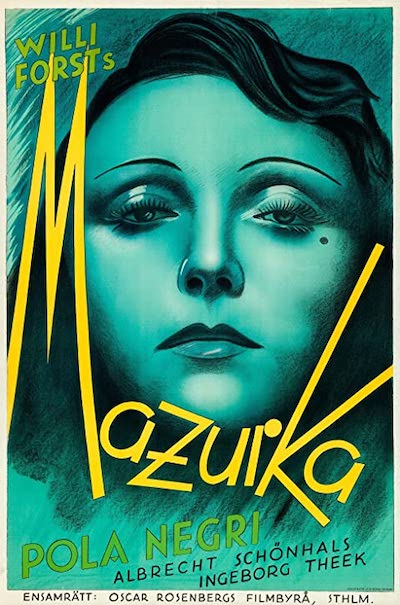
  • Willi Forst – Mazurka (1935)

    1931-1940CrimeDramaGermanyThird Reich CinemaWilli Forst

    Quote:
    A female cabaret singer is put on trial for murdering a predatory musician.

    Wikipedia wrote:
    Warner Brothers Studios acquired the U.S. distribution rights but shelved the film in favor of its own scene-by-scene 1937 English language remake, Confession, which starred Kay Francis. Mazurka’s sets were designed by the art director Hermann Warm. It was partly shot on location in Warsaw. The film was made by Cine-Allianz whose Jewish owners Arnold Pressburger and Gregor Rabinovitch were dispossessed during pre-production of the film.Read More »
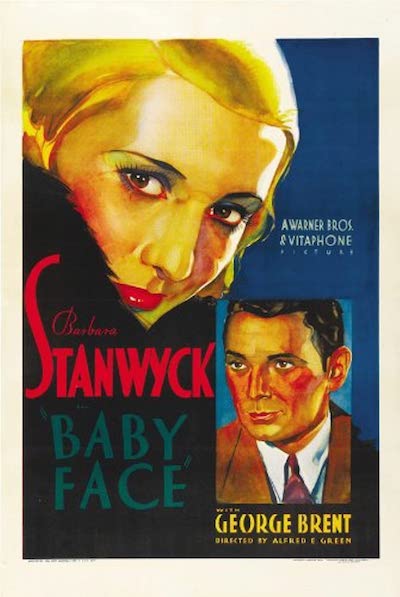
  • Alfred E. Green – Baby Face (1933)

    1931-1940Alfred E. GreenClassicsDramaUSA

    A young woman, sexually exploited all her life, decides to turn the tables and exploit the hapless men at a big city bank – by gleefully seducing her way to the top.Read More »

  • Daisuke Itô – Oatsurae Jirôkichi kôshi AKA Jirokichi the Rat (1931)

    Daisuke Itô1931-1940AdventureJapanSilent

    The only completely preserved silent film directed by Daisuke Ito, this film relates the life of a legendary thief, Jirokichi the Rat in an exquisite original story and through the revolutionary use of dynamic intertitles. The skillful benshi narration featuring a mixture of Edo dialect and Kansai dialect is highly entertaining.Read More »

  • Frantisek Pilát & Otakar Vávra – Svetlo proniká tmou AKA The Light Penetrates the Dark (1931)

    1931-1940Czech RepublicExperimentalFrantisek PilátOtakar VávraShort Film

    Quote:
    Zdenek Pešánek created the first public kinetic sculpture, for the power station in Prague. This short experimental film focuses on a kinetic sculpture by Zdenek Pešánek. For a period of eight years it issued beams of light from the outside wall of a transformer station at Prague’s power utility before its destruction in 1939. Though genuine, these shots seem abstract to us. They are a rhythmically assembled ode to the light-creating devices and phenomena of electricity. Light arcs, coils, bulbs and various luminous elements support the alternation of positive and negative film images, creating an impressive universe of light and shade. In the 1920s, Pešánek had obtained financial support for his work with electric kinetic light art. In the 1930s, he was the first sculptor to use neon lights. He built several kinetic light pianos, and published a book titled “Kinetismus” in 1941.Read More »

  • Mikio Naruse – Yogoto no yume AKA Every-Night Dreams (1933)

    Drama1931-1940JapanMikio NaruseSilent

    In the formally ravishing Every-Night Dreams, set in the dockside neighborhoods of Tokyo, a single mother works tirelessly as a Ginza bar hostess to ensure a better life for her young son—until her long-lost husband returns.Read More »

  • Charles Dekeukeleire – Het kwade oog AKA The Evil Eye (1937)

    Drama1931-1940BelgiumCharles Dekeukeleire

    Quote:
    Tandis qu’un cinéma populaire, purement commercial, se développe tant à Bruxelles qu’en région flamande, Charles Dekeukeleire se lance dans l’aventure du long métrage en 1937, sur un scénario ambitieux du romancier Herman Teirlinck. Le cinéaste va le réaliser en Flandre avec des acteurs non professionnels, originaires de la campagne, et avec des fonds réunis par Henri d’Ursel auprès de riches mécènes. L’argument imaginé par Teilinck, issu de l’une de ses pièces et basé sur une approche expérimentale du Temps, relève du fantastique rural: un vagabond jette la panique dans une communauté villageoise en déclenchant une série d’événements insolites qui le font craindre comme sorcier, comme esprit malfaisant. Read More »

  • Mikio Naruse – Kagirinaki hodô AKA Street Without End (1934)

    1931-1940DramaJapanMikio NaruseSilent

    Mikio Naruse’s final silent film is a gloriously rich portrait of a waitress, Sugiko, whose life, despite a host of male admirers and even some intrigued movie talent scouts, ends up taking a suffocatingly domestic turn after a wealthy businessman accidentally hits her with his car. Featuring vividly drawn characters and bold political commentary, Street Without End is the grandly entertaining silent melodrama with which Naruse arrived at the brink of the sound era.Read More »

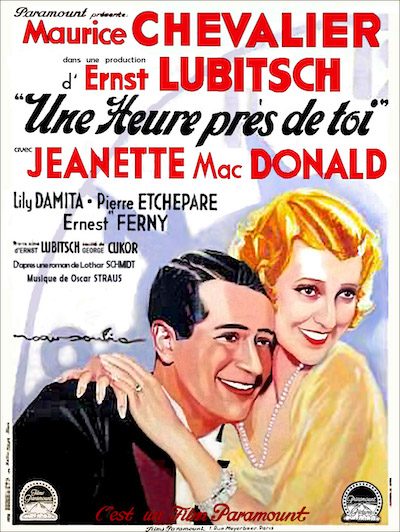
  • Ernst Lubitsch & George Cukor – One Hour with You (1932)

    1931-1940ComedyErnst LubitschGeorge CukorMusicalUSA

    But ohhhh! that Mitzi!

    A delightful comedy of manners from Ernst Lubitsch (with some assistance from George Cukor), rivaling Love Me Tonight as the best musical comedy and Trouble in Paradise as Lubitsch’s supreme achievement of that year. While most critics agree that it just misses reaching either one of those heights, it’s still one of the supreme treats of the Pre-Code era, best enjoyed a little over an hour before midnight together with (as per Leslie Halliwell’s suggestion) some Whitstable natives, salmon, trout and strawberries Romanoff, and an ice-cold bottle of either Moët et Chandon or Château d’Yquem on the side. And if you choose both of them…that’s what I do, too.Read More »

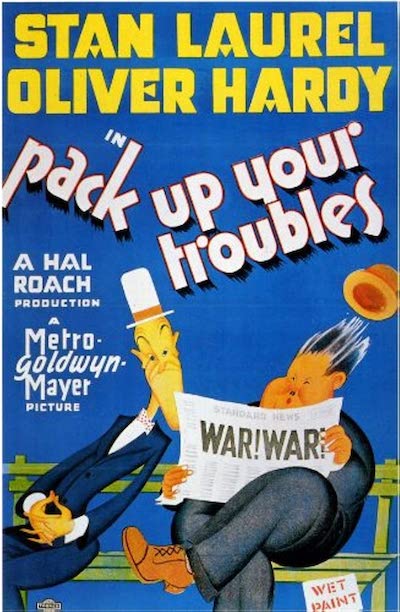
  • George Marshall – Pack Up Your Troubles (1932)

    1931-1940ClassicsComedyGeorge MarshallUSA

    The boys’ Army buddy, Eddie Smith, is killed in the trenches in France, leaving his baby girl an orphan. Back home after Armistice, they try to find Eddie’s father and turn the child over to him. Unfortunately, they keep coming up with the wrong Smiths, and in the process disrupt a wedding by proclaiming the baby to be the groom’s child. To evade the Welfare Association, they try to skip town, raising money for their escape by hocking their lunch wagon. But they accidentally knock the bank president unconscious and wind up being hunted down for bank robbery.Read More »

Back to top button