

Plot: A famous painter returns to Spain under a false name as he once had to run away, to meet his half gypsy daughter, who has become a flamenco dancer. He offers her his house, making popular rumors take flight.Read More »
Plot: A famous painter returns to Spain under a false name as he once had to run away, to meet his half gypsy daughter, who has become a flamenco dancer. He offers her his house, making popular rumors take flight.Read More »
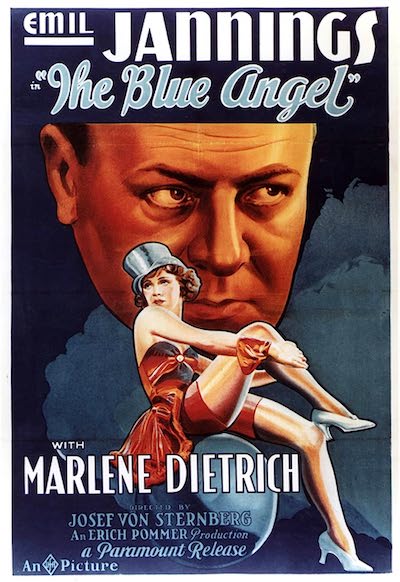
Immanuel Rath is a stuffy, disciplinarian professor who is shocked to discover his students passing around a postcard of Lola-Lola, a singer at The Blue Angel cabaret. Hoping to catch his students there, Professor Rath visits the nightclub and witnesses Lola-Lola’s performance. Entranced by her dissolute charms, he gets drunk on champagne and spends the night with her. The ensuing scandal causes him to lose control of his students and he is terminated from his position. Returning to Lola, he agrees to marry her and joins the troupe. His humiliation at having to play a clown onstage is compounded by Lola’s attraction to the strongman Mazeppa. To make matters worse, the troupe returns to the professor’s hometown, forcing him to acknowledge how far he has fallen.Read More »

Quote:
A young girl, Jadzia, is sentenced to death for the murder of her child. Shocked by her fate, lawyer Krystyna decides to defend her in the court of second instance. She learns the story of a girl who was seduced by a strange man during a trip. Jadzia is acquitted and tries to start her life anew, but fate is preparing another fatal surprise for her.Read More »

On the eve of the French Revolution, two orphan girls, Henriette and Louise, make their way to Paris…
There are so many unforgettable scenes:
– Louise singing in the streets, Henriette and the Countess trying to reach her.
The police and the Count stopping them. Countess’ silent despair and Henriette’s screams.
– All the sequences with Pierre and Louise.
– The Marquis’ costume orgy, masterfully filmed.
– And, above all, Yvette Guilbert cradling her son with a song… an immense moment of cinema.
Paul Vecchiali – L’encinéclopédie – cinéastes français des années 1930 et leur oeuvreRead More »

Quote:
Three American workers are dismissed from the Ford plant during the Depression, and come to the Soviet Union. Not wanting to live with a man of “inferior race” one (Sam) kicks the other (Tom) out of the dorm. The Soviet workers are outraged by the American’s ugly act, declare a boycott of Sam and convince him to abandon racial prejudices and make peace with Tom.Read More »
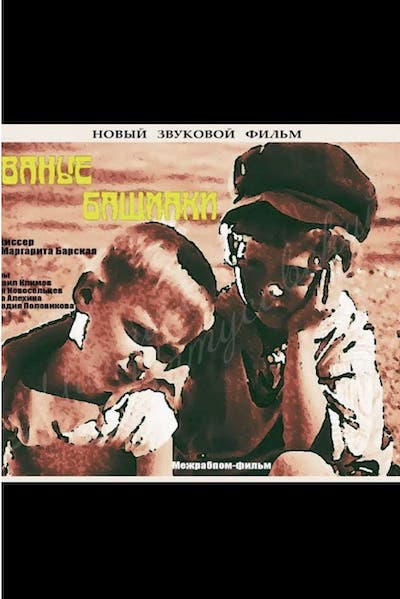
The first sound film for children “Torn Shoes” was released in 1933 and won the world audience. It’s about kids from a poor family living in some European country (looks like pre-nazi Germany); two brothers have one pair of shoes for both. The author of the film Margarita Barskaya was proclaimed the leading director of child cinema. In 1937 she was repressed and her name was taken off the Soviet cinematography.Read More »

Quote:
Lye’s first direct film, which combines popular Cuban dance music with hand-painted abstract designs, amazed cinema audiences. Color was still a novelty, and Lye’s direct painting on celluloid creates exceptionally vibrant effects. The film won several major awards, though some festivals had to invent a special category for it, and in Venice, the Fascists disrupted screenings because they saw the film as ‘degenerate’ modern art. A Colour Box was funded and distributed by John Grierson’s GPO Film Unit on the condition that Lye include postal messages at the end.Read More »
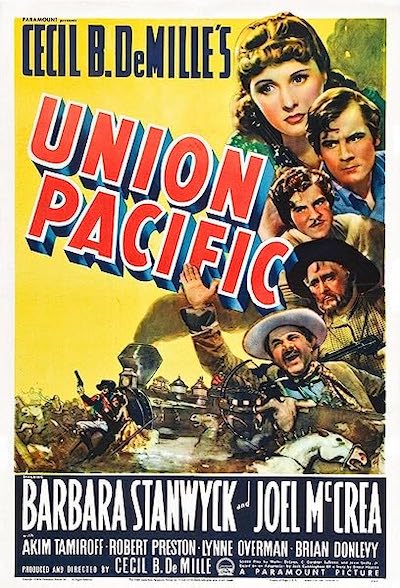
One of the last bills signed by President Lincoln authorizes pushing the Union Pacific Railroad across the wilderness to California. But financial opportunist Asa Barrows hopes to profit from obstructing it. Chief troubleshooter Jeff Butler has his hands full fighting Barrows’ agent, gambler Sid Campeau; Campeau’s partner Dick Allen is Jeff’s war buddy and rival suitor for engineer’s daughter Molly Monahan. Who will survive the effort to push the railroad through at any cost?Read More »

Alain Resnais° wrote:
It remains, I think, the single overwhelming experience I’ve ever had in a cinema. When I first came out of the theater, I remember I just had to sit on the edge of the pavement. I sat there for about five minutes and then I walked the streets of Paris for a couple of hours. For me, every thing had been turned upside down. All my ideas about the cinema had been changed. While I was actually watching the film, my impressions were so strong physically that I thought that if this or that sequence would to go for one more shot, I would either burst into tears or scream or something. Since then, of course, I’ve seen it at least fifteen times like most filmmakers of my generation. I even recorded the whole soundtrack on my tape recorder and it’s amazing how well it stands up well on its own.Read More »