1930s

  • Basil Wright – The Song of Ceylon (1934)

    1931-1940Basil WrightDocumentaryUnited Kingdom

    The Song of Ceylon was originally commissioned as a series of short travelogues, but spawned an ambitious film transforming travelogue (exotic animals, eye-catching scenery, quirky customs) into a dreamlike film poem. Critics have since argued every possible position on the film’s portrayal of colonialism and its subjects. Only during editing did the film find its intricate design, a documentary ‘song’ in four movements. The first, ‘The Buddha’, is an impression of religious and cultural practices. ‘The Virgin Island’ is the most factually informative, featuring fishing and agricultural scenes. ‘The Voice of Commerce’ highlights the film’s most controversial aspect, its ambivalence towards British imperialism. The final section, ‘The Apparel of a God’, returns to ritualistic images, as if synthesising the verse and chorus of Ceylon’s ‘song’.Read More »

  • Jacques Tourneur – Harnessed Rhythm (1936)

    Jacques Tourneur1931-1940DocumentaryShort FilmUSA

    This Sports Parade series entry follows the life of Dixie Dan, a harness racehorse, from birth through age three.Read More »

  • Jean Epstein – Mor vran AKA Sea of the Ravens (1931)

    Jean Epstein1931-1940ArthouseFranceShort Film

    Quote:
    MOR-VRAN starts with a shot of the sea, followed by one of the map of the Breton coastline. Next, we see images of the various islands off the coast: harbours, a mill, sheep, a lighthouse, cemeteries. The women are dressed in black. In the port of Brest there is a great hustle and bustle. A sailor pays a visit to the fair and wins a chain. He returns to the island of Sein by boat. As the result of a storm he will never get there. After a few weeks, his body, with the chain, washes ashore. On Sein, people start repairing the damage caused by the storm. A young couple talks about the future, about buying a house and a boat. A widow visits a graveyard. With MOR-VRAN, Jean Epstein continued his series of films about the Breton coast. This documentary was obviously conceived as a silent movie: inserted titles explain the action, while music accentuates the atmosphere. Epstein creates a gloomy atmosphere by using pregnant images: the sea leaves serious scars on the islands off the Breton coast. Nevertheless, life goes on.Read More »

  • Jacques de Baroncelli – Belle Etoile (1938)

    Jacques de Baroncelli1931-1940ComedyDramaFrance

    IMDB user review:
    Jacques De Baroncelli was a prolific director ,active from the silent age (1916)up to post-war years (“Rocambole” 1947).”La Duchesse De Langeais”(1942) is considered his best work.

    This one is a comedy.The beginning might remind some users of a famous scene of the all-time classic “it’s a wonderful life” -which had still to be made in 1938-: a young man ,weary of life ,wants to throw himself into the river ;but a young girl does it at the very moment he is about to act.He saves her and a “guardian angel” welcomes him ,in the shape of a tramp ,played by the always wonderful Michel Simon.Nothing magic,nothing religious ,like in Capra’s beloved work.Simply the two young people decides to live under the stars ,like their mate .The chick (Meg Lemonnier)is a wealthy banker’s daughter and the boy (Jean ¨-Pierre Aumont) a poor artist ,but he is handsome whereas all the men the rich dad wanted his heir to marry were graybeards.Read More »

  • André De Toth – Két lány az utcán AKA Two Girls on the Street (1939)

    André De Toth1931-1940ClassicsDramaHungary

    The maverick Hollywood stylist André de Toth sharpened his craft in his native Hungary, including making this chic, dynamic melodrama, studded with deco decor and jazzy musical interludes. Two upwardly mobile working women—one a musician in an all-girl band, the other a bricklayer—join forces in their attempts to make it in Budapest, supporting each other through changing fortunes, the advances of lecherous men, and the highs and heartbreaks of love. Kinetic camera work, brisk editing, and avant-garde imagery abound in this often strikingly modern ode to the power of working-class female solidarity.Read More »

  • Veit Harlan – Jugend (1938)

    Drama1931-1940GermanyThird Reich CinemaVeit Harlan

    Though it was accepted as standard entertainment upon its first release, the German Jugend (Youth) has in recent years been perceived as an implicitly pro-Nazi tract. Adapted by Thea Von Harbou from a controversial 19th century play by Max Hulls, the story concerns a young girl named Annchen (Kristina Soderbaum), who from childhood onward has had her judgment warped by the self-righteous proclamations of a fanatical priest (Eugene Klopfer). After her first sexual experience, Annchen is so overwhelmed by guilt that she commits suicide, profoundly affecting the lives of those closest to her. Some critics have suggested that the film advises its audience to beware false prophets-except those wearing brown shirts and armbands, who will lead the populace from the opiate of religion to the glories of National Socialism. The fact that Jugend was directed by Kristina Soderbaum’s husband Viet Harlan, one of the German film industry’s leading torch-bearers for the Third Reich, has not been a point in its favor. ~ Hal Erickson, All Movie GuideRead More »

  • Mikhail Romm – Pyshka AKA Boule de suif (1934)

    Mikhail Romm1931-1940ClassicsDramaUSSR

    Synopsis
    A company of French bourgeois travel through the territories occupied by Germans in a stagecoach accompanied by a woman of the oldest profession.Read More »

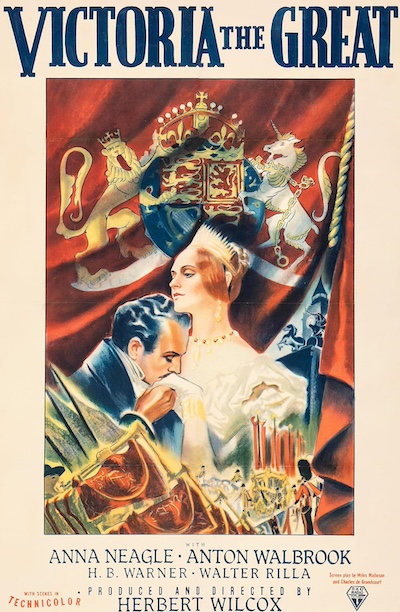
  • Herbert Wilcox – Victoria the Great (1937)

    Herbert Wilcox1931-1940DramaUnited Kingdom
    Victoria the Great (1937)
    Victoria the Great (1937)

    The story of an 18-year-old princess who becomes Queen of England. It chronicles six decades of her reign during a period of immense change and her marriage to a prince who would become her treasured source of stability and affection.Read More »

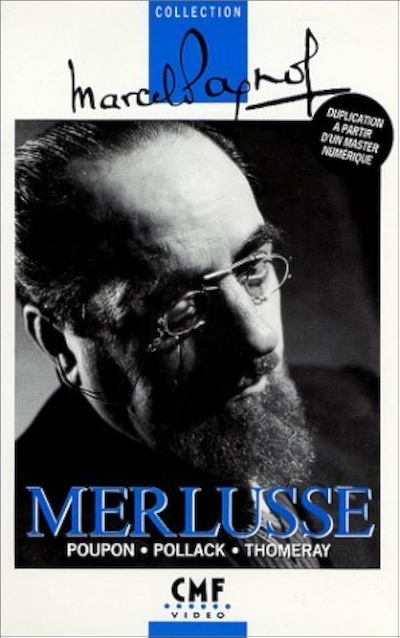
  • Marcel Pagnol – Merlusse (1935)

    Marcel Pagnol1931-1940DramaFrance
    Merlusse (1935)
    Merlusse (1935)

    Quote:
    Merlusse is a teacher in an all-boys boarding school – pupils hate him since he smells, they think, has a glass eye and is very strict. When Christmas Eve arrives most boys leave school to spend the holidays with their families but a small group of lonely boys is left behind with Merlusse as their overseer. Merlusse doesn’t get along with the boys very well and they pull various tricks on him…Read More »

Back to top button