• Claude Lanzmann – Tsahal (1994)

    Documentary1991-2000Claude LanzmannIsraelPolitics

    new york times review (january 1995)
    If “Tsahal,” opening today at the Walter Reade Theater, initially seems to admire that toughness unquestioningly, it eventually grows into a thoughtful exegesis of a troubling, complex subject. This film provoked a tear-gas bombing at a Paris movie theater last November, but it isn’t inflammatory on its own merits. Mr. Lanzmann, whose background in philosophy shapes his film making in palpable ways, is more pensive than judgmental. He seeks the essence of Israel’s embattled existence during “46 years of perpetual alarm.” Slowly, doggedly, he arrives at a profound understanding of it by the time “Tsahal” is over.Read More »
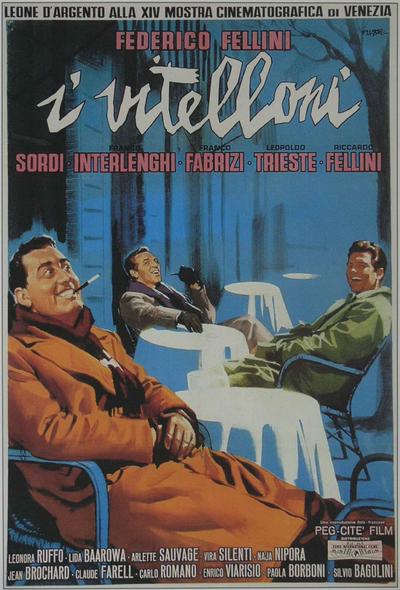
  • Federico Fellini – I vitelloni (1953)

    1951-1960ComedyDramaFederico FelliniItalian Neo-RealismItaly

    29f7c043f76a2bde437fd0d52a185152

    Quote:
    Five men walk arm-in-arm through a sleepy Adriatic town, their lockstep a gentle echo of Italy’s Fascistic past. Such posses are quite common in Italy, where close male friendships, equal parts sensuality and ritual, are second only to the family in importance. I Vitelloni (the best sense of it is “the idlers”), Fellini’s third film, includes some of his most subtle filmmaking and most personal material. Loosely structured and oddly narrated, I Vitelloni is like a sketch for both La Dolce Vita and Amarcord. Paradoxically, I Vitelloni is also an insightful and accurate representation of Italy in the immediate postwar period, full of references to the massive social changes underway. Fifty years after its release, I Vitelloni can finally be seen as a seminal film in Italian cinema, one of the first to detail the effects of technology, celebrity, and mobility on Italian life.Read More »

  • Richard Myers – 37-73 (1974)

    1971-1980ExperimentalRichard MyersUSA

    “I think 37-73 is an extraordinary work, and the best of [Myers’] long films. I am astonished by his skill in image making, and his power to evoke the crazy pain of being an artist. It is a haunting work, with unforgettable scenes ….” – James Broughton

    “Richard Myers’ 37-73 was far and away the most noteworthy film in the Exposition (9th Annual Independent Filmmakers Exposition). In fact, Richard Myers is, in my opinion, one of the few innovative conceptually oriented filmmakers in the country. As powerful and complex as is AKRAN, 37-73 is more taut, richer in associative meaning …. 37-73 is about dreams, about memory and its associations with nightmare and magic.” – Owen Shapiro

    “Through Myers’ so eloquently expressed dream world we’re able to perceive the entire panorama of the specifically American imagination. It’s as if he’s tapped our collective subconscious.”—Kevin Thomas, LA Times.Read More »

  • Anne Charlotte Robertson – Five Year Diary [Incomplete] (1982)

    USA1981-1990Anne Charlotte RobertsonDocumentaryExperimental

    29f7c043f76a2bde437fd0d52a185152

    Includes reels : 01, 02, 03, 09, 22, 23, 26, 31, 40, 47, 80, 81, 83

    Anne Charlotte Robertson, born in 1949, was a Massachusetts-based filmmaker who used her Super-8 camera and acute self-awareness to forge a radically intimate mode of first-person cinema. Although she was celebrated as an artist in her lifetime, only today is Robertson finally being acknowledged as an influential pioneer of the first-person diary cinema that has long flourished in the Boston-Cambridge area, perhaps best known in the work of Ed Pincus and Ross McElwee. Gripped by mental illness, Robertson discovered a vital form of self-therapy in the diaristic filmmaking practice invented and refined across her magnum opus, Five Year Diary (1981­–1997), whose eighty-one individual chapters, or “reels,” meld bold formal experimentation, self-depreciatory humor, and raw emotion into a charged yet lyrical chronicle of an often painfully difficult life. Cathartic and devastating, rough-edged and poignantly delicate, disarmingly funny and meditative, Robertson’s Five Year Diary offers a remarkably frank and revealing self-portrait of an artist and woman struggling to understand the overwhelming desires and dark shadows that defined her world.Read More »

  • Zülfü Livaneli – Sis AKA Le Brouillard AKA Mist (1993)

    2001-2010ArthouseDramaTurkeyZülfü Livaneli

    29f7c043f76a2bde437fd0d52a185152

    Mist is uncertainty.
    A mist which cannot be held with the hand, or even seen with the eye.
    A mist which can comprehend our happiness, our pain, our fears, our contrainment and which encompasses human relationships.
    A mist hanging over a family, a society and an era.
    As stated by Victor Hugo “similar to the volcano’s discharge of stones, the discharge of people” in an era of uncertainty.
    A mist which has taken the lives of 5 000 people within four years.
    The effort of this film is to remember and understand something which is lost and gone in our country’s existence and in our own lives.
    (Zülfü Livaneli)
    Read More »

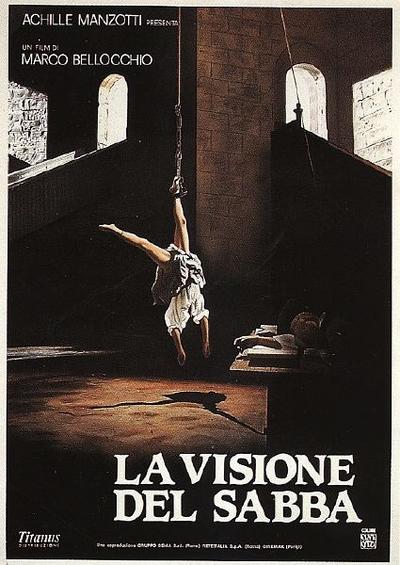
  • Marco Bellocchio – La Visione del Sabba AKA The Witches’ Sabbath (1988)

    Drama1981-1990ItalyMarco Bellocchio

    29f7c043f76a2bde437fd0d52a185152

    Plot: The freshly graduated psychiatrist David shall deliver an opinion about young Maddalena, who’s on trial for murdering a hunter. She claims she’s a witch and acted on behalf of the devil. The public health officer tells David, he’s got reason to believe her, that she’d been searching for a man who suits her needs for 300 years. Already after his first meeting with Maddalena, David begins to change: He ignores his beautiful young wife Cristina and loses himself in daydreams and hallucinations in which he participates in Inquisition questioning and erotic witches’ circles.Read More »

  • Kurt Meisel – Tragödie einer Leidenschaft (1949)

    1941-1950DramaGermanyKurt MeiselRomance

    Free Image Hosting at www.ImageShack.us

    29f7c043f76a2bde437fd0d52a185152

    When she was a little girl, Liuba came to town with her widowed mother to live in the block of flats owned by her aunt Anna Iwanowna. The wealthy and cold-hearted Anna Iwanowna barely accepted them as tenants. And no sooner did Liuba’s mother die than she wanted to send her niece to the orphanage. Fortunately, Pawlin, Anna Iwanowna’s janitor, decided to adopt her and he brought her up with affection. When she grew up, the beautiful Liuba fell in love with her aunt’s son, Dodja, a good-looking but profligate army officer. Wishing nothing more than an affair with Liuba, Dodja did not hesitate to play the comedy of love to her. When she realized what Dodja was really after, Liuba was devastated and in desperation accepted to marry Pawlin, her benefactor, who had been infatuated with her for years. Alas, in the middle of the wedding party Dodja danced with Liuba and eloped with her. Written by Guy Bellinger Read More »

  • Orson Welles – Around the World with Orson Welles (1955) (HD)

    1951-1960DocumentaryOrson WellesTVUnited Kingdom

    29f7c043f76a2bde437fd0d52a185152

    Sean Axmaker, Keyframe wrote:
    When handed the raw materials from an unfinished documentary about Elmyr de Hory, an art forger whose life was being written up by biographer Clifford Irving, Orson Welles took the opportunity to make something far beyond the concept of the traditional documentary. F for Fake has been called the Orson Welles’ first essay film, a true enough statement if you limit the accounting to feature films, but he had been doing short-form non-fiction since 1955, when he made Around the World with Orson Welles (a.k.a. Around the World) for British television.Read More »

  • Robert Wiene – I.N.R.I. AKA Crown of Thorns (1923)

    1921-1930DramaGermanyRobert WieneSilentWeimar Republic cinema

    Free Image Hosting at www.ImageShack.us

    29f7c043f76a2bde437fd0d52a185152

    By the director of Cabinet of Dr.Caligari, this is the Passion embedded in a contemporary story. An anarchist jailed for an attempted assassination is told the Passion story by the prison chaplain, who seeks to convince him that it is better to sacrifice ones own life than take the life of ones enemy. The framing story, taken from a novel, is believed to have been intended to give the Biblical story an anti-Bolshevist propaganda function. In any case, it was added without the knowledge of the actors in the Passion story, who included some of the major stars of the period Asta Nielsen as Mary Magdalene, Henny Porten as Mary, Grigori Chmara as Jesus, and Werner Krauss as Pontius Pilate -bampfa.berkeley.eduRead More »

Back to top button