

Apocalypse. Two starving kids find a dead body in the ruins.
From the director of An Elephant Sitting Still and under the supervision of Béla TarrRead More »
Apocalypse. Two starving kids find a dead body in the ruins.
From the director of An Elephant Sitting Still and under the supervision of Béla TarrRead More »
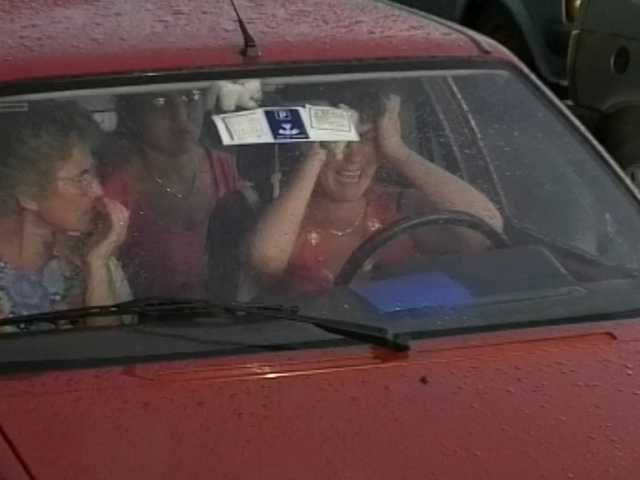
An Anthropological Television Myth is an excuse to introduce television anthropology into the culture debate, reading the history of a country and its people through the archives of hundreds of private TV stations scattered throughout Italy.
MUBI’s take wrote:
A great example of how seemingly mundane footage can be reused to create a work of social importance, this exercise in visual history-telling uses a medium representative of popular culture as a tool for the reading of social movements and citizen engagement in a Sicilian city.Read More »

About the fate of Anne, a peasant girl who finds herself among the inhabitants of the «Dream» furnished rooms in a town of Western Ukraine. They are unfortunate people who can’t be settled in life that shuts the door on them. Only Anne manages to realize her dream of worthy existence: having overcome serious difficulties she finds herself in the USSR.
Source : www.mosfilm.ruRead More »

Early 1970s. Amedeo is a poor Italian immigrant living in Australia for twenty years. Seeking to marry an Italian wife, he corresponds with Carmela, a pretty girl from Rome. They do not reveal their true identities and do not mention their hardships in their letters. Carmela is actually a prostitute seeking an opportunity to change her life style. Amedeo, embarrassed about his looks, sends a photograph to Carmela of his handsome friend Giuseppe. Finally, Carmela lands in Melbourne. Amedeo meets Carmela at the airport and he is struck by her beauty. Thinking he will be rejected because of his looks, he decides to tell Carmela that he is Giuseppe, and he reserves to tell her the truth at a later moment. This starts a three day eventful journey across Eastern Australia. Carmela will soon become better acquainted with Amedeo and she learns of his hardships as an immigrant. She eventually meets the real Giuseppe, however, she believes that he is her betrothed groom, Amedeo. She quickly learns Giuseppe’s true shady intentions. In fact, she finds herself living in a red light district and then escapes. Amedeo and Carmela finally find true happiness together.Read More »
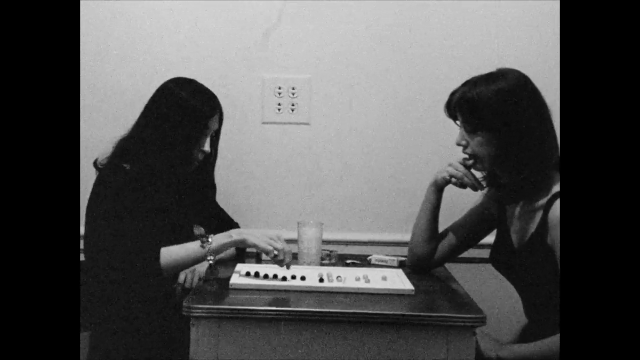
Chinese Checkers
Two women play Chinese checkers. Halfway through the film, the women are transformed through masks, make-up and costumes and they drift from a concentration on the board game to a concentration on each other’s hands and eyes, engaging in a game of seduction and lovemaking. Chinese Checkers was shot in New York in 1964 just before Dwoskin moved to the UK. It features Joan Adler and Beverly Grant and is based on a story by American experimental filmmaker Harry Smith. This film is not suitable for young audiences.Read More »
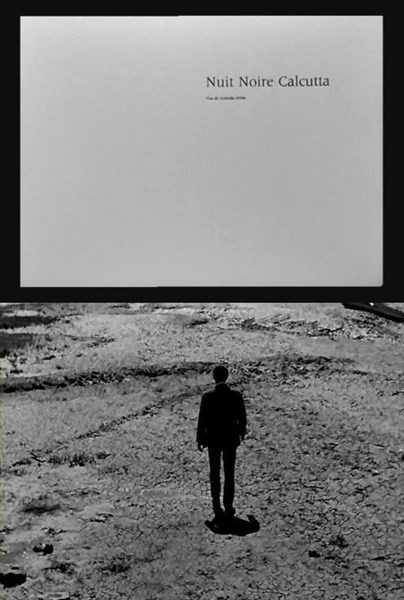
Nuit Noire, Calcutta is the story of a writer, Jean (Maurice Garrel), who has come to the coast to complete a novel about the french vice consul in Calcutta. He does not find his task an easy one, and he struggles throughout to find adequate words for his story. Convinced, as he puts it, that the words do exist somewhere, he is shown repeatedly working on his manuscript, deleting sentences, or tearing pages in frustration. In the process he empties several bottles of whisky (hence the connection with the theme of alcoholism). As he writes, there is a story unfolding in the outside world that seems to parallel the one he is inventing, although it is not clear which of these is mirroring the other. The two series of events refuse to converge; but this enables the film to explore the ironical,metaphorical relationship between the imagenery, speculative world of Callcutta and the dunes and mudflats of the Seine estuary at Ouistreham.Read More »

Quote:
The Spanish Civil War has been considered one of the most horrendous events in the recent European history and has been depicted by a plethora of writers, philosophers and artists – Hemingway, Picasso and even Guillermo del Toro. But how much do we know about the thirty-five years General Franco ruled in Spain for? Under what conditions did Spaniards live in the 1940s and 50s, for example? This is a much obscure period, due mainly to Franco’s protectionist attitude towards international politics.Read More »
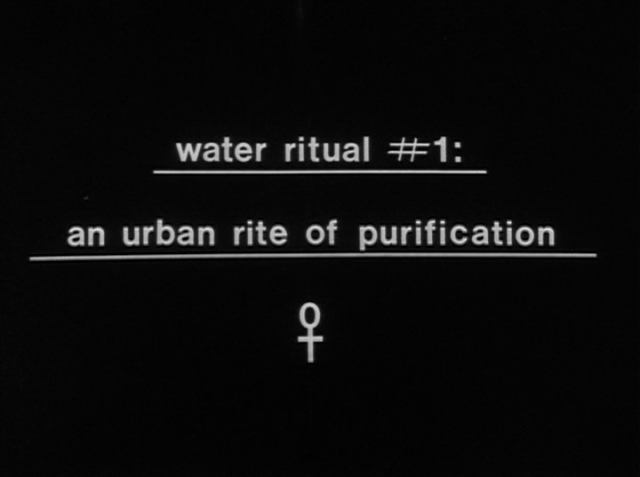
acqueline Stewart wrote:
Made in collaboration with performer Yolanda Vidato, Water Ritual #1 examines Black women’s ongoing struggle for spiritual and psychological space through improvisational, symbolic acts. Shot in 16mm black-and-white, the film was made in an area in Watts that had been cleared to make way for the I-105 freeway, but ultimately abandoned. At first sight, Milanda (Vidato, wearing a simple dress and scarves on her head and waist) and her environs (burnt-out houses overgrown with weeds) might seem to be located in Africa or the Caribbean, or at some time in the past. This layering of locations and temporalities continues to the film’s striking conclusion, in which a now nude Milanda squats and urinates inside an urban ruin. By making “water,” Milanda evokes the numerous female water-based figures in African-Diaspora cosmology as she attempts to expel the putrefaction she has absorbed from her physical environment, while symbolically cleansing the environment itself. Read More »
Shannon Kelley wrote:
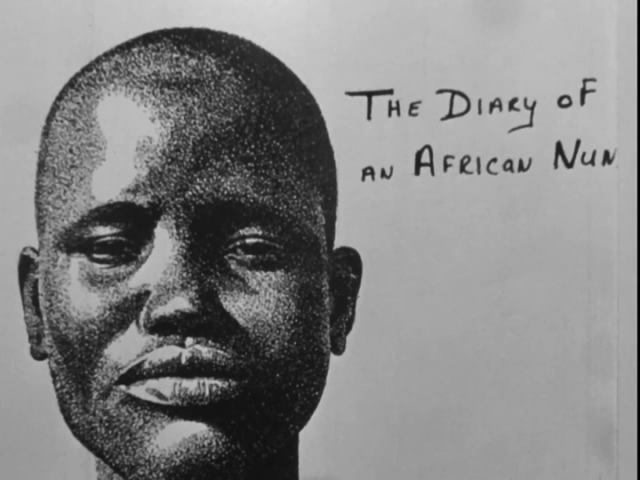
A nun in Uganda weighs the emptiness she finds in her supposed union with Christ. Adapted from a short story by Alice Walker, the film was a deliberate first move by its director toward narrative filmmaking, though its graphic simplicity and pantomimed performance by Barbara O. Jones give it an intensity that anticipates Julie Dash’s work on Daughters of the Dust.Read More »