In the Name of Lenin is a 14 minute single subject ‘short’ (rather than a newsreel) produced by Soyuzkinozhurnal in 1932. It was directed by Mikhail Slutskii, a member of the new ‘Stalinist’ generation of film-makers, who had only recently graduated from film school in Moscow.Read More »
USSR
-
Mikhail Slutsky – Imeni Lenina aka In the Name of Lenin (1932)
1931-1940DocumentaryMikhail SlutskyPoliticsUSSR -
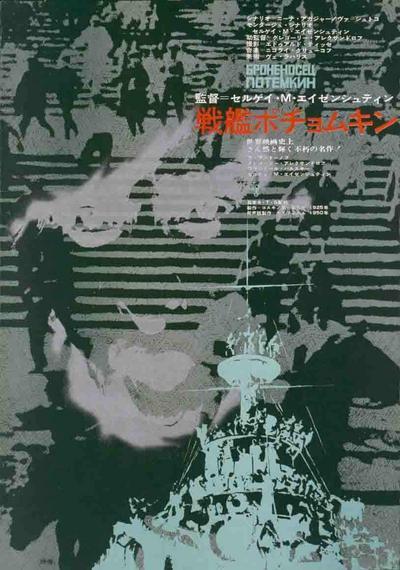
Sergei M. Eisenstein – Bronenosets Potyomkin aka The battleship Potemkin (1925)
1921-1930Sergei M. EisensteinSilentUSSRMarie Seton wrote:
When he made Potemkin in 1925, Sergei Eisenstein was not only a man with his total personality dedicated to creative work — albeit a creative work aimed at destroying all orthodox concepts of ‘art’ — but he was also a revolutionary fighter, a propagandist for the Russian Revolution. Thus, his work had a utilitarian purpose as well as an artistic one. He was educator and artist. At its most obvious level, Potemkin was regarded as propaganda for the Revolution; at a deeper level it was a highly complex work of art which Eisenstein thought would affect every man who beheld it, from the humblest to the most learned.Read More » -
Konstantin Lopushansky – Pisma myortvogo cheloveka AKA Letters from a Dead Man (1986)
1981-1990ArthouseKonstantin LopushanskySci-FiUSSRQuote:
Letters from a Dead Man is another film that deals with the theme of the nuclear nightmare. It falls into a mini-genre of nuclear holocaust film along with others such as On the Beach (1959), Dr Strangelove or, How I learned to Stop Worrying and Love the Bomb (1964), Fail-Safe (1964), The War Game (1965) et al. But what makes Letters from a Dead Man unique in this case is that the treatment is one that comes from the opposite side of the Iron Curtain. Every single other treatment of the nuclear holocaust theme was made in the West and comes based on the speculation (or at least implication) of what would happen if the bombs falling were coming from the Soviet side; this is one which shows everything from the other perspective. In both cases though, the films are almost identical in their treatment of the subject matter and are certainly agreed upon what an horrific experience the nuclear holocaust would be.Read More » -
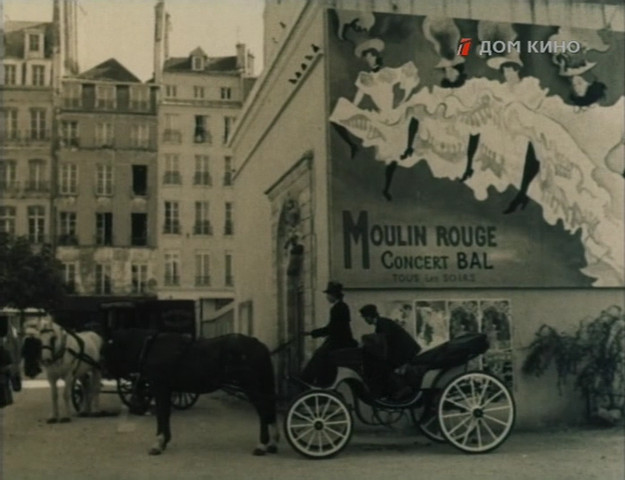
Leonid Ejdlin & Sergei Yutkevich – Lenin v Parizhe AKA Lenin in Paris (1981)
1981-1990Leonid Ejdlin and Sergei YutkevichSergei YutkevichUSSRRussian revolutionary Vladimir Lenin spent four years in Paris (1909–1912), and this historical docudrama explores those years with a certain amount of humor. Lenin is shown visiting with friends, the meetings with his later mistress Inessa Armand (in the movie she is in love with a young communist, Trofimoff), while several of his philosophical views and economic and political theories are mouthed by a former colleague who narrates the film and brings the material into the present.Read More »
-
Irina Poplavskaya & Sergei Yutkevich – Dzhamilya AKA Jamilya (1969)
1961-1970ArthouseDramaIrina Poplavskaya and Sergei YutkevichSergei YutkevichUSSRThe film is based on the story of the same name by Soviet writer Chinghiz Aitmatov. It is set in a remote Kirghiz village during the Great Patriotic War (1941-1945). A young wife of a soldier, Djamilya, fell in love with Daniar, a wounded war veteran living in her village. Daniar reciprocates her feelings. But suddenly Djamilya receives a letter from her husband with the news of his forthcoming return from the hospital. This forces the lovers to make a final decision. Years later, their young friend, Seid, who was a witness to their beautiful, albeit uneasy, love, reminisces about this wonderful couple…Read More »
-
Yuriy Norshteyn – Yozhik v tumane aka Hedgehog in the fog (1975)
1971-1980AnimationUSSRYuriy NorshteynЁжик в тумане
Hedgehog is on his way to visit Bear cub,
to sit and count the stars, their nightly ritual. Read More » -
Semyon Aranovich & Aleksandr Sokurov – Altovaya Sonata. Dmitriy Shostakovich AKA Viola Sonata. Dmitriy Shostakovich (1981)
1981-1990ArthouseDocumentarySemyon Aranovich and Aleksandr SokurovUSSRQuote:
The life and work of the great Russian composer Dmitriy Shostakovich is presented in this documentary through rare images and audios from many archives, at one time censored by the Soviet government. A brief take on his life, from his transition as an early prodigy to a first rate artist, his celebrated compositions and the final years with a declining health.Read More » -
Dziga Vertov – Chelovek s kino-apparatom aka Man with a movie camera (1929)
1921-1930Dziga VertovExperimentalSilentUSSRQuote:
This playful film is at once a documentary of a day in the life of the Soviet Union, a documentary of the filming of said documentary, and a depiction of an audience watching the film. Even the editing of the film is documented. We often see the cameraman who is purportedly making the film, but we rarely, if ever, see any of the footage he seems to be in the act of shooting!Read More » -
Andrei Tarkovsky – Stalker [The Criterion Collection] (1979)
1971-1980Andrei TarkovskyDramaSci-FiUSSRQuote:
Andrei Tarkovsky’s final Soviet feature is a metaphysical journey through an enigmatic postapocalyptic landscape, and a rarefied cinematic experience like no other. A hired guide—the Stalker—leads a writer and a professor into the heart of the Zone, the restricted site of a long-ago disaster, where the three men eventually zero in on the Room, a place rumored to fulfill one’s most deeply held desires. Adapting a science-fiction novel by Arkady and Boris Strugatsky, Tarkovsky created an immersive world with a wealth of material detail and a sense of organic atmosphere. A religious allegory, a reflection of contemporaneous political anxieties, a meditation on film itself—Stalker envelops the viewer by opening up a multitude of possible meanings.Read More »