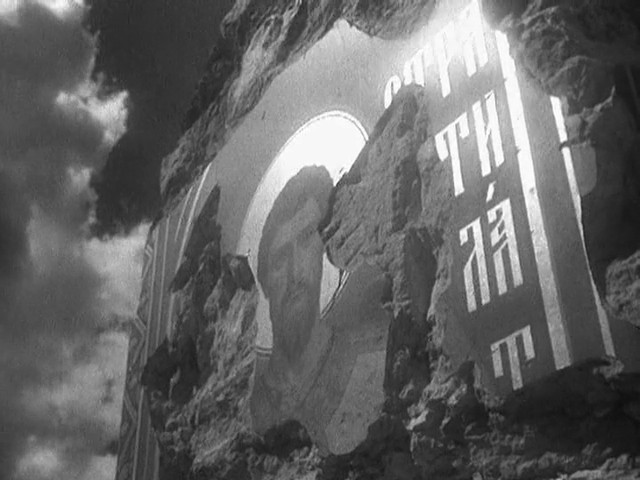
Directors Sergei Paradzhanov and Dodo Abashidze resurrected an old Soviet Georgian folktale as the basis for their film The Legend of Suram Fortress. The fortress in question is forever under construction, and forever collapsing before the last brick can be laid. The advice of a fortuneteller is sought out; the young fellow sent out to seek this advice happens to be the son of a man who years earlier had jilted the fortuneteller. Out of pique, she tells him that he must be walled up in the fortress’ wall, else the structure will continue to tumble. So many ancient legends are based upon self-sacrifice that one would think that Legend of Suram Fortress would have nothing new to offer–and one would be quite unfair to this well-crafted film to think along those lines. Never as brilliant as the critics made it out to be, Suram Fortress is still an immensely satisfying work from a gifted filmmaking team. ~ Hal Erickson, RoviRead More »
USSR
-
Sergei Parajanov & Dodo Abashidze – Ambavi Suramis tsikhitsa AKA The Legend of the Suram Fortress (1985)
1981-1990ArthouseFantasySergei ParajanovSergei Parajanov and Dodo AbashidzeUSSR -
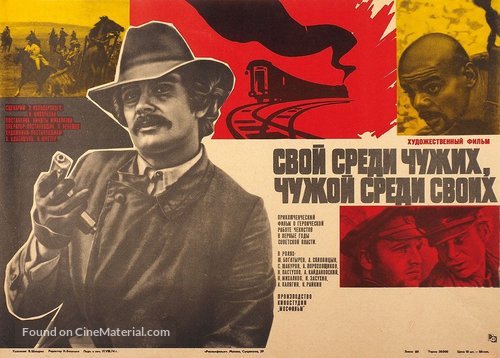
Nikita Mikhalkov – Svoy sredi chuzhikh, chuzhoy sredi svoikh AKA At Home Among Strangers, A Stranger Among His Own (1974)
1971-1980Euro WesternsNikita MikhalkovUSSRWesternQuote:
An unenviable lot fell to the Red Army soldier Shilov: he is being suspected of stealing gold. In the hungry 1920s, the young Soviet Republic’s government searches for gold all over the country, to buy for it bread from abroad. And now, the collected valuables disappeared from the armored and well-guarded train car on their way to Moscow. Shilov learns that the valuables have been stolen by the bandits. To restore his good reputation, Shilov has to infiltrate the band. To find out where the stolen gold is kept, he must be at home among the strangers.
A debut of the world-famous director Nikita Mikhalkov, this film is an excellent model of a “western,” having a very ingenious plot, and, most importantly, being a hymn to men’s true friendship.Read More » -
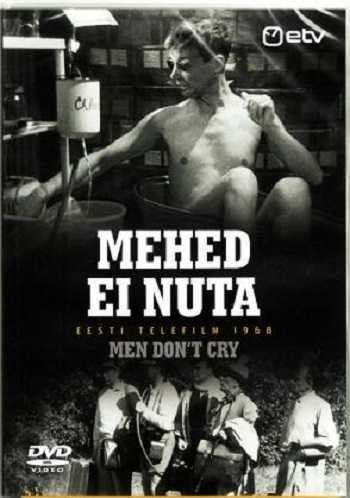
Sulev Nõmmik – Mehed ei nuta AKA Men Don’t Cry (1968)
1961-1970ComedyCultSulev NõmmikUSSRSynopsis:
A group of sleepless nerds should be taken into sanitarium for hard-therapy. They are taken to a lonely island but no sanitarium is in sight. Suddenly turns out that the nurses have kidnapped the men and are about to give them the only useful medicine they need – fresh air and work. But the patients decide to disobey. There’s only one solution – to escape. The film is absolute cult in Estonia. Read More » -
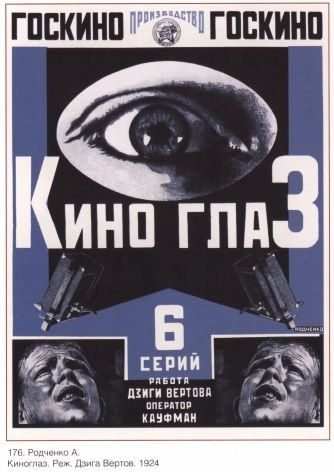
Dziga Vertov – Kinoglaz AKA Kino Eye (1924)
1921-1930DocumentaryDziga VertovSilentUSSRQuote:
This documentary promoting the joys of life in a Soviet village, centers around the activities of the Young Pioneers. These children are constantly busy, pasting propaganda posters on walls, distributing hand bills, exhorting all to “buy from the cooperative“ as opposed to the Public Sector, promoting temperance, and helping poor widows. Experimental portions of the film, projected in reverse, feature the un-slaughtering of a bull and the un-baking of bread.Read More » -
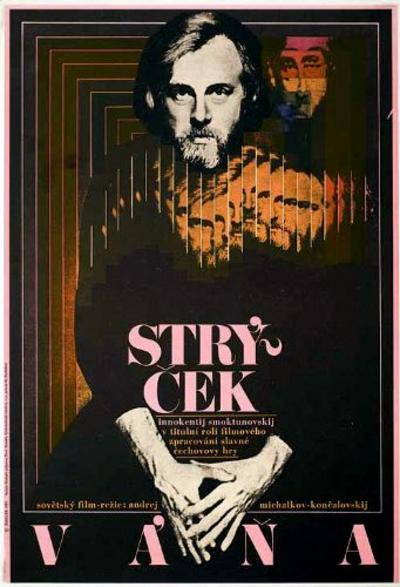
Andrey Konchalovskiy – Dyadya Vanya AKA Uncle Vanya (1971)
1971-1980Andrey KonchalovskiyDramaUSSRSynopsis
A retired professor has returned to his estate to live with his beautiful young wife, Yelena. The estate originally belonged to his first wife, now deceased; her mother and brother still live there and manage the farm. For many years the brother (Uncle Vanya) has sent the farm’s proceeds to the professor, while receiving only a small salary himself. Sonya, the professor’s daughter, who is about the same age as his new wife, also lives on the estate. The professor is pompous, vain, and irritable. He calls the doctor (Astrov) to treat his gout, only to send him away without seeing him. Astrov is an experienced physician who performs his job conscientiously, but has lost all idealism and spends much of his time drinking. The presence of Yelena introduces a bit of sexual tension into the household. Astrov and Uncle Vanya both fall in love with Yelena; she spurns them both. Meanwhile, Sonya is in love with Astrov, who fails even to notice her. Finally, when the professor announces he wants to sell the estate, Vanya, whose admiration for the man died with his sister, tries to kill him.Read More » -
Grigoriy Aleksandrov & Sergei M. Eisenstein – Staroye i novoye aka The Old and the New aka The General Line (1929)
1921-1930EpicGrigoriy Aleksandrov and Sergei M. EisensteinPoliticsSergei M. EisensteinUSSRThe horseless Marfa Lapkina, together with the local agronomist and other poor peasants, organizes a dairy farm in the village. However, local kulaks are actively resisting the project and any success it could provide. Old poor people also resists, not understanding the meaning of camaraderie and what their unification could bring to them…Read More »
-
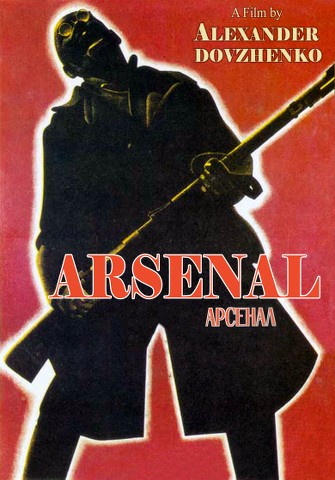
Aleksandr Dovzhenko – Arsenal (1928)
1921-1930Aleksandr DovzhenkoDramaUSSRWarSet in the bleak aftermath and devastation of the World War I, a recently demobbed soldier, Timosh, returns to his hometown Kiev, after having survived a train wreck. His arrival coincides with a national celebration of Ukrainian freedom, but the festivities are not to last as a disenchanted.
In Arsenal, Alexander Dovzhenko, perhaps the most radical of the Soviet directors of the silent period, altered the already extended conventions of cinematic structure to a degree greater than had even the innovative Sergei Eisenstein in his bold October. The effect of this tinkering with the more or less accepted proprieties of motion picture construction produced a work that is actually less a film than it is a highly symbolic visual poem. For example, in a more linearly structured piece like October, the metaphors, allusions, and analogies that arise through the construction of the various montages replace rather than comment on essential actions within the film. In Arsenal, however, the symbolism is so purposely esoteric, with seemingly deliberate barriers established to block the viewer’s perception, that the relationship of individual symbols or sequences to the various actions of the film is not immediately clear.Read More »
-
Aleksandr Dovzhenko & Yuliya Solntseva – Pobeda na Pravoberezhnoi Ukraine i izgnaniye nemetsikh zakhvatchikov za predeli Ukrainskikh sovietskikh zemel AKA Victory in Soviet Ukraine (1945)
Documentary1941-1950Aleksandr DovzhenkoUSSRWarYuliya SolntsevaYuliya Solntseva and Aleksandr DovzhenkoDescribes the Russian attack against the Germans, which drove them away from the Dneiper river, and finally out of Ukraine.Read More »
-
Gennadiy Klimov & Igor Shavlak – Semya vurdalakov AKA The Vampire Family (1990)
1981-1990FantasyGennadiy KlimovHorrorIgor ShavlakUSSR

A newspaper sends a young reporter into the Russian countryside to make a nice, sensationalist yarn out of some strange stories going around.
Quote:
Only vaguely based on Alexei Tolstoy’s novel ‘Oupyr’ (1841), ‘The Vampire Family’ (Semya vurdalakov) is a mixture of striking dreams, fading reality, and most ingenious psychedelic background music, Artemeyv-style (scores by Vladimir Davydenko).Read More »