

When a Mongolian nomadic family’s newest camel colt is rejected by its mother, a musician is needed for a ritual to change her mind.Read More »
When a Mongolian nomadic family’s newest camel colt is rejected by its mother, a musician is needed for a ritual to change her mind.Read More »

“I learned and stole a lot from James Broughton…
See this movie!” – Gus Van Sant
Review (from slackerwood.com)
James Broughton’s epitaph says about all you need to know about him: Adventure — not predicament.
For those who want to know more, the splendid documentary Big Joy: The Adventures of James Broughton is a terrific tribute to the revered poet, writer and pioneering experimental filmmaker.
Born in 1913, Broughton overcame a difficult childhood to have a long, fulfilling career and personal life. His father died when Broughton was five, and his overbearing mother sent him to military school at age 9, hoping to break him of his effeminate tendencies. These experiences no doubt informed his work and his lust for life and love as an adult.Read More »

Synopsis:
Director Francesco Carrozzini creates an intimate portrait of his mother, Franca Sozzani, the legendary editor-in-chief of Italian Vogue. From the ridiculous to the sublime, her astonishing but often controversial magazine covers have not only broken the rules but have set the high bar for fashion, art and commerce over the past 25 years. From the legendary “Black Issue” and the “Plastic Surgery issue” Sozzani remains deeply committed to exploring subject matter off limits to most in order to shake up the status quo and occasionally redefine the concept of beauty. With interviews from Karl Lagerfeld, Bruce Weber, Baz Luhrmann, Courtney Love and many others, Carrozzini gives us a behind the scenes glimpse into his mother’s creative process as well as peek into her vulnerabilities both past and present. Deeply insightful and often emotional this film is like a love letter from a son to his mother.Read More »

Synopsis
Extraordinary things always happen when unexpected. During the 18 months Justice spent touring, “extraordinary” didn’t necessarily mean “amazing”, or “great”, (though it sometimes did) but “surreal”, “weird”, “horrendous”, “fascinating”, “paranormal”, etc. To cut a long story short, it means that without anyone to film you twenty-four/seven, no one will believe or get the essence of every moment you’d like to tell them about. So as Justice were about to tour the USA for the second time, multi-awarded directors and intimate friends of the band Romain Gavras and So-Me taped every second of that 3 week tour that looks like it lasted 3 years. This documentary isn’t a report of a Justice live show (the audio CD is here for that), but is all about the extraordinary things that can happen when a bunch of frogs get dropped in dreamy America.Read More »
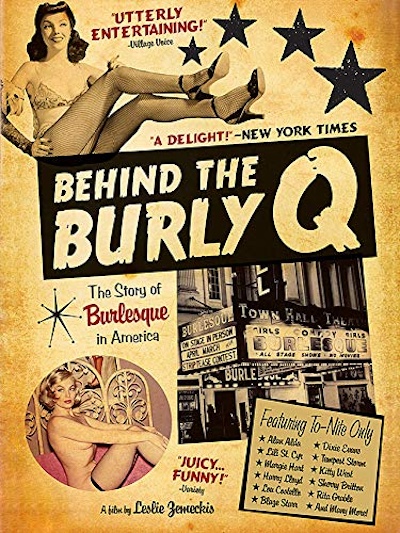
Synopsis from allmovie.com:
In the days before hardcore pornography attained mainstream accessibility in America, a more docile and suggestive form of adult entertainment proliferated in and around big cities, especially Manhattan: the classic burlesque show. Populated by musicians, comedians, and strippers, and cloaked in an overarching gaudiness, “burly” shows typically cost a dime for a single admission. Especially during difficult eras such as the Great Depression, the shows enabled male attendees to temporarily cast their troubles aside. As helmed by Leslie Zemeckis (documentarist wife of Robert Zemeckis), this chronicle examines the burly tradition by interviewing authors, historians, and burlesque participants including former strippers, comedians, and novelty acts. Taken together, the personal reminiscences not only reflect a broad spectrum of emotions, from triumph to tragedy, but add up to a historical chronicle of a unusual, now-extinct subculture that will remain forever tied to the early to mid-20th century. — Nathan SouthernRead More »

Anna Masecchia wrote:
With her 16mm camera in hand, the optical prosthesis of a 20th-century flâneuse, Agnès Varda filmed 42nd Street in 1967, shooting a crowdof passersby to the beat of The Doors. Pier Paolo Pasolini is with her, getting lost in the lights, bodies, faces and chaos of a crowded and multicultural New York. Opening in soft focus and closing on Pasolini’s blurred face, the images shot in a direct style and without audio are merged with a dense dialogue between the two artists and intellectuals, which was recorded later. Prompted by Varda, Pasolini reflects on the relationship between reality and fiction, the Christian figurative tradition and the function of audiovisual language in contemporary society. All of which is enhanced by the audio-visual décalage that simultaneously reveals the camera as a device while emphasising the real and political information of the images, which emerges from the background and comes into the foreground. In a matter of minutes,Varda’s art captures Pasolini talking about himself and the essence of cinema as a whole, which for both is an expression of reality itself.Read More »
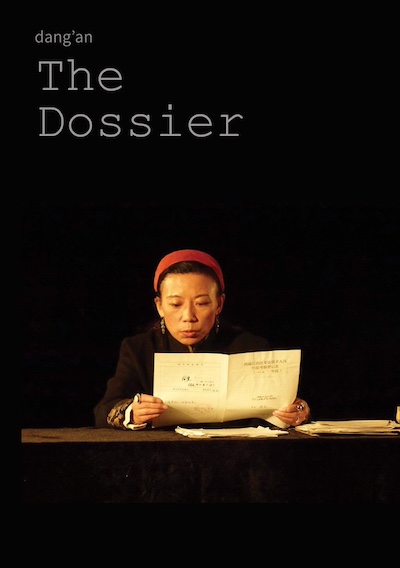
Tsering Woeser, the subject of Chinese filmmaker Zhu Rikun’s extraordinary documentary, is a Tibetan writer now based in Beijing. Through her writing and online voice, she has become one of the most eloquent voices on Tibet. Zhu Rikun’s sharply designed, formally innovative documentary is completely in Woeser’s own voice: Zhu alternates formally photographed scenes of Woeser reading excerpts from her secret government “dossier” (which she has somehow gained access to) with scenes of her speaking in her own soft but powerful, eloquent, passionate voice. Woeser’s moving account of her political awakening and current activism makes for a powerful document of a Tibetan woman finding her voice and insisting on her freedom to use it.
Read More »
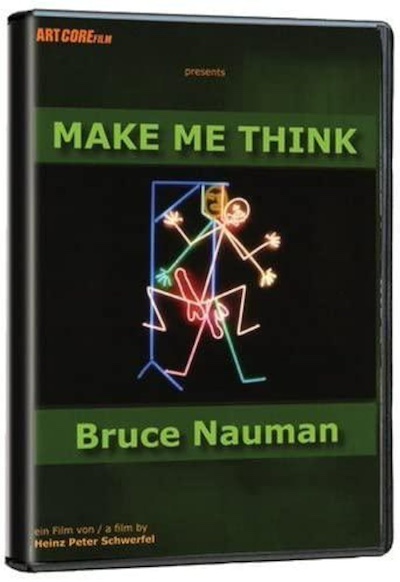
Quote:
Starting in the 1960s in the Bay Area, artist Bruce Nauman made sculptures from nonart materials like dirt, neon, polyester resin and burlap. With a fertile, almost frenzied creativity, Nauman also pioneered video installations and body art. Now something of a recluse, living in New Mexico, Nauman continues to exert art-world influence. Last year, UC Press published a comprehensive volume about his early period, A Rose Has No Teeth. The book, however, lacked a companion DVD—too much of Nauman’s art depends on time and movement to be captured in static illustrations. Bruce Nauman: Make Me Think, a 66-minute 1997 film by Heinz Peter Schwerfel, now available from Facets, provides that missing link. Read More »
