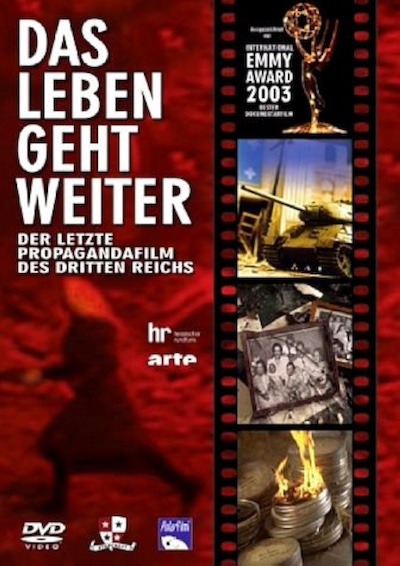

The absurd and often surrealistic story of the last propaganda film of the Third Reich.Read More »
The absurd and often surrealistic story of the last propaganda film of the Third Reich.Read More »

Located deep in the forested hills of the Siang valley of Arunachal Pradesh, at the north-eastern extremity of India, Damro village gathers to build a 1000 foot long suspension bridge, the elegant structures of cane and bamboo, that are the distinctive mark of the Adi tribe. Their only tool is the dao, a blade length of tempered steel, the size of a machete.
Ethnological documentary on the Adis of Arunachal Pradesh as they build one of their cane-and-bamboo bridges against the imminent arrival of “development” as backdrop.Read More »

Quote:
Fifty-two clips of Charles Bukowski ranting and musing comprise Barbet Shroeder’s Charles Bukowski Tapes. It was, until now, a rarity that circulated amongst die-hard Bukowski fans, since the release of Shroeder’s Bukowski-scripted feature, Barfly. This collection of monologues, ranging in topic from Bukowski’s beef with God, to biographical tales of his life as an abused child, to his views on writing as a disciplinary craft, cover the gamut of Bukowski-typical topics, which can also be glimpsed in other Bukowski documentaries, such as Born Into This. But The Charles Bukowski Tapes are set apart by their sheer volume of candid author footage, in which Bukowski has drunkenly abandoned all camera-shyness to reveal, and revel in, his damage. Read More »

‘Menus-Plaisirs – Les Troisgros’, a film by Frederick Wiseman, showcases the Troisgros family restaurant, which has held 3 Michelin stars for 55 years over four generations. The film is about the artistry, ingenuity, and imagination that goes into creating and presenting meals of the highest quality. It follows Michel Troisgros, as he turns over responsibility of the restaurant to his son, César.Read More »

Film-maker Vladimir Yerofeyev (1898-1940) was a pioneer of expedition cinema in the Soviet Union, advocating for increased attention and investment in edifying non-fiction films made to win the interest of broad audiences. Pamir. Roof of the World, 1927, is his second feature film, and the first resulting from an expedition (his debut that same year, Za poliarnym krugom [Beyond the Arctic Circle] was a co-edited compilation film). In summer 1927, a trek to the mountainous Pamir region, known as the “Roof of the World”, in present-day Kyrgyzstan and Tajikistan, was organized by the Sovkino studio in co-operation with the Geological Committee. Yerofeyev worked with prominent geologist Dmitrii Nalivkin and ethnographer Mikhail Andreyev; both scholars had extensively researched the area and contributed to the planning for the crew’s journey.Read More »

Quote:
This documentary shows how different young people try to realize their dreams or become famous through the film industry. One of the main characters of this documentary is named Wang, a young man from the countryside, aged 28. He comes to Beijing out of a love for the cinema; however, all he can do every day is line up outside the gate of a film studio in the hope of landing a job as an extra, getting 30 yuan for one day! During his stay in Beijing he writes a film script based on his own experience in the city as an extra. He thinks his play presents the darkness and desperation of survival in China. Then he wants to find an investor or a director who can produce his play as an “underground film”, because in his opinion many Chinese directors are successful on the international stage this way.Read More »
Quote:
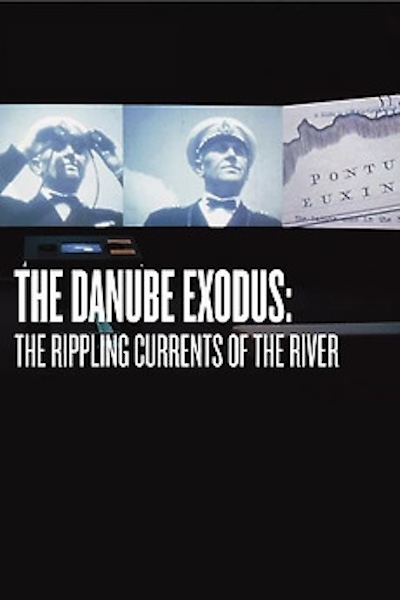
He is primarily interested in the way in which these films seem to depict only happy moments, but on closer consideration they also appear to tell a hidden history, which can be brought back to the surface by the recycling filmmaker.
In the travelogue The Danube Exodus, he documents the Jewish exodus from Slovakia just before the beginning of World War II. In two boats, a group of nine hundred Slovak, Austrian Jews tried to reach the Black Sea via the river Danube, in order to get to Palestine from there. Forgács based his film on the amateur films of Captain Nándor Andrásovits, the captain of one of the boats.
Read More »
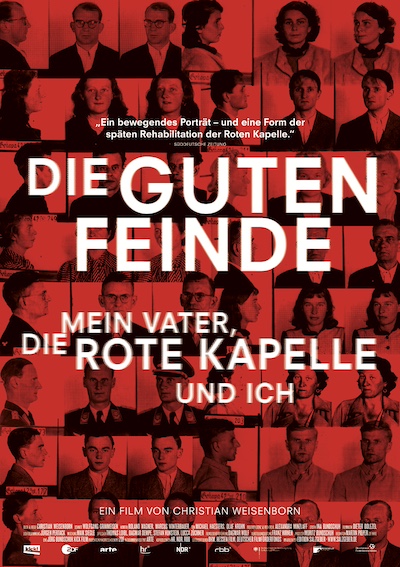
An intimate quest by a son to understand the identity of his father; a look back at the Berlin of the 30s and a special group of friends who loved life and, in the darkest hours of German history, ultimately chose good over evil.Read More »

PLOT: Fatma 75 is a pioneering film: it is the first non-fiction film by a Tunisian woman, a feminist essay-film, and the first in a series of powerful films about strong female figures in the country. The film was made in the UN International Women’s Year, 1975, and has long been recognised as one of the most important films from North Africa.Read More »