Documentary

  • Pier Paolo Pasolini – Appunti per un film sull’india AKA Notes for a Film on India (1968)

    Documentary1961-1970IndiaPier Paolo PasoliniShort Film
    Appunti per un film sull’india (1968)

    here’s very little about this film on the internet. Pasolini travels to India to make notes about a future film he planned on making. He examines differences between the modern India and the historical one found in its mythologies and vedic texts by posing a particular question based on a didactic anecdote that no longer seems to apply in a twentieth century world. This ‘prehistory’ forms most of the first part of the film. The second part covers a modern India marred by social divisions, overpopulation and poverty. Pasolini keeps his focus on the human tragedy involved at all times.Read More »
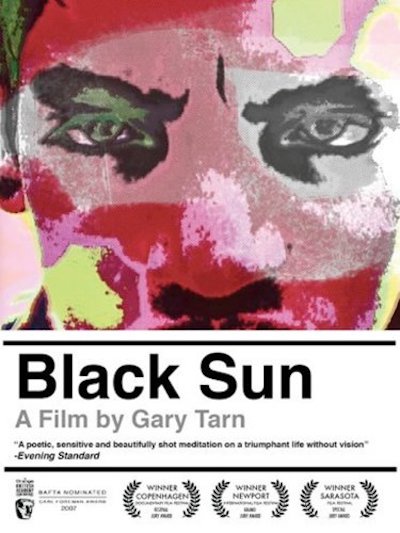
  • Gary Tarn – Black Sun (2005)

    2001-2010DocumentaryExperimentalGary TarnUnited Kingdom

    Quote:
    Black Sun tells the story of Hugues de Montalembert, a French artist and filmmaker living in New York, who was blinded during a violent assault in 1978.
    In telling the story of this unique man and his extraordinary reaction to a life-changing trauma, Tarn has created an expressionist film whose power lies in visualising a world from the perspective of the blind de Montalembert.
    Part- survivor’s testimony, part- philosophical meditation on the nature of perception, BLACK SUN is a celebration of life that makes us see the world anew.Read More »

  • Abel Ferrara – Mulberry St. (2010)

    2001-2010Abel FerraraDocumentaryUSA
    Mulberry St. (2010)

    Synopsis
    In this film, Bronx-born director Abel Ferrara energetically documents Manhattan’s Little Italy during the famed San Gennaro feast. As Ferrara explains, the feast “brings all the characters out.” He introduces viewers to Butchie the Hat, Cha Cha, Baby John, and others, who reminisce about the pre-Giuliani feast as prepare for the annual “invasion” of tourists. Actors and musicians including Danny Aiello and Matthew Modine make appearances.Read More »

  • Gerhard Benedikt Friedl – Hat Wolff von Amerongen Konkursdelikte begangen? aka Did Wolff von Amerongen Commit Bankruptcy Offenses? (2004)

    2001-2010DocumentaryExperimentalGerhard Benedikt FriedlGermany
    Hat Wolff von Amerongen Konkursdelikte begangen? (2004)

    Quote:
    The most remarkable discovery in recent German-language cinema: Gerhard Friedl’s first feature is a hypnotic visual puzzle at the interface of documentary, essay film and pulp fiction. On the soundtrack: an unflinchingly ‘objective’ account of the labyrinthine genealogies, criminal involvements and afflictions of Germany’s economic leaders in the 20th century. On the screen: pans and tracking shots through European financial centres, production sites and landscapes. Read More »

  • Ben Hopkins – 37 Uses For A Dead Sheep (2006)

    Arthouse2001-2010Ben HopkinsDocumentaryUnited Kingdom
    37 Uses For A Dead Sheep (2006)

    Portrait of the Kirghiz tribe, living a quasi-Iron Age existence in one of the remotest places on earth.

    37 Uses For A Dead Sheep is a documentary with a sense of humour. However, as he recounts the eventful history of Central Asian tribe the Pamir Kirghiz, director Ben Hopkins stays on the right side of Borat-style ethnic mockery, treating his subjects with affection and esteem. He also turns a few of them into film stars in a range of reconstructions that entertainingly reveal the community’s journey over the last century or so.Read More »

  • Ingo Niermann & Erick Niedling – The Future of Art (2011)

    2011-2020ArthouseDocumentaryGermanyIngo Niermann and Erick Niedling
    The Future of Art (2011)

    A film that came with a book in the same name, The Future of Art; A manual.
    The film contains documentary and interviews on acclaimed artists about the direction of art towards the future.Read More »

  • Nicolas Philibert – Le Pays des sourds AKA Land of the Deaf (1992)

    1991-2000DocumentaryFranceNicolas Philibert
    Le pays des sourds (1992)

    IMDB –
    “I saw this lovely documentary once, some ten years ago, and found it most rewarding. Its tone was dignified and understated, having a gently moving cumulative effect. The most salient impression I had of the film’s subjects was how expressive they were with their faces and bodies in revealing their emotions and thoughts. As a cinephile, I could not help but think of the vanished acting styles of silent cinema, of how so much had to be conveyed through purely visual means, and of how comparatively impoverished, from a visual viewpoint, so much modern cinema is. Read More »

  • Jean-Pierre Limosin – Abbas Kiarostami – Verités et songes (1994)

    1991-2000Abbas KiarostamiArthouseDocumentaryFranceJean-Pierre Limosin

    29f7c043f76a2bde437fd0d52a185152

    Description: This documentary by French director Jean-Pierre Limosin is the first Spanish edition of the renowned “Cinéma, de notre temps” series. In this episode, Abbas Kiarostami talks about his life and work. Summarising his approach to filmaking, Kiarostami said:

    “A filmmaker has to be conscious about his responsibility. I always wish to remind the audience that they are watching a film. You see, it is very dangerous to make the audience more emotionally engaged than they need to be. In the darkness of the cinema, people are so innocent. It makes them feel that everything is closer and stronger. That is why we should not make them even more emotional: People need to think when they watch films, not to be robbed of their reason … I make half movies. The rest is up to the audience to create for themselves.”Read More »

  • Rupert and Ulrike Pöschl – Vimbuza Chilopa (1991)

    1991-2000DocumentaryGermanyRupert and Ulrike Pösch
    Vimbuza Chilopa (1991)

    “Shows different healing ceremonies among the Tumbuka of Malawi, who attribute illness (vimbuza) to spirit possession. Documents nightlong exorcism rituals of singing, clapping, and drumming during a full moon, culminating in an animal sacrifice (chilopa) at dawn. Portrays the interaction of patients, healers, and village community, and includes an interview with a patient”Read More »

Back to top button