Quote: A teen-movie documentary, Swagger carries us in the midst of the astonishing minds of eleven teenagers growing up in one of the most underprivileged neighborhood in France. Despite their life difficulties, Aulnay’s and Sevran’s kids have dreams and ambitions. And no one will take that from them!Read More »
In 1939, the author Annemarie Schwarzenbach and the ethnologist Ella Maillart travel together by car to Kabul, but each is in pursuit of her own project. Annemarie Schwarzenbach, who was among Erika and Klaus Mann’s circle of friends in the 30s, is searching for a place of refuge in the Near East to discover her own self. Ella Maillart justifies her restlessness, her need for movement and travel, with a scientific pretext: she would like to explore the mysterious Kafiristan Valley and make a name for herself with publications on the archaic life of the nomads living there. Both women are on the run, but political developments and their own biographies catch up with them again and again. Their mutual journey through the outside world, which runs from Geneva via the Balkans and Turkey to Persia, is compounded by the inner world of emotions with a tender love story.Read More »
Synopsis Kazuo Hara follows Ayumi Yasutomi, a transgender candidate, who is also a Tokyo University professor, as she embarks on a national campaign for a seat in Japan’s Upper House.Read More »
From the New York Times “This humorous and informative documentary traces the history of cinematic pornography back to the 1915 stag film “The Free Ride.” Sexual attitudes of society have been carefully researched and explained as films from World War up to and including the year 1970 are examined. Stripper Candy Barr is shown in the classic “Smart Alec”, and the mild peep shows of the 1940s and 1950s are examined. All events lead up to the late 1960s where censorship laws were successfully challenged in the courts. The last half hour is a shameless promotion of director Alex de Renzy’s current blue movies and adds nothing to the historical perspective of the feature. Color process is not credited, but few porn films before the 1960s were filmed in color. ~ Dan Pavlides”Read More »
Quote: Based on the personal recollections of Danish film journalist Christian Braad Thomsen, Fassbinder: To Love Without Demands is an episodic but thorough examination of the man and his works. Starting with the terrible reception of his first feature film Love Is Colder Than Death at the 1969 Berlin Film Festival, the bio-doc builds through photographs, stills, audio recordings and filmed interviews a portrait of Rainer Werner Fassbinder, his loose but consuming relationships with his family and the extended families he created around him. [MARK WILSHIN, Dog and Wolf]Read More »
Quote: A historical analysis of how groups such as the Nazi’s may use language, symbols, and religious connotation in order to come to power. It raises questions that deserve in depth analysis and consideration. Questions include: Where do legends expand our thinking and where do they bury it? When does spiritual pursuit suddenly turn into fanaticism and violence? Last, have we as a society learned from our past, and if so have forgotten the lessons of the 20th Century? Are we now embarking on a new level only to learn the same old lessons about humanity again? In addressing these questions we are taken into the back drop of the history of Germany beginning in the late 1800’s through the late 20th Century at the eve of the 21st. “A society that does not take archetypes, myths, and symbols seriously will possibly be jumped by them from behind.”Read More »
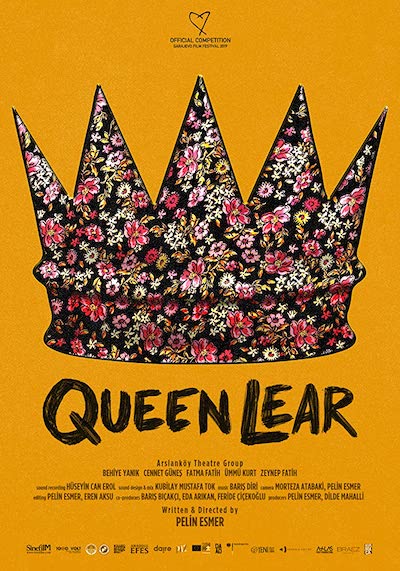
Quote: Shakespeare’s ‘King Lear’ travelling on the dusty and risky roads to the remotest forgotten villages in the mountains of Turkey where even drinking water can hardly reach, turns delicately into ‘Queen Lear’ in the hands of a peasant-women theatre group.
In the early 2000s, a handful of peasant women from the mountains of southern Turkey formed a theater group, which later became the subject of the documentary, The Play. The women acted out their own life stories in the village, and the play changed their lives. Now, they take to the road with an adaptation of Shakespeare’s King Lear, traveling the dusty, dangerous roads to the farthest-flung mountain villages where there isn’t even running water. On the road, their lives merge with the world of King Lear and become bound up with “the good and the bad”, “the young and the old”, “the rich and the poor”, “the honest and the dishonest” of the play.Read More »
PLOT: Béla Tarr’s first full length film is a bleak indictment of communist housing policy; A young couple and their daughter are forced to live with the husband’s family in a tiny flat in which tempers frequently flare. The close camera work and grainy documentary style capture the claustrophobia and indignity of life at close quarters with those you don’t like; the father-in-law is a malevolent Iago-esquire figure, forever whispering conspiracies to his son. The couple are desperate to leave, but, as their meetings with the government officials show, there is no prospect of escape for years to come; This is despite many usable flats standing empty, unused for bureaucratic reasons.. We learn more of the characters as the second half of the film effectively becomes a series of monologues, which further convey what a bleak place 1970’s Hungary was.Read More »