One of Jem Cohens first films (his third), conducted on Super 8 camera in 1987-88, consisting of impressionistic shots of urban development and decay. An impressive short piece (not least considering its year of production!) pointing ahead to his masterful ‘Lost book found’.Read More »
Arthouse
-
Jem Cohen – This Is a History of New York (1987)
1951-1960ArthouseDocumentaryJem CohenUSA -
Ryuichi Hiroki – Futei no kisetsu AKA I Am an S+M Writer (2000)
1991-2000ArthouseEroticaJapanSynopsis:
A writer draws inspiration for his erotic stories from vivid bondage scenes performed right in front of his writing desk. Still, he prefers to novelize his fascination rather than participate actively. As a consequence, the already ambivalent relation with his wife turns into an intriguing reflection of himself. HIROKI’s growth as a director is evident when he subordinates apparent obscenities to mildly humorous romance, employing his background as a pinku director to create a highly dramatic effect.Read More » -
Eryk Rocha – Cinema Novo (2016)
2011-2020ArthouseBrazilDocumentaryEryk Rocha

Synopsis:
Cinema Novo is a movie-essay that investigates poetically the most important movement of Latin America cinema, through the thoughts of its main auteurs: Nelson Pereira dos Santos, Glauber Rocha, Leon Hirszman, Joaquim Pedro de Andrade, Ruy Guerra, Walter Lima Jr., Paulo César Saraceni, among others.Read More » -
Emir Kusturica – On the Milky Road (2016)
2011-2020ArthouseEmir KusturicaFantasySerbiaQuote:
Spring in wartime. Each day a milkman crosses the frontline on a donkey, dodging bullets to bring his precious wares to the soldiers. Blessed with good fortune on his mission, loved by a beautiful villager, a peaceful future seems to await him… until the arrival of a mysterious Italian woman turns his life upside down. Thus begins a story of passionate, forbidden love that will plunge them both into a series of fantastic and dangerous adventures. They have been joined by fate, and nothing and no one seems able to stop them… Two-times Palme D’Or winner Emir Kusturica directs and stars in this story of love and war, rich in emotion, comedy and adventure.Read More » -
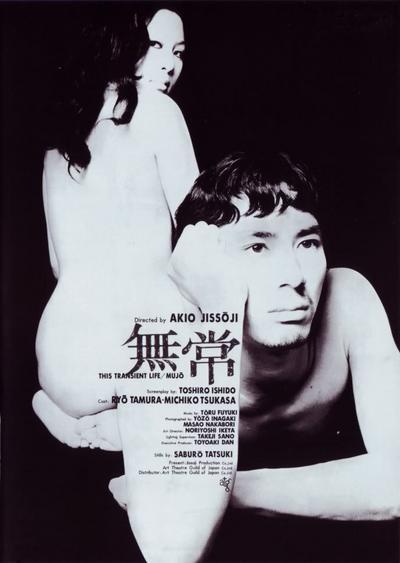
Akio Jissôji – Mujô AKA This Transient Life (1970)
1961-1970Akio JissojiArthouseJapanPhilosophyQuote:
One of the recurrent themes of the Art Theatre Guild (ATG)’s films of the 60s and early 70s was incest. In Funeral Procession of Roses (Bara No Soretsu, 1968) Toshio Matsumoto told a modern version of the Oedipus tale, transplanting the story into the gay subculture of present-day Tokyo. The hero of Susumu Hani’s The Inferno of First Love (Hatsukoi Jigokuhen, 1968) suffers from the sexual abuse of his stepfather. In Yoshishige Yoshida’s Heroic Purgatory (Rengoku Eroica, 1970) a young girl who creeps into the life of a scientist and his wife pretending to be their daughter seduces her alleged father. The family head in Nagisa Oshima’s masterful critique of the patriarchic family, The Ceremony (Gishiki, 1971), rapes his son’s bride. In Masahiro Shinoda’s Himiko (1974) the prehistoric shaman empress of Japan falls in love with her brother and is killed by ruthless elders who can no longer exercise control over her. In Kazuo Kuroki’s Preparations for the Festival (Matsuri No Junbi, 1975) the disabled Kikuo is sexually comforted by his mother, and in Shuji Terayama’s Pastoral: To Die in the Country (Den’en Ni Shisu, 1974), the story of a boy who tries to escape his mother, incest is omnipresent.Read More » -
Various director / artists – Kunst im Exil AKA Arts in Exile (1962-1989)
ArthouseExperimentalGermanyVariousNine short stories that together amount to a play time of 3h20m.
Presented here are nine short films that feature: film director Slatan Dudow; actor Martin Brandt; authors Erich Fried, Erich Weinert, and Arnold Zweig; photographer Walter Ballhause; cartoonist Leo Haas; and journalist Egon Erwin Kisch. Original interviews with the artists, close family members, and friends are combined with little-known historic film material. All produced in the GDR.Read More »
-
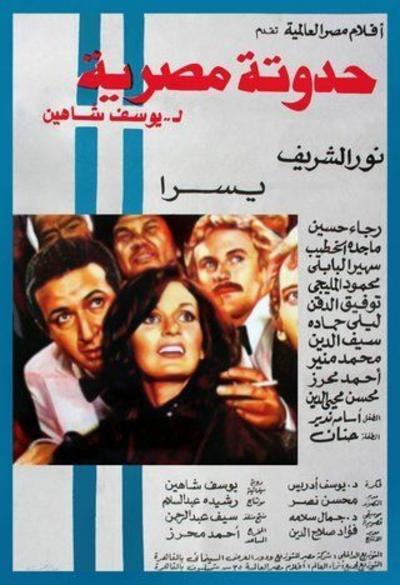
Youssef Chahine – Hadduta misrija AKA An Egyptian Story (1982)
1981-1990ArthouseDramaEgyptYoussef ChahineBoldly blending personal and political histories, intercutting its fast-moving fictional scenes with documentary footage, this sort of sequel to Alexandria – Why? follows the fortunes of Chahine’s charismatic film-maker hero and alter ego, forced to review his past and learn to love himself by a critical open-heart operation. The occasionally clumsy central conceit – Yehia/Chahine standing trial for his life during surgery – is amply offset by the energy and style of this indulgent, exuberant, and immensely likeable self-portrait.Read More »
-
Júlio Bressane – Garoto (2015)
2011-2020ArthouseBrazilJúlio BressaneRomanceA girl, a boy, a murder, some great landscapes, the sound of wind. Like a young couple on the lam film shot by Straub/Huillet. It achieves a beauty few films can.
Quote:
Boy meets girl at the end of the world. Once again, Julio Bressane stages the beginning of life itself as a stylized and dysfunctional yet mysteriously minnellian dance. O Garoto, element of the collective project Telha brilhadora, that comprises also O prefeito by Bruno Safadi, O espelho by Rodrigo Lima and Origem do mundo by Moa Batsow, is a film that has at its core a mischievous insurgent sexual energy that bristles and sparks relentlessly poetic hybris. Those who are not familiar with Bressane’s work may be puzzled by the minimalistic approach and its reiterative patterns, but it is obvious that O Garoto (The Kid) is just a different kind of educaçao sentimentalRead More » -
Peter Greenaway – Drowning by Numbers (1988)
1981-1990ArthouseDramaPeter GreenawayUnited Kingdom
Quote:
Following his pair of despairing urban studies, A Zed and Two Noughts and The Belly of an Architect, director Peter Greenaway turned to the sardonic countryside of The Draughtsman’s Contract for another tongue-in-cheek murder yarn, Drowning by Numbers. Easily his most playful film in every sense of the term, this tricky and often charming film boasts some of his wittiest dialogue and makes for an ideal introduction for newcomers compared to his more experimental works.Read More »