

SYNOPSIS
1947 Cairo. Washerwoman Lavandiere dreams of escaping reality through movies. A charming organ grinder offers excitement, but a cholera outbreak threatens her son. Desperate, she fights to save him.Read More »
SYNOPSIS
1947 Cairo. Washerwoman Lavandiere dreams of escaping reality through movies. A charming organ grinder offers excitement, but a cholera outbreak threatens her son. Desperate, she fights to save him.Read More »

Plot: The mayor of a small village invents a fictional character called ‘Rajeh’ which he claims he fights on the outskirts of the village. But some people question the mayor’s stories and call him a bluffer. He admits to his niece, Rima, the truth. He made it all up. Fadlou and Eed carry on a number of crimes and blame Rajeh for it. It’s the time for the annual singles festival where males and females still unmarried get engaged, and it’s when Rajeh appears. People start getting scared forming community watches looking for Rajeh.Read More »

Youssef Chahine directed this drama about lovers struggling to find happiness in Egypt during the chaos of World War II. Yehia (Mohsen Mohiedine) is a teenage boy who is fascinated with the glamour of Hollywood movies, and he escapes into a rich fantasy world to free himself from the horror around him. But as he learns more about the horrors of the Nazi occupation of Europe, it becomes harder for him to ignore life’s grim realities, especially after he falls in love with a local girl. Meanwhile, a Jewish woman living nearby becomes involved with a man who is Muslim, and a gay soldier from England has an affair with a wealthy Arab. Iskanderija … Lih? was followed by two sequels, Hadota Misreya and Iskindiriah Kaman Oue Kaman.Read More »
Quote:
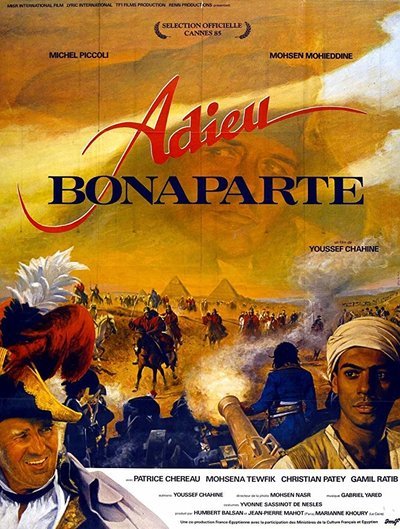
In 1798, Napoleon lands his army in Egypt, defeats the Mameluke warlords (the remnants of Ottoman rule), and goes on to Cairo. Three brothers, who are Egyptian patriots, chafe under Mameluke rule and reject the prospect of French domination. Bakr, the eldest, is a hothead, quick to advocate armed rebellion; Ali is more philosophical and poetic; Yehia is young and impressionable. One of Napoleon’s generals, the one-legged intellectual Caffarelli, wants to make Frenchmen out of Ali, Yehia, and other Egyptians, opening a bakery where their father works, becoming a tutor, and declaring his love for them. Is tragedy the only resolution of these conflicting loyalties?Read More »

The last film in Youssef Chahine’s autobiographical Alexandria Trilogy stars Chahine himself as his cinematic alter ego, Yehia Mourad, completing his merging of fiction with real life and drama with psychodrama. Opening with Chahine’s triumph at the Berlin Film Festival, where he took home the Silver Bear for Alexandria…Why? (the first film in the trilogy–this is layered stuff), the film explores Yehia’s obsession with his young star, Amir (Amr Abdel-Guelil), while participating in the general strike of 1987. As Yehia fantasizes about the films they would make together (one of them looks like a loony take on Jesus Christ Superstar), he elevates Amir from a kind of adopted son to cinematic messiah. But while caught up in the strike, Yehia becomes enchanted by a former actress, Nadia (Yousra), turned dedicated revolutionary, and he decides to cast her in his next feature.Read More »

Quote:
During the Second and Third Crusades, Saladin beat the Franks in battle partly because he was helped by an Arab Christian named Issan. Thus he was able to reconquer Jerusalem and take many prisoners, including Guy de Lusignan, a Christian King.
This big budget production, promoted by Assia, a well-known female producer, enabled Chahine to offer an Arab perspective on the history of the Crusades such as presented by Hollywood and Cinecittà. In order to obtain Egyptian army’s logistical support and also administrative clearances, Chahine cunningly persuaded Nasser, the charismatic ruler of Egypt, that the film was being made as a tribute to him.Read More »

This film can be considered one of the world’s best movies, actually it was chosen on top of the best 100 movies in Egypt. The movie is adopted from a novel written by Abdel Rahman El Sharkawi and was directed by Youssef Shahin. Abdel Rahman El Sharkawi is a well known novelist and play-writer, in fact he’s much more recognized for the plays he wrote. The movie “El-Ard” was produced in 1969, which falls inn a very important period of time in the Egyptian history, at this time the Egyptian ideology was being restructured. As for the film itself, I would start by the choice of actors, when you think of the actors that were in Egypt at that time, you can’t find a replacement for any of the actors in the movie, and you feel that no one else can play in any of the roles. I would start by the Great actor Mahmoud El-Meliguy. Read More »

I have watched this movie maybe 20 times till now ,and every time i got out with the feeling that this movie is great , it gives you a great picture about Egypt before 1952 , The land owner that control the farmers (Basha) and treat them like salves , the killing circle (Al-Tar) that is well known in upper Egypt , and the love story that will never change with time , and the evil and greedy people that never get enough , it is all in this movies. The uncountable number of stars with a very talented director gave us this state of art movie. (islamx – IMDB).Read More »
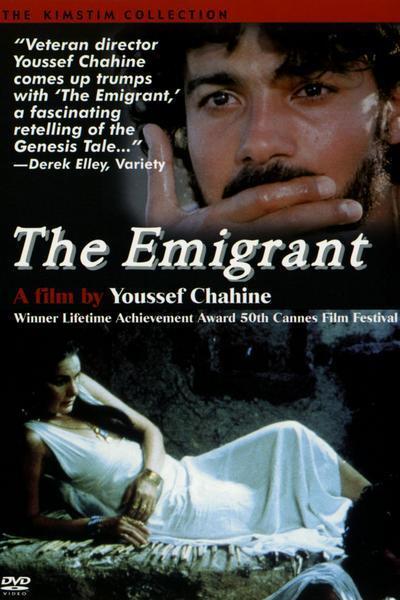
The biblical tale of Joseph is told from an Egyptian perspective in this interesting character study. In this film, Joseph is called Ram. Ram, tired of his family’s backward superstitious life, and tired of being picked on by his brothers, wants to go to Egypt to study agriculture. His brothers travel with him across Sinai, but then suddenly sell him to Ozir, an Egyptian who works for a Theban military leader, Amihar. Amihar is impressed by Ram’s drive and personal charm and so grants Ram some desolate land outside the capital. Ram soon finds himself a pawn in the political and sexual games between Amihar and his wife Simihit, a high priestess of the Cult of Amun.Read More »