Arthouse

  • Mario O’Hara – Tatlong taong walang Diyos aka Three Godless Years (1976)

    1971-1980ArthouseMario O'HaraPhilippines

    29f7c043f76a2bde437fd0d52a185152

    Quote:
    What makes Tatlong Taong Walang Diyos (Three Years without God), about the Japanese Occupation of the Philippines during World War II, such a great film? O’Hara’s style is thrillingly simple: each scene begins and ends like any other scene in a well-shaped drama. But there’s a quiet undercurrent that builds, sequence upon sequence, with the smoothness and power of a rising tsunami, until it pulls your feet out from under you, breaking high over your head, overwhelming you.Read More »

  • Konstantin Lopushansky – Pisma myortvogo cheloveka AKA Letters from a Dead Man (1986)

    1981-1990ArthouseKonstantin LopushanskySci-FiUSSR

    Quote:
    Letters from a Dead Man is another film that deals with the theme of the nuclear nightmare. It falls into a mini-genre of nuclear holocaust film along with others such as On the Beach (1959), Dr Strangelove or, How I learned to Stop Worrying and Love the Bomb (1964), Fail-Safe (1964), The War Game (1965) et al. But what makes Letters from a Dead Man unique in this case is that the treatment is one that comes from the opposite side of the Iron Curtain. Every single other treatment of the nuclear holocaust theme was made in the West and comes based on the speculation (or at least implication) of what would happen if the bombs falling were coming from the Soviet side; this is one which shows everything from the other perspective. In both cases though, the films are almost identical in their treatment of the subject matter and are certainly agreed upon what an horrific experience the nuclear holocaust would be.Read More »

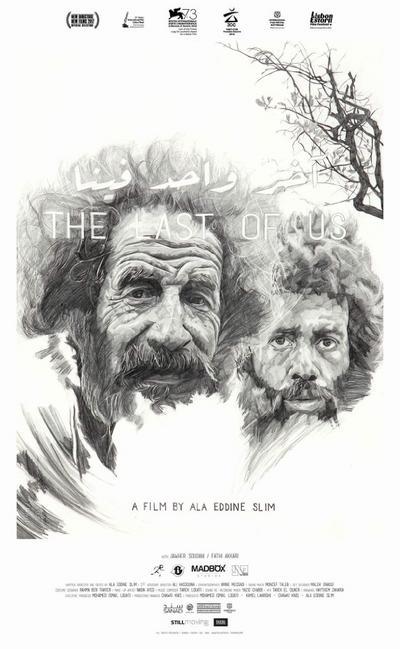
  • Ala Eddine Slim – Akher Wahed Fina AKA The Last of Us (2016)

    2011-2020Ala Eddine SlimArthouseSilentTunisia

    29f7c043f76a2bde437fd0d52a185152

    With no dialogue, The Last of Us tracks a Sub-Saharan man through the desert to North Africa where he steals a boat. When it breaks down in the middle of the sea, he begins an imaginary surrealistic odyssey where he meets an older man, who might be an altered version of himself, and, in a wild landscape, rediscovers his relationship with primary nature. “A philosophical fable on being lost” (Giona Nazzaro).

    Awarded with the Lion Of the Future in the 73rd Venice Film Festival (2016)Read More »

  • Laila Pakalnina – Ausma aka Dawn (2015)

    2011-2020ArthouseDramaLaila PakalninaLatvia

    29f7c043f76a2bde437fd0d52a185152

    From the IMDB:
    Propaganda story about a ‘Young Pioneer’ Pavel Morozov, who denounced his father to Stalin’s secret police and was in turn killed by his own family.Read More »

  • Theodoros Angelopoulos – O Melissokomos AKA The Beekeeper (1986)

    1981-1990ArthouseDramaGreeceTheodoros Angelopoulos

    29f7c043f76a2bde437fd0d52a185152

    Acquarello wrote:
    The Beekeeper opens to a static shot of an extended dinner table festively covered with a white tablecloth and ornamented with rose petals that is sitting empty at the center of the courtyard in the rain, as the sound of Spyros’ (Marcello Mastroianni) affectionate voice is heard recounting to his young daughter the natural selection process of bees that culminates in the majestic queen’s dance. The guests have retreated indoors for what is revealed to be the wedding reception of Spyros’ daughter – now a grown woman – in the family home. From the onset, the middle-aged schoolteacher’s profound disconnection is immediately palpable as he shares a prolonged, uncomfortable silence with his wife (Jenny Roussea) while picking up shards of broken glass from an overturned tray of wine glasses. Dispirited by his inevitable separation from his beloved daughter, Spyros separates from his wife and embarks on his forefathers’ traditional vocation of apiculture. Traveling southward with his bees on an instinctual springtime migration, Spyros encounters a young hitchhiker (Nadia Mourouzi) who, abandoned on a rural truck stop, insinuates herself on the resigned and acquiescent Spyros through intermittent points on his indeterminate journey. Estranged from an unfamiliar modern world where his generation has become a historically incidental relic, Spyros attempts to reconnect with humanity through the promiscuous and rootless young woman and, in the process, retreats further into the solitude of his dying avocation.Read More »

  • Irina Poplavskaya & Sergei Yutkevich – Dzhamilya AKA Jamilya (1969)

    1961-1970ArthouseDramaIrina Poplavskaya and Sergei YutkevichSergei YutkevichUSSR

    29f7c043f76a2bde437fd0d52a185152

    The film is based on the story of the same name by Soviet writer Chinghiz Aitmatov. It is set in a remote Kirghiz village during the Great Patriotic War (1941-1945). A young wife of a soldier, Djamilya, fell in love with Daniar, a wounded war veteran living in her village. Daniar reciprocates her feelings. But suddenly Djamilya receives a letter from her husband with the news of his forthcoming return from the hospital. This forces the lovers to make a final decision. Years later, their young friend, Seid, who was a witness to their beautiful, albeit uneasy, love, reminisces about this wonderful couple…Read More »

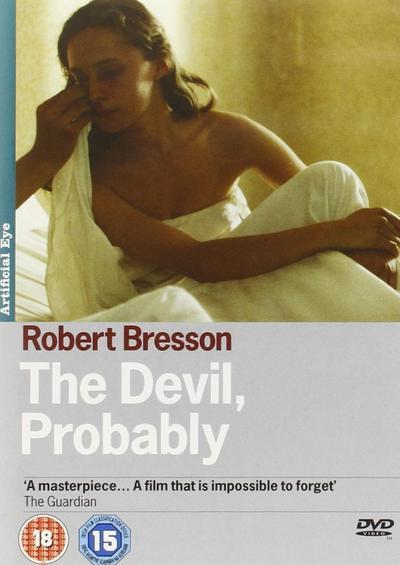
  • Robert Bresson – Le Diable Probablement AKA The Devil, Probably (1977)

    1971-1980ArthouseDramaItalyRobert Bresson

    29f7c043f76a2bde437fd0d52a185152

    Quote:
    Having largely focused on literary adaptations from 1951’s Diary of a Country Priest through 1974’s Lancelot du Lac, Robert Bresson turned his attention to the politics of the present with this seminal, searing send-up of post-’68 France. Our protagonist is Charles, a young man adrift who tries out a variety of activities to lend meaning to his life: drugs, psychoanalysis, ecology, radical politics… With surgical precision (and, contrary to his reputation, a sense of humor), Bresson vividly chronicles how Charles and his similarly listless fellow travelers come to know firsthand the emptiness of modern existence, and the question becomes not so much how to cope but rather how to escape. Perhaps Bresson’s most explicitly political film, and among the most chilling cinematic portraits of a historical moment.Read More »

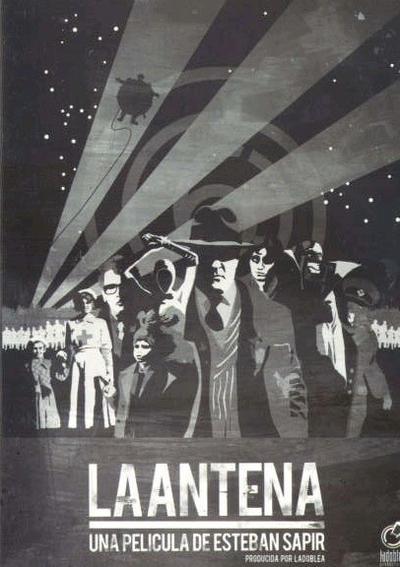
  • Esteban Sapir – La antena AKA The Aerial (2007)

    2001-2010ArgentinaArthouseEsteban SapirExperimental

    29f7c043f76a2bde437fd0d52a185152

    Quote:
    An impressive example of the vitality and the formal potential of silent cinema, the long-awaited second feature by Esteban Sapir is also welcome proof of the continuing attraction it has for contemporary film makers. Inspired by the cinema of Murnau and Lang, of Eisenstein and Vertov, La Antena is nevertheless a very modern film. Not only in the theme – monopolisation, consumerism, cultural dulling – is there talk of an update, also the form, the editing and the techniques used reveal that La Antena is a film of our own time. Read More »

  • Jean Pierre Lefebvre – Le vieux pays où Rimbaud est mort AKA The Old Country Where Rimbaud Died (1977)

    1971-1980ArthouseCanadaDramaJean Pierre Lefebvre

    29f7c043f76a2bde437fd0d52a185152

    Quote:
    Forty-year old Abel travels to France from Quebec on a pilgrimage to explore the mother country and the land of his ancestors. As he travels around and does all the things tourists are supposed to do, his expectations and perceptions are shattered and he is forced to revise his romanticized image of France. As he travels to see the places where Rimbaud was born, lived, and died, he meets two women who show him the warmth and kindness he was searching for.Read More »

Back to top button