1931-1940

  • Alfred Hitchcock – The 39 Steps [+commentary] (1935)

    1931-1940Alfred HitchcockMysteryThrillerUSA

    29f7c043f76a2bde437fd0d52a185152

    Quote:
    Fresh, funny, and filled with typically Hitchcockian suspense, The 39 Steps fully demonstrates the director’s unshaken status as a cinematic master. Based on the 1915 novel by John Buchan, this quickly paced adaptation follows Richard Hannay (played by the sublime Robert Donat) through one dangerous adventure after another and simultaneously tracks his romantic relationship with Pamela (Madeleine Carroll).

    Like many Hitchcock characters, Hannay is singled out for no apparent reason, wrongly accused of a crime, and caught up in a world of intrigue and danger. It slowly dawns on Hannay that he is among such diabolical forces, and that he must struggle to survive. This scenario often recurs in the director’s work, notably in Strangers on a Train, The Wrong Man, Vertigo, North by Northwest, and The Man Who Knew Too Much (both versions). Through this theme of “the wrong man,” Hitchcock meditates on the issue of human identity and the related issue, in film, of human distinctiveness. He, also through this theme, contemplates what it means to be thrown into the world of a Hitchcock film. Death and exposure to being viewed are among the consequences, or risks, that human beings (characters, actors) face in his universe.Read More »

  • W.S. Van Dyke – Never the Twain Shall Meet (1931)

    1931-1940ClassicsDramaUSAW.S. Van Dyke

    29f7c043f76a2bde437fd0d52a185152

    Plot/Description: from IMDB

    Dan works for Pritchard and Pritchard out of San Francisco and is in love with Maisie, referred to as “the icebox” by his news reporter friend. As one of his ships returns to San Francisco, Dan learns that the Captain has contracted Leprosy and asks Dan to be the guardian of his South Sea island daughter Tamea. Dan soon learns that Tamea wants him and will do nothing without a kiss. But Tamea soon learns that she is different than Dan and Maisie and that makes her angry. Dan decides to go and live on the island with Tamea, but soon finds out that Paradise is not everything that he thought it was.Read More »

  • William A. Wellman – The Public Enemy (1931)

    1931-1940CrimeFilm NoirUSAWilliam A. Wellman

    29f7c043f76a2bde437fd0d52a185152

    Quote:
    A young hoodlum rises up through the ranks of the Chicago underworld, even as a gangster’s accidental death threatens to spark a bloody mob war.Read More »

  • Edmond T. Gréville – Remous AKA Whirlpool (1935)

    Drama1931-1940ClassicsEdmond T. GrévilleFrance

    29f7c043f76a2bde437fd0d52a185152

    Quote:
    The happiness of a newly-married couple, Henry and Jeannie Saint Clair, is shattered when the husband is made a paralytic in an automobile accident. The wife still loves him, although he is incapable of any physical love. She is slowly drawn into a short-lived affair with a handsome athlete, Robert Vanier. When the husband learns of the affair, he commits suicide. But the wife cannot forget him and she sends her lover away.Read More »

  • Valentin Vaala – Herää Helsinki! AKA Wake Up, Helsinki! (1939)

    1931-1940DocumentaryFinlandShort FilmValentin Vaala

    29f7c043f76a2bde437fd0d52a185152

    Quote:
    Impressionistic short documentary of the Helsinki morning at the end of 1930s with a poetic narration.Read More »

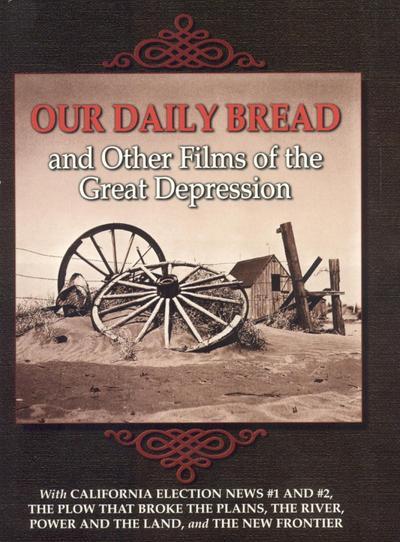
  • King Vidor – Our Daily Bread (1934)

    1931-1940ClassicsDramaKing VidorUSA

    Quote:
    “Back to the land!” To escape the massive urban unemployment of the Depression, John Sims and his wife Mary take President Franklin D. Roosevelt’s exhortation to heart and take over an uncle’s run-down farm. But it soon becomes clear that the two city-dwellers have taken on more than they can handle. When a landless farmer pitches in, John decides to gather more unemployed into the collective. Soon the arcadian farm is filled with tradesmen, farmers, and their families. Together, they fend off foreclosure and speculators. Until a drought threatens to destroy the harvest … King Vidor made one of the first films of the New Deal era with the intention of contrasting the glamour of Hollywood with the harsh realities of American life. In reference to real institutions such as Texas’ Woodlake Community, he created a conservative social utopia in the form of a collective based on faith and a barter economy. Denounced sometimes as communist, sometimes as fascist, Our Daily Bread glorifies, above all, the American work ethic. In the lyrical tradition of poet Walt Whitman, Vidor celebrates the power of the human body, on full display in the rhythmic choreography of the final scenes.Read More »

  • Luis Trenker – Der verlorene Sohn AKA The Prodigal Son (1934)

    1931-1940ClassicsDramaGermanyLuis TrenkerThird Reich Cinema

    Free Image Hosting at www.ImageShack.us

    29f7c043f76a2bde437fd0d52a185152

    Synopsis:
    “Mountain-film” specialist Luis Trenker plies his trade with his usual expertise in the Austrian Velorene Sohn (Prodigal Son). Trenker himself plays the leading role of Tonia Feuersinger, a Tyrolean mountaineer bound and determined to scale the American Rockies. He also wants to journey to the States to court pretty American tourist Lillian Williams (played by pretty American actress Marian Marsh). Leaving his broken-hearted local girlfriend (Maria Andergast) behind, Tonio treks to New York, but never quite makes it to the Rockies; instead, he gets a welding job on a skyscraper, then achieves success as a prizefighter. In the end, however, he realizes that his heart is still in the Tyrol and thus returns to the arms of his hometown sweetheart. Though aimed at the German-speaking clientele, Verlorene Sohn was financed in Hollywood by Universal Pictures.
    — allmovie.comRead More »

  • Michael Curtiz – Mandalay (1934)

    1931-1940ClassicsDramaMichael CurtizUSA

    29f7c043f76a2bde437fd0d52a185152

    Synopsis:
    Tanya, a Russian refugee, is hiding in Rangoon, Burma under the protection of her lover, Tony Evans, a gunrunner working for a weathly underworld leader named Nick. Nick wants to add Tanya to his stable of women in a decadent Rangoon club and intimidates Tony into turning her over to settle a debt. At first the abandoned Tanya refuses to cooperate with Nick, but eventually decides to beat him at his own game and uses sex to gain power. She becomes notorious for her affairs, is re-named “Spot White,” and by blackmailing a British officer, gets passage money out of Rangoon. On the boat to Mandalay, she meets formerly prestigious surgeon Gergory Burton who is now exiled in Burma because of his alcoholism, and they fall in love. Unfortunately, Tony has followed her, and in an attempt to escape the authorities, he frames her for what appears to be his murder. She is arrested, but before the boat docks, Tony comes to Tanya’s cabin and proposes that they open a club like Nick’s, with Tanya as “hostess.” Tanya, desperate to sever her past, poisons Tony, who falls overboard to his death. When they dock in Mandalay, the captain reports that stowaways saw Tony in the hold and it is presumed he escaped in a small boat. Tanya is freed, she confesses her crime to Gregory, and they pledge to start a new life togetherRead More »

  • Lothar Mendes – Jew Süss aka Power (1934)

    1931-1940DramaLothar MendesPoliticsUnited Kingdom

    29f7c043f76a2bde437fd0d52a185152

    Quote:
    Unlike the horrifically antisemitic 1940 Nazi propaganda film, Lothar Mendes’ adaptation of Lion Feuchtwanger’s book offers a fairly sympathetic depiction of a Jew (Conrad Veidt) who seeks political power in order to improve the plight of Germany’s Jewry. Despite some unpleasant stereotypes – Suss is scheming and ruthless – the film is ultimately on his side, and the ending is deeply moving.

    While films about the rise of fascism in Europe were hindered by censorship, producer Michael Balcon hoped that the scenes of racism would draw attention to the Nazi persecution of Jews, despite the 18th century setting. The scene in which a Jew is falsely accused of killing a Christian woman, to use her blood for Passover rituals (the notorious ‘blood libel’), is particularly disturbing. The film was a box-office success, although Observer critic CA Lejeune suggested that the money should have been spent on a feature about British industry rather than “a film about a little German municipality of 200 years ago”.Read More »

Back to top button