Synopsis:
Tanya, a Russian refugee, is hiding in Rangoon, Burma under the protection of her lover, Tony Evans, a gunrunner working for a weathly underworld leader named Nick. Nick wants to add Tanya to his stable of women in a decadent Rangoon club and intimidates Tony into turning her over to settle a debt. At first the abandoned Tanya refuses to cooperate with Nick, but eventually decides to beat him at his own game and uses sex to gain power. She becomes notorious for her affairs, is re-named “Spot White,” and by blackmailing a British officer, gets passage money out of Rangoon. On the boat to Mandalay, she meets formerly prestigious surgeon Gergory Burton who is now exiled in Burma because of his alcoholism, and they fall in love. Unfortunately, Tony has followed her, and in an attempt to escape the authorities, he frames her for what appears to be his murder. She is arrested, but before the boat docks, Tony comes to Tanya’s cabin and proposes that they open a club like Nick’s, with Tanya as “hostess.” Tanya, desperate to sever her past, poisons Tony, who falls overboard to his death. When they dock in Mandalay, the captain reports that stowaways saw Tony in the hold and it is presumed he escaped in a small boat. Tanya is freed, she confesses her crime to Gregory, and they pledge to start a new life togetherRead More »
1931-1940
-
Michael Curtiz – Mandalay (1934)
1931-1940ClassicsDramaMichael CurtizUSA -
Lothar Mendes – Jew Süss aka Power (1934)
1931-1940DramaLothar MendesPoliticsUnited KingdomQuote:
Unlike the horrifically antisemitic 1940 Nazi propaganda film, Lothar Mendes’ adaptation of Lion Feuchtwanger’s book offers a fairly sympathetic depiction of a Jew (Conrad Veidt) who seeks political power in order to improve the plight of Germany’s Jewry. Despite some unpleasant stereotypes – Suss is scheming and ruthless – the film is ultimately on his side, and the ending is deeply moving.While films about the rise of fascism in Europe were hindered by censorship, producer Michael Balcon hoped that the scenes of racism would draw attention to the Nazi persecution of Jews, despite the 18th century setting. The scene in which a Jew is falsely accused of killing a Christian woman, to use her blood for Passover rituals (the notorious ‘blood libel’), is particularly disturbing. The film was a box-office success, although Observer critic CA Lejeune suggested that the money should have been spent on a feature about British industry rather than “a film about a little German municipality of 200 years ago”.Read More »
-
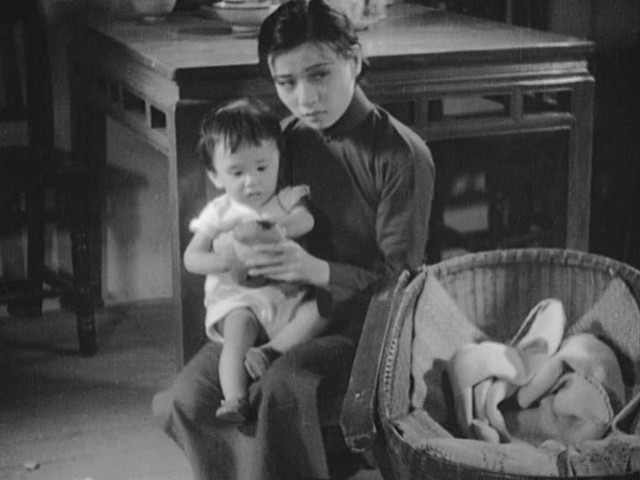
Yonggang Wu – Shen nu AKA The Goddess (1934)
1931-1940ChinaClassicsDramaYonggang WuQuote:
Ruan Lingyu, one of the most famous stars of early Chinese cinema, gives a devastating performance as an unnamed goddess an ironic euphemism for a prostitute in this profoundly moving but rarely seen classic of world cinema. A tragic tale of shame and maternal sacrifice, Ruan stars as a mother desperate to provide for her young son and forced to take brutal vengeance on her pimp. It is a profoundly moving drama, all the poignant by the fact that its star committed suicide at the age of 24, a year after the film’s release.Read More » -
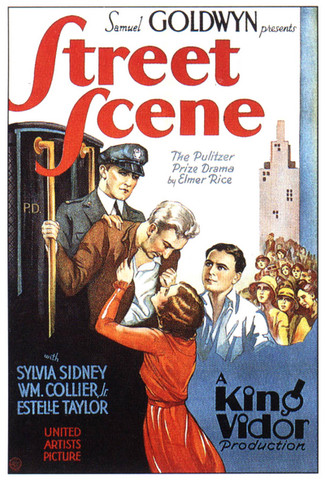
King Vidor – Street Scene (1931)
1931-1940ClassicsDramaKing VidorUSABased on the Pulitzer prize winning Broadway play, Street Scene is a study in the daily lives of people who communicate in a street and reside in the surrounding apartment complexes. Mrs. Murrant is dealing with issues of infidelity, Rose, her daughter is conflicted with her advancement in life and leaving the neighborhood, Rose’s father, a hard-working man who is never around, Sam Kaplan as a caring and concerned neighbor; and the rest of the idlers and gossipers that make up the rest of the street and the focus of their daily existence.Read More »
-
George Archainbaud – Thirteen Women (1932)
1931-1940DramaGeorge ArchainbaudMysteryUSASynopsis:
Thirteen women who were schoolmates send to a swami for their horoscopes. Little do they realize that Ursula, a half-breed Asian, is using her hypnotic powers over the swami and them to lead them or their families to their deaths. It seems that she too went to their school, but was forced to leave by their bigotry, and is exacting revenge. Will she be stopped in time to save Laura’s son, Bobby? Read More » -
Frank Borzage – No Greater Glory (1934)
1931-1940ClassicsDramaFrank BorzageUSASynopsis:
Adapted from The Paul Street Boys, an autobiographical novel by Ferenc Molnar, GLORY is an unusually sensitive evocation of the pain of youth and the senselessness of war. Frail Nemecsek, a lonely boy who yearns to belong, worships Boka, the self-sufficent, charismatic leader of a well-organized gang, decked out in uniforms and sporting their own flag. The perennial outsider sees his chance to win a respected place in Butler’s army when their flag is stolen and war breaks out with another gang.Read More » -
Fyodor Otsep – Amok (1934)
1931-1940DramaFranceFyodor OtsepSummary from wikipedia:
Quote:
Amok is a 1934 French film, directed by Fyodor Otsep. The director was nominated for the Mussolini Cup at the 1934 Venice International Film Festival. The movie centers on a physician, Dr. Holk, in a small Dutch colony in the tropics. A strange illness, known as Amok, is turning innocent people into madmen. When a young woman, Hèlène, comes to him asking for an abortion so that her returning husband will not know she has been unfaithful, he refuses. Hélène seeks help elsewhere, leading Dr. Holk to try to find and save her before it’s too late.Read More » -
Mikhail Slutsky – Imeni Lenina aka In the Name of Lenin (1932)
1931-1940DocumentaryMikhail SlutskyPoliticsUSSRIn the Name of Lenin is a 14 minute single subject ‘short’ (rather than a newsreel) produced by Soyuzkinozhurnal in 1932. It was directed by Mikhail Slutskii, a member of the new ‘Stalinist’ generation of film-makers, who had only recently graduated from film school in Moscow.Read More »
-
Teuvo Tulio – Laulu tulipunaisesta kukasta AKA Song of the Scarlet Flower (1938)
1931-1940ClassicsDramaFinlandTeuvo TulioSynopsis:
Song of the Scarlet Flower was Teuvo Tulio’s first independently produced film, and the earliest of his surviving films. The plot was about Olavi, a farmer’s son who leaves his home after a dispute with his father and leads a life of a womanizing logger.Read More »