1931-1940

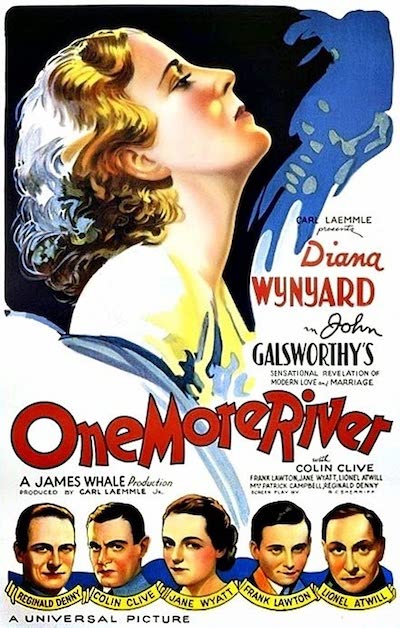
  • James Whale – One More River (1934)

    1931-1940DramaJames WhaleUSA

    A young lady leaves her brutal husband and is befriended by a smitten man aboard ship. The husband pursues her to her family home, treating her more like property, and refusing to grant her wish for divorce. Antiquated marital laws only allow for divorce if the wife commits adultery (which she did not, and does not want to do). So she’s in a Catch-22…Read More »

  • Frank Borzage – Strange Cargo (1940)

    1931-1940DramaFrank BorzageRomanceUSA

    29f7c043f76a2bde437fd0d52a185152

    Plot Synopsis by Hal Erickson
    “Strange” is right: this mystical MGM melodrama has to be the oddest of the studio’s Clark Gable-Joan Crawford vehicles. When eight prisoners escape from a New Guinea penal colony, they are picked up by a sloop commandeered by another escapee named Verne (Gable) and his trollop girl friend Julie (Joan Crawford). Among the fugitives is Cambreau (Ian Hunter), a soft-spoken, messianic character who has a profound effect on his comrades. One by one, the escapees abandon their evil purposes and find God-and a peaceful death–through the auspices of the Christlike Cambreau. The last to succumb to Cambreau’s ministrations is Verne, who agrees to return to return to the prison colony serve out his sentence if Julie will wait for him (which she does). A superb Franz Waxman score provides a touch of show-biz grandeur to this haunting fable.
    Read More »

  • Basil Dean – The Constant Nymph (1933)

    1931-1940Basil DeanDramaUnited Kingdom

    29f7c043f76a2bde437fd0d52a185152

    A married man leaves his wife for a teenage girl.

    The Constant Nymph is a 1933 British drama film directed by Basil Dean and Victoria Hopper, Brian Aherne and Leonora Corbett. It is an adaptation of the novel The Constant Nymph by Margaret Kennedy. Dean tried to persuade Novello to reprise his appearance from the 1928 silent version The Constant Nymph but was turned down and cast Aherne in the part instead.
    Read More »

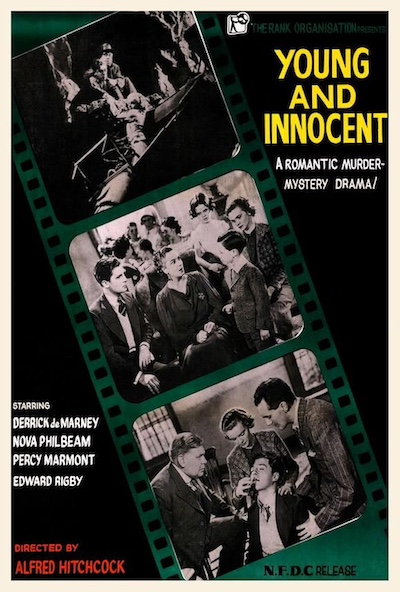
  • Alfred Hitchcock – Young and Innocent (1937)

    United Kingdom1931-1940Alfred HitchcockClassicsThriller
    Young and Innocent (1937)
    Young and Innocent (1937)

    Synopsis: As early as 1937’s Young and Innocent, Alfred Hitchcock was beginning to repeat himself, but audiences didn’t mind so long as they were thoroughly entertaining-which they were, without fail. Derrick De Marney finds himself in a 39 Steps situation when he is wrongly accused of murder. While a fugitive from the law, De Marney is helped by heroine Nova Pilbeam, who three years earlier had played the adolescent kidnap victim in Hitchcock’s The Man Who Knew Too Much. The obligatory “fish out of water” scene, in which the principals are briefly slowed down by a banal everyday event, occurs during a child’s birthday party. The actual villain, whose identity is never in doubt (Hitchcock made thrillers, not mysteries) is played by George Curzon, who suffers from a twitching eye. Curzon’s revelation during an elaborate nightclub sequence is a Hitchcockian tour de force, the sort of virtuoso sequence taken for granted in these days of flexible cameras and computer enhancement, but which in 1937 took a great deal of time, patience and talent to pull off. — Hal EricksonRead More »

  • Jean Grémillon – L’Étrange Monsieur Victor AKA Strange M. Victor (1938)

    1931-1940CrimeDramaFranceJean Grémillon

    29f7c043f76a2bde437fd0d52a185152

    Jonathan Rosenbaum wrote this :

    In his finest work, including this masterful 1938 noir, the remarkable French filmmaker Jean Gremillon (1901-1959), trained as a composer and musician, used mise en scene, script construction, editing, and dialogue delivery to explore the complex relationship between film and music.

    Raimu, one of the greatest French actors, plays the “strange” title hero, a respectable Toulon merchant who secretly operates as a fence for local thieves; after he murders a potential blackmailer, an innocent local shoemaker (Pierre Blanchar) is sent to prison for his crime.

    Seven years later the fall guy escapes, returns to Toulon to see his son, and, unaware of Victor’s guilt, persuades the merchant to shelter him, then becomes involved with his wife.
    Read More »
  • Mary Ellen Bute – Seven short films by Mary Ellen Bute (1934 – 1940)

    1931-1940AnimationExperimentalMary Ellen ButeUSA


    (From Wikipedia)
    Mary Ellen Bute (November 21, 1906 – October 17, 1983) was a pioneer film animator who did much of her work in visual music. She was one of the first female experimental filmmakers in the U.S. From 1934 until 1953, she made 14 short, musical abstract films, working in New York. Many of these were seen in regular U.S. movie theaters, such as Radio City Music Hall, often before a prestigious film. Several of her films were also called “Seeing Sound” films.Read More »

  • Aleksandr Dovzhenko – Aerograd (1935)

    1931-1940Aleksandr DovzhenkoClassicsDramaUSSR

    Quote:
    A Russian outpost in Eastern Siberia comes under threat of attack by the Japanese in this patriotic film from 1935. Aerograd is a new town with a strategically located airfield of vital interest to the government. Work on the new outpost is complicated when tensions develop between workers and a religious sect. The sect threatens to give their support to a band of marauding samurai warriors who battle for control of the region. Relations between the two countries are further strained in the days before World War II, dating back to the Russo-Japanese War of 1905. In this feature, the Russians are victorious as airplanes throughout the country come to the aid of the beleaguered new town. Director Alexander Dovzhenko, long considered a giant in Russian classic cinema, also wrote the screenplay for this feature.Read More »

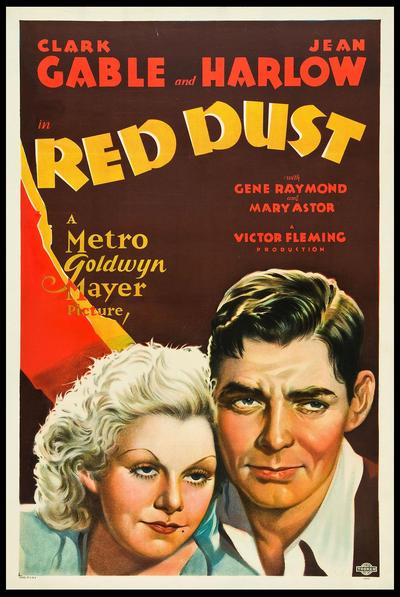
  • Victor Fleming – Red Dust (1932)

    1931-1940DramaRomanceUSAVictor Fleming

    29f7c043f76a2bde437fd0d52a185152

    Plot:
    Conditions are spartan on Dennis Carson’s Indochina rubber plantation during a dusty dry monsoon. The latest boat upriver brings Carson an unwelcome guest: Vantine, a floozy from Saigon, hoping to evade the police by a stay upcountry. But Carson, initially uninterested, soon succumbs to Vantine’s ostentatious charms…until the arrival of surveyor Gary Willis, ill with malaria, and his refined but sensuous wife Barbara. Now the rains begin, and passion flows like water…Read More »

  • Erle C. Kenton – You’re Telling Me! (1934)

    1931-1940ComedyErle C. KentonUSA

    29f7c043f76a2bde437fd0d52a185152

    Synopsis from Allmovie.com
    W.C. Fields stars in a remake of his silent comedy So’s Your Old Man. Fields plays Sam Bisbee, an erstwhile inventor who is the laughingstock of his small town. Returning in defeat from a disastrous big-city demonstration of his latest invention, Sam makes the acquaintance of a beautiful young woman (Adrienne Ames) who happens to be an incognito foreign princess. After Bisbee tells her of how he’d like to be a success for the sake of his family, the princess decides to use her celebrity to Sam’s benefit. She arrives in his town and lets it be known of her high regard for the downtrodden Bisbee. Suddenly Sam is the town’s big shot, enabling him to merchandise his inventions and do right by his wife and daughter. Sam earns the respect he’s so long deserved–but he’s never completely convinced that the princess is who she claims to be, and keeps congratulating her on her “racket.” Based on a story by Julian Street, You’re Telling Me is climaxed by a sidesplitting recreation of W.C. Fields’ Ziegfeld Follies golf routine. ~ Hal EricksonRead More »

Back to top button