1931-1940

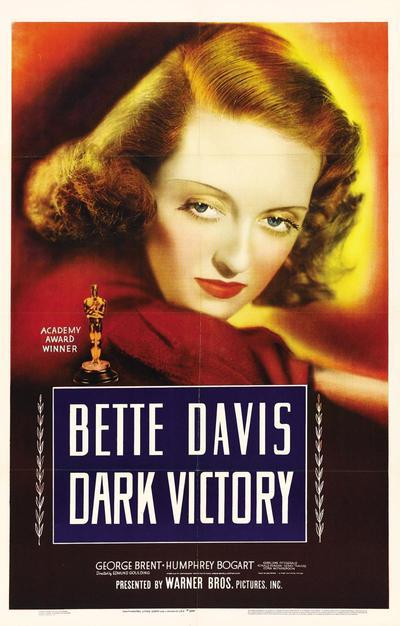
  • Edmund Goulding – Dark Victory (1939)

    1931-1940DramaEdmund GouldingRomanceUSA

    29f7c043f76a2bde437fd0d52a185152

    Quote:
    Judith Traherne is at the height of young society when Dr. Frederick Steele diagnoses a brain tumor. After surgery she falls in love with Steele. The doctor tells her secretary that the tumor will come back and eventually kill her. Learning this, Judith becomes manic and depressive. Her horse trainer Michael, who loves her, tells her to get as much out of life as she can. She marries Steele who intends to find a cure for her illness. As he goes off to a conference in New York failing eyesight indicates to Judith that she is dying.Read More »

  • Frank Tuttle – No Limit (1931)

    1931-1940ComedyDramaFrank TuttleUSA

    29f7c043f76a2bde437fd0d52a185152

    Theater usherette Bunny O’Day (Clara Bow) inadvertently becomes hostess of a private gambling den, and gets involved in a romance with a ne’er-do-well gambler.

    Review:
    Clara Bow, less boisterous than usual and all the more effective for her sobriety, may be seen at the Paramount this week in an extravaganza of New York life, called “No Limit,” many of the scenes for which were photographed here. This narrative of a poor working girl and her adventures in high gambling society never approaches plausibility, but it emerges as fair entertainment because of the excellent comedy provided by Stuart Erwin and Harry Green. Mr. Erwin contributes another of his clever comic performances in the role of a bashful suitor for Miss Bow’s hand, and the only regret is that a full half of the film has to struggle on without him.Read More »

  • Boris Ingster – Stranger on the Third Floor (1940)

    1931-1940Boris IngsterCrimeFilm NoirUSA

    29f7c043f76a2bde437fd0d52a185152

    Plot Synopsis: Though he doesn’t speak his first line of dialogue until the film’s final ten minutes, Peter Lorre spiritually dominates the fascinating RKO melodrama Stranger on the Third Floor. The plotline is carried by John McGuire, playing Ward, a newspaper reporter whose courtroom testimony sends the hapless Briggs (Elisha Cook Jr). to the death house. Ward is certain that he saw Briggs leaving the scene of a murder, but as the days pass, he is tortured by guilt and doubt — especially during the film’s surrealistic knockout of a nightmare sequence. When another murder is committed, Ward finds himself as much a victim of circumstantial evidence as the unfortunate Briggs. The reporter’s girlfriend (Margaret Tallichet) tries to clear Ward….and that’s when she first makes the acquaintance of Lorre, who is heard ordering a pound of raw meat! Stranger on the Third Floor was a “film noir” long prior to the genesis of that cinematic movement. Long ignored or trivialized by film historians, this 7-reel quickie has in recent years graduated to classic status.
    — Hal Erickson, AMGRead More »

  • William A. Seiter – Hired Wife (1940)

    1931-1940ComedyScrewball ComedyUSAWilliam A. Seiter

    29f7c043f76a2bde437fd0d52a185152

    Synopsis:
    Kendal Browning is a secretary in love with her boss, Stephen Dexter, a man who every spring succumbs to his weakness for blondes. Much to Kendal’s chagrin, Stephen’s current affliction is model Phyllis Walden. When Stephen’s cement company is threatened with a takeover by one of his competitors, Stephen’s attorney, Roger Van Horn, suggests that Stephen marry and put his assets in his wife’s name, thus averting the danger of takeover. Stephen foolishly dispatches Kendal to bring back Phyllis as his bride, but Kendal cleverly tenders Stephen’s proposal in such a way that Phyllis rejects him, thereby making Kendal Stephen’s bride by proxy. On their wedding night, Kendal confesses her deviousness to Stephen, who throws her out until he realizes that his new wife owns everything. Read More »

  • Jean Renoir – La Marseillaise (1938) (HD)

    1931-1940ArthouseFranceJean Renoir

    29f7c043f76a2bde437fd0d52a185152

    A news-reel like movie about early part of the French Revolution, shown from the eyes of individual people, citizens of Marseille, counts in German exile and, of course the king Louis XVI, showing their own small problems.

    Quote:
    “An heroic romanticized telling of the French Revolution of 1789.”
    Reviewed by Dennis Schwartz

    An heroic romanticized telling of the French Revolution of 1789. It covers the events beginning in 1789, when a constitutional monarchy was created after the storming of the Bastille. It leaves off in 1792, when the aristocracy led a counterrevolution that led to their overthrow and the citizen soldiers were last seen in battle with the invading Prussian army in the Battle of Valmy. It’s directed with great skill and feeling by Jean Renoir (“Whirlpool of Fate”/”Grand Illusion”/”The Rules of the Game”). This episodic epic (told in five chapters: The Court, The Civil and The Military Authorities, The Aristocrats, The Marseilles Locals, and The Ordinary Citizens), co-written with Renoir, Carl Koch and N. Martel-Dreyfus, comes with a cast of thousands dressed appropriately in period costumes. It effectively uses the director’s noted naturalistic style of filmmaking in its well-choreographed battles and chatty behind the scene political intrigues. Read More »
  • Frank Capra – Lady for a Day (1933)

    USA1931-1940ComedyFrank Capra

    29f7c043f76a2bde437fd0d52a185152

    Synopsis:
    Apple Annie is an indigent woman who has always written to her daughter in Spain that she is a member of New York’s high society. With her daughter suddenly en route to America with her new fiancé and his father, a member of Spain’s aristocracy, Annie must continue her pretense of wealth or the count will not give his blessing. She gets unexpected help from Dave the Dude, a well-known figure in underground circles who considers Annie his good luck charm, and who obtains for her a luxury apartment to entertain the visitors – but this uncharacteristic act of kindness from a man with a disreputable reputation arouses suspicions, leading to complications which further cause things to not always go quite as planned. Read More »

  • Roy William Neill – Black Moon (1934)

    1931-1940HorrorRoy William NeillThrillerUSA

    29f7c043f76a2bde437fd0d52a185152

    Plot Synopsis
    A white woman returns to the native island where she was raised with her young daughter and her husband’s secretary. In her youth, she was indoctrinated into the ways of voodoo and her returns sparks off a new wave of voodoo ritual and human sacrifices.

    Review from BlackHorrorMovies.com:

    In the 1930s and 1940s, it seems like nothing scared white America like being outnumbered by Negroes. An endless stream of African jungle adventure films came out exploiting that fear, as did a number of voodoo tales — Black Moon being one of the earliest. Unlike predecessor White Zombie and successor I Walked with a Zombie, Black Moon details a white woman’s encounter with voodoo without dragging in those precocious living dead. This well-made but obscure flick takes place on the fictional Caribbean isle of San Christopher, the birthplace of said white woman, Juanita Perez Lane (Dorothy Burgess).Read More »

  • Alfred Hitchcock – Waltzes from Vienna (1934)

    1931-1940Alfred HitchcockComedyRomanceUnited Kingdom

    29f7c043f76a2bde437fd0d52a185152

    A bizarre entry in Alfred Hitchcock´s filmography: Johann Strauss Jr. is the son of the famous conductor and composer, and plays the violin in his father’s orchestra. He hasn’t had any of his own compositions performed or published because Strauss Sr. sternly discourages it. Not dismayed, Strauss Jr gives singing lessons to his gifted sweetheart Resi, the daughter of a pastry chef, and dedicates all his songs to her. Then he meets a Countess who has written some verses and asks his help in setting them to music. When her husband hears from a servant that a young man is upstairs with his wife, he storms into the music room, but the name of Strauss placates him. Later, Resi isn’t so easily placated, for she senses a rival. However, the Countess essentially has Strauss Jr’s best interests at heart. With a publisher friend, she successfully plots to have the elder Strauss delayed one night so that Jr’s new composition, “The Blue Danube” may receive a performance. Strauss Jr. conducts the waltz himself, becoming the sensation of Vienna. Soon afterwards, though the Prince’s suspicions have briefly been aroused again, everyone is finally reconciled.
    In his interview with François Truffaut in 1964 and in many other interviews, Alfred Hitchcock referred to this film as “the lowest ebb of my career”.Read More »

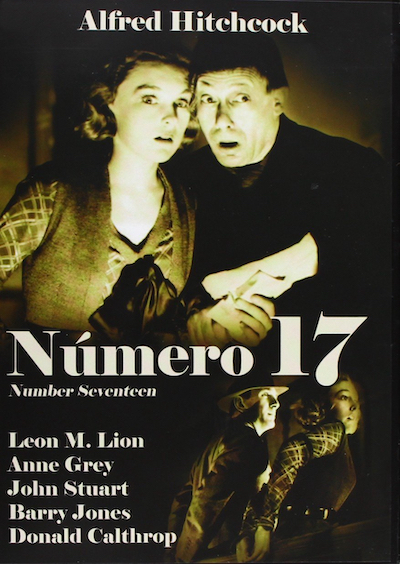
  • Alfred Hitchcock – Number Seventeen (1932)

    1931-1940Alfred HitchcockMysteryThrillerUnited Kingdom

    A gang of thieves gather at a safe house following a robbery, but a detective is on their trail.Read More »

Back to top button