In his finest work, including this masterful 1938 noir, the remarkable French filmmaker Jean Gremillon (1901-1959), trained as a composer and musician, used mise en scene, script construction, editing, and dialogue delivery to explore the complex relationship between film and music.
Raimu, one of the greatest French actors, plays the “strange” title hero, a respectable Toulon merchant who secretly operates as a fence for local thieves; after he murders a potential blackmailer, an innocent local shoemaker (Pierre Blanchar) is sent to prison for his crime.
Seven years later the fall guy escapes, returns to Toulon to see his son, and, unaware of Victor’s guilt, persuades the merchant to shelter him, then becomes involved with his wife. Read More »
Quote:
The adventures of an upper-class suburban family abruptly confronted with the younger brother’s discovery of his homosexuality, the elder sister’s suicide attempt and sado-masochist tendencies, and the intrusion of a very free-spirited maid and her husband… And it all started with the arrival in the family of an innocent looking rat…Read More »
Plot Summary :
This appreciation of Tarkovsky made by his friend Chris Marker for the French television series ‘Cinema du Notre Temps’ is both an illuminating personal portrait and a poetic study of the Russian master’s films. Granted access to the set of ‘The Sacrifice’ Marker captured fascinating and insightful behind-the-scenes footage, including the editing process which the then gravely ill Tarkovsky conducted from his sickbed.Read More »
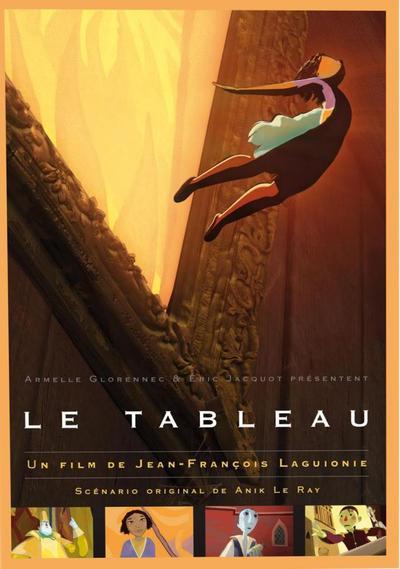
A delightful and innovative CG-animated fable, Le tableau is set within the world of an unfinished painting whose artist has abandoned his incomplete creations. In his absence, the finished drawings (the “Alldunns”) take over governance of the painting, relegating the partially completed “Halfies” to second-class citizenship and declaring a war of extermination against the thinly outlined “Sketchies.” But when an Alldunn, a Halfie and a Sketchie wind up sharing a journey downriver to parts unknown, they discover other paintings, other beings, and learn that the world beyond their own frame is richer and more diverse than they ever imagined. Returning from their adventure, they must persuade the others to learn acceptance, to see the bigger picture and to realize that everyone is, in their own way, a unique work of art.Read More »
Synopsis
It’s summer and a young foreigner saunters through the streets of this city of street cars and canals.
A lone wanderer, the hypotheses surrounding him will be changing: An artist, at leisure, a simple tourist, a parasite, paranoid, in love…?
Lodged at an old, family-run hotel, he walks through the city, observing, writing and drawing –sketching gestures and expressions caught at random on the street.
In the evenings he haunts a night club called “Les Aviateurs”.
He peers through the open windows of certain façades.
He revisits one of them at different times of day, here and there making out minor domestic contents, more insinuated than seen.
A certain mystery floats over the nature of his intentions, with attitudes reminiscent of those of a voyeur or even a psycho-killer…Read More »
Based on a play by Charles Méré, the 1926 French production Le Vertige was released in the U.S. two years later as “The Living Image”, or “The Lady of Petrograd”. The film opens with the overthrow of the Czar during the 1917 Russian revolution. The family of General Count Svirsky (Roger Karl) cower in their home, certain that the mobs of angry peasants will tear them apart. But even in this moment of crisis, Svirsky can find time to murder the young officer who has been having an affair with Countess Svirska (Emmy Lynn). The Countess knows what has happened, but she loyally remains with her husband as they escape to the safety of the French Riviera. It is here that the Countess meets Henri de Cassel (Jaque Catelain), the “living image” of her dead lover. Once again, the General prepares to shoot the Countess’ paramour in cold blood — but this time, the outcome is quite different.From Hal EricksonRead More »
Synopsis from AMG:
In this episodic animated fantasy from France, an art teacher interprets a series of six fairy tales (each involving a prince or princess) with the help of two precocious students. Princes et Princesses was created using a special style of cutout animation, with black silhouetted characters performing the action against backlit backdrops in striking colors. Produced in 1989, Princes et Princesses was first released in Europe in 2000 and received its first screening in North America at the 2000 Toronto Film Festival. — Mark DemingRead More »
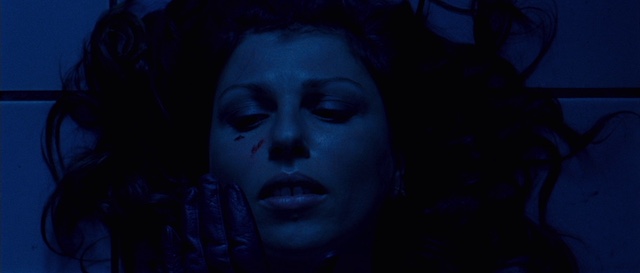
It’s been argued that this frightening and erotic piece of experimental montage from Belgian directors Hélène Cattet and Bruno Forzani is all form and no feeling. It’s easy to see why, since its most easy pleasures derive from a cool juxtaposition and stylisation of sound and imagery. But there’s more to it: the film also functions as a knowing, lightly feminist homage to Hitchcock and the chief exponents of the Giallo genre, Dario Argento and Mario Bava. As such, its ‘meanings’ may not be instantly traceable through a cosy linear storyline or densely wrought characterisations.
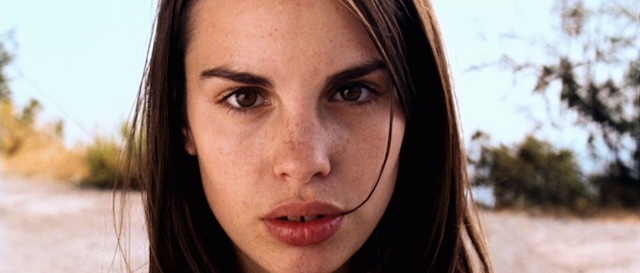
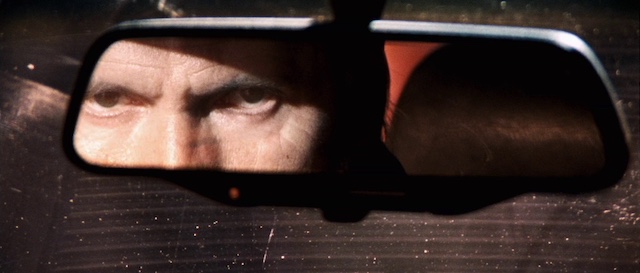
In immaculate detail and with barely any dialogue, the film depicts three symbolic events in the life of Ana: the first involves a family death and some mid-coitus voyeurism; another shows her first experience of male attraction; and the final, most impressive chapter (a wholesale updating of a key segment from Argento’s ‘Deep Red’) sees our heroine (played by Marie Bos, pictured above) sneaking around an eerie, European mansion, maybe stalked by a razor-wielding maniac.
Cattet and Forzani sculpt with pure mood. They deliver a vivid sense of Ana’s heightened sensitivity towards her surroundings via an array of bravura camera tricks and fine edits. The best way to describe it would be to imagine the shower scene in ‘Psycho’ played over feature length. A large part is shot in extreme close-up, mostly of Ana’s eyes or the silhouette of her crotch underneath a billowy cotton summer dress.
This technique imbues the film with a rich sense of texture, such as in an early scene where Ana runs her fingers over the cracking, mottled skin of (what appears to be) the corpse of an old man, or later when she’s riding in a taxi and the heat makes the leather trim too hot to touch. Some may find the film a mite academic in its glassy deconstruction of genre convention, and it’s perhaps asking a bit much to read it as anything more than a claustrophobic portrait of sexual danger, but it still fulfils that highly specific brief with blood-splashed gusto.
Amer.2009.1080p.BluRay.x264-HANDJOB.mkv

General
Container:  	Matroska
Runtime: 	1 h 30 min
Size: 	7.92 GiB
Video
Codec: 	x264
Resolution: 	1916x816
Aspect ratio:  	2.35:1
Frame rate: 	23.976 fps
Bit rate: 	11.9 Mb/s
BPP: 	0.317
Audio
#1:  	French 5.1ch AC-3 @ 640 kb/s
Synopsis:
A loyal man is tempted both in real life and in cyberspace in this thriller from director Gilles Marchand. Gaspard and his girlfriend Marion head out to Marseilles for a few weeks of sunshine and relaxation, but after spending a few hours by the pool one day, he finds a lost cell phone in the locker room. Gaspard isn’t sure what he should do with the phone, and he’s all the more puzzled when the phone rings and he finds himself having to help Audrey, an attractive but disturbed woman threatening to kill herself. Gaspard and Marion help Audrey before she can take her own life, but while Gaspard is deeply in love with Marion, he’s powerfully intrigued by Audrey. Gaspard discovers Audrey is a serious fan of an on-line role playing game called Black Hole, and he begins playing too, creating a character that bears little resemblance to his own personality. The fictive Gaspard becomes all the more attracted to Audrey in the virtual environment, until he realizes she’s not as benign as he first thought. ~ AllmovieRead More »