1960s

  • William Castle – Homicidal (1961)

    1961-1970HorrorThrillerUSAWilliam Castle
    Homicidal (1961)
    Homicidal (1961)

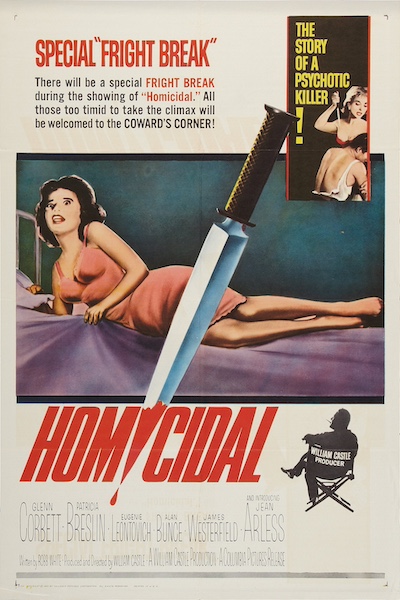
    Gimmicky B-movie fright master William Castle (THE TINGLER, STRAIT JACKET) enters the adventurous (for 1961!) world of gender psychology in this effective suspense picture. Bombshell Emily (Jean Arless) murders the justice of the peace after he marries her to Warren (Glen Corbett) a hotel bellboy whom she paid to do so. The odd couple then move to the sleepy town of Solvang, where she works for Warren’s childhood guardian Helga (Eugenie Leontovich), a mute, wheelchair-bound old woman. Emily terrorizes Helga, knowing that Helga has no way of informing anyone about her murderous manners. Warren’s half-sister Miriam (Patricia Breslin) begins to unravel some family secrets–but not before the body count increases! This low-budget “tribute” to the previous year’s PSYCHO featured a “fright break” in its theatrical run which allowed views to get their money back if they were too scared to watch the conclusion.Read More »
  • Sébastien Kamba – Kaka Yo AKA Rien que toi (1965)

    1961-1970African CinemaCongo (Brazzaville)RomanceSébastien KambaShort Film
    Kaka Yo (1965)
    Kaka Yo (1965)

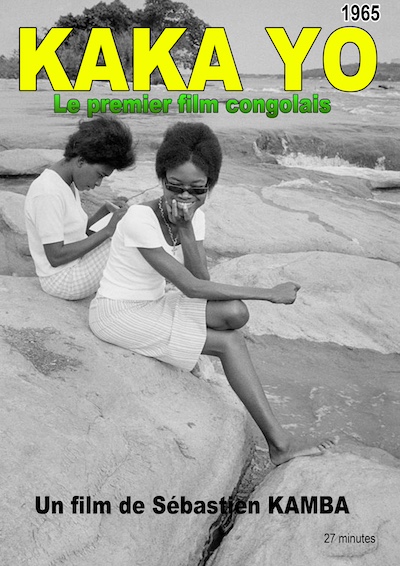
    Vibrant love story, which means “Just You” in Lingala, intersperses modern life, the youth of Brazzaville at the time, the European dances in vogue in the 1960s, and life initiation, the sorcery, spiritual power and ritual.Read More »

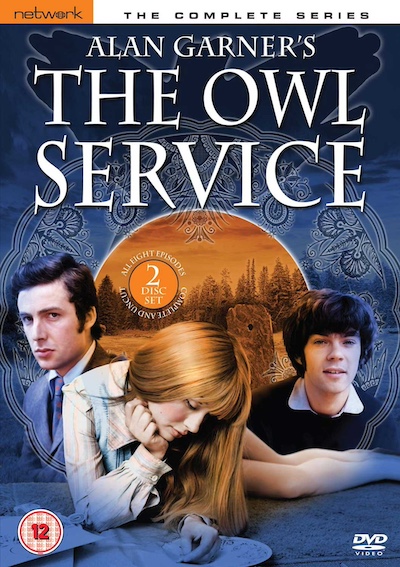
  • Peter Plummer – The Owl Service (1969)

    1961-1970FantasyPeter PlummerTVUnited Kingdom
    The Owl Service (1969)
    The Owl Service (1969)

    All eight episodes of the late-sixties TV series about a girl, holidaying with her family in a remote Welsh valley, who stumbles upon ancient magical forces. Alison (Gillian Hills), along with step-brother Roger (Francis Wallis), are spending a few weeks of the summer in Wales, at a house formerly owned by Alison’s late father. After discovering a set of dinner plates in the attic, Alison traces the plates’ flower pattern onto paper, discovering that they fold in turn into owls. Soon, the house starts to reveal hidden secrets, compelling Alison to experience an ancient legend brought back to life.Read More »

  • Katsu Kanai – Mujin rettô AKA The Desert Archipelago (1969)

    1961-1970ArthouseAsianJapanKatsu Kanai
    Mujin rettô (1969)
    Mujin rettô (1969)

    KatsuKanai wrote:
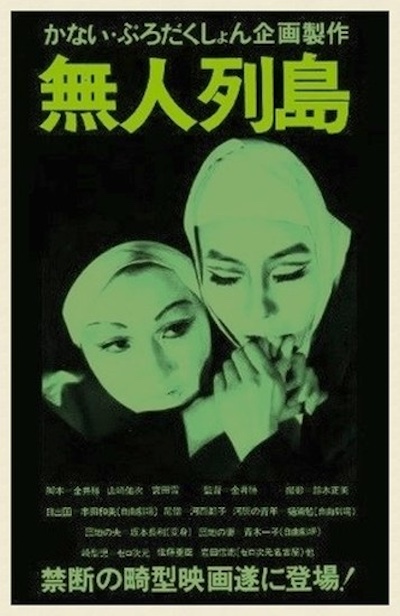
    The Deserted Archipelago was my first independently directed and produced film. The film won the Grand Prix at the Nyon International Film Festival and garnered considerable attention both overseas and in Japan. The film follows an extremely simple story of a plain boy who matures into manhood while constantly manipulated by nuns. But woven into this narrative are my own experiences and the history of postwar Japan as well as a series of fantasies. The result is a multifaceted and multilayered objet, the birth of a newly sur-realistic filmmaking. On August 15th, the day the war ended, I was in the third year of primary school. That day, when the reality that I had known turned completely upside down, I was saddled with the trauma of no longer being able to believe in anything. Searching here and there for some kind of spiritual salvation, I finally found the existentialism of Albert Camus. From there, I was able to build up my own kind of existentialism and this film is best understood as based in that “Kanai Katsu Existentialism.” The film was praised by European film scholars Max Tessier and Tony Rayns and was screened as part of “Eiga: 25 Years of Japanese Film,” a special program at the 1984 Edinburgh International Film Festival.Read More »

  • Susumu Hani – Bwana Toshi no uta AKA The Song of Bwana Toshi (1965)

    Susumu Hani1961-1970ClassicsDramaJapan
    Bwana Toshi no uta (1965)
    Bwana Toshi no uta (1965)

    Quote:
    On the border of Kenya and Tangoniga in East Africa, a Japanese, Toshio Kataoka, finally arrived here. A Japanese academic survey team came to build a comprehensive research facility. But in the village where Toshio finally arrived after more than three days of travel, no one could help him, leaving only a letter of disconnection. At the end of his rope, the handsome man asked the local youth for help through a boy he knew. However, in the village where the clan chief led by the boy, not to mention the conveners, even the cattle were used all day long. Despite this, handsome man still worked hard. Because of this opportunity, Toshio was called “toshi” by everyone in the village and became close to him.Read More »

  • Susumu Hani – Furyô shônen AKA Bad Boys (1961)

    Susumu Hani1961-1970ArthouseDramaJapan
    Furyô shônen (1961)
    Furyô shônen (1961)

    An improvisational film depicting life in a boys’ reform school.

    Quote:
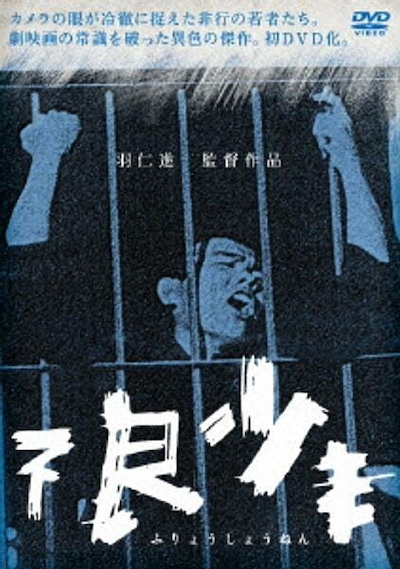
    Susumu Hani’s first feature was this gritty pseudo docudrama of juvenile delinquency based upon a collection of papers, ‘Wings That Couldn’t Fly’, written by the inmates of a boy’s prison. The film follows a young man who drifts into petty crime, is arrested, imprisoned, reformed and released. True stories of other inmates are interwoven into his experience to create a startling document of crime and punishment.Read More »

  • Susumu Hani – Kanojo to kare AKA She and He (1963)

    1961-1970ArthouseDramaJapanSusumu Hani
    Kanojo to kare (1963)
    Kanojo to kare (1963)

    In a sterile building complex, a woman gains a sense of altruism after encountering a street beggar and his blind orphan, much to her husband’s disapproval.Read More »

  • Jean Eustache – La rosière de Pessac AKA The Virgin of Pessac (1968) (HD)

    Jean Eustache1961-1970DocumentaryFrance
    La rosière de Pessac (1968)
    La rosière de Pessac (1968)

    As political and social tumult rocked France in May and June of 1968, Jean Eustache used his first documentary to focus on persistent tradition, in the form of a centuries-old ceremony in his hometown of Pessac. Each year, Pessac’s civic leaders choose a young woman they consider an exemplar of moral virtue, with a daylong celebration commemorating the changing of the guard from the previous year’s “virgin” to the present one. Eustache observes the exacting selection process, the fostering of communal bonds, and a bold implication by Pessac’s presiding priest that the ritual upholds the same Christian values for which leftist students and workers were then currently fighting.Read More »

  • Gordon Flemyng – Dr. Who and the Daleks (1965)

    Gordon Flemyng1961-1970AdventureSci-FiUnited Kingdom

    Accidentally thrown together, Dr. Who (Peter Cushing), his granddaughters, and their friend Ian cross the universe in Who’s new invention, the space and time machine known as “Tardis”. When they land on the planet Skaro, the travellers meet the kind and placid Thals, who live in fear of the dreaded Daleks. Somehow, Dr. Who and his party must find a way to help the Thals overcome the deadly mutants who live inside impenetrable metal casings.

    Dr. Who and the Daleks, based on TV: The Daleks, was the first theatrical film based on Doctor Who. It stars Peter Cushing as a human scientist named “Dr. Who” who invents Tardis and takes his companions on a journey to the planet Skaro, where they help the peace-loving Thals battle the evil Daleks.Read More »

Back to top button