

Singer Oksana has lost her beloved in the war. Everyone thinks he perished, but actually he was taken prisoner, then ran away, hid, fell into American hands, and… Finally, he returns to his village, and meets Oksana.Read More »
Singer Oksana has lost her beloved in the war. Everyone thinks he perished, but actually he was taken prisoner, then ran away, hid, fell into American hands, and… Finally, he returns to his village, and meets Oksana.Read More »

Based on Pier Paolo Pasolini’s second novel, A Violent Life (Una Vita Violenta) tells the story of a group of kids who live in one of the poorest and most disreputable neighborhoods in Rome. The story is set at the end of WWII. Thomas lives at the expense of others, like all his other companions, stealing and wasting time. But one day after a theft, Thomas gets arrested. When he comes out of prison he contracts tuberculosis, going through an inner struggle which changes his worldview. He begins to think about his future as a human being and vows to change his life. Hoping to become honest, Thomas gets engaged to the beautiful Irene and also decides to participate in political activity, joining the Communist Party. Then there is a sudden accident, and Thomas once again is faced with the most important challenge of his life.Read More »

To Die in Madrid (French: Mourir à Madrid) is a 1963 French documentary film about the Spanish Civil War, directed by Frédéric Rossif. It was nominated for an Academy Award for Best Documentary Feature.Read More »

Thriller (aka. Boris Karloff’s Thriller) was an hour-long TV Horror anthology series that originally aired on NBC from 1960 to 1962. Horror fans who grew up in the 1960’s and 1970’s were nearly enraptured with the content and structure of this show. Indeed, in his non-fiction book on horror, Danse Macabre, Stephen King calls Thriller “the best horror series ever put on TV” (224; 1983 ed). At the beginning of each hour, Hollywood’s master of the macabre himself, Boris Karloff, would set the tone and prime the viewers for frightful and chilling dramatizations based on the works of some of the era’s greatest writers in the genre – writers like Robert E Howard, Cornell Woolrich, Richard Matheson, and Robert Bloch. Each episode was shot in eerie black and white and offered at least one story, with a few episodes dividing the hour between two or three shorter plays.Read More »
Thriller (aka. Boris Karloff’s Thriller) was an hour-long TV Horror anthology series that originally aired on NBC from 1960 to 1962. Horror fans who grew up in the 1960’s and 1970’s were nearly enraptured with the content and structure of this show. Indeed, in his non-fiction book on horror, Danse Macabre, Stephen King calls Thriller “the best horror series ever put on TV” (224; 1983 ed). At the beginning of each hour, Hollywood’s master of the macabre himself, Boris Karloff, would set the tone and prime the viewers for frightful and chilling dramatizations based on the works of some of the era’s greatest writers in the genre – writers like Robert E Howard, Cornell Woolrich, Richard Matheson, and Robert Bloch. Each episode was shot in eerie black and white and offered at least one story, with a few episodes dividing the hour between two or three shorter plays.Read More »

IMDB:
Augusto Matraga is a violent agressive farmer who after being betrayed by his wife and trapped by several enemies is bitten up and left for dead. He is rescued by a couple of humble small farmers who nurse him for a long time until he is well again. Influenced by the couple Augusto Matraga turns to a religiosity a long time neglected, believing he is atoning for past sins. Then he starts a long penitent life while waiting for his hour and chance. As time goes on he comes strong again but he only realize this after meeting Joaozinho Bem Bem, a famous chief of “jaguncos” who sees in him the violent man he was. Augusto Matraga starts a fight between his violent nature, his hidden desire of vengeance and the mysticism and goodness which is also part of him. This conflict lasts until the moment when his hour and his chance comes, the hour and chance to fight, to struggle an to use his strength and courage in the name of faith and humanity.Read More »
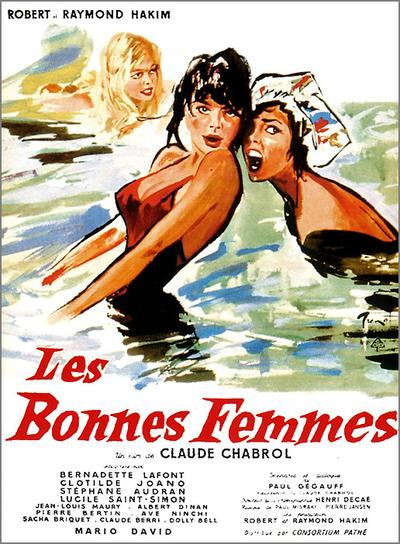
Four Parisian women navigate the world of romance and daily life looking to fulfill their dreams but often find real-life to be inescapable.
Ginette, Rita, Jacqueline and Jane try to find fulfillment and love in their lives. Rita has a fiancé whose family is obsessed with social distinction; Jane has a boy-friend in the army, but does not hesitate to enjoy herself with chance encounters; Ginette has a mysterious passion that keeps her away from her colleagues at nights. Jacqueline is lonely; but who is that mysterious bike-rider who is constantly following her?Read More »
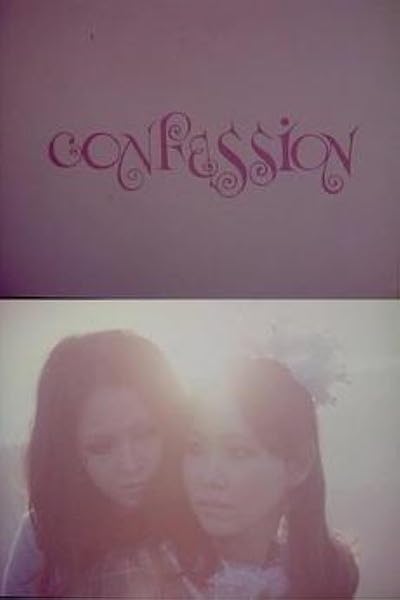
Quote:
This is probably a forgotten masterpiece of Japanese underground cinema, though I think I’d need subtitles to know for sure. It seems to be a very personal and autobiographical film for Obayashi. There isn’t much dialogue, but subtitles would be necessary to fully understand the story. Much of the film’s running time consists of creatively edited montages of the young main characters having fun, high on life, wreaking havoc 1968-style in the town of Onomichi.Read More »

From the cover:
In this small film, shot in Estepona in the south of Spain, Jørgen Leth and Ole John pursue the principle of asynchronisation and the juxtaposition of disparate elements. The images are footage from a barbershop, a talking man’s face and black film. The sound likewise embraces three elements: a story of how cement is made, which has neither head nor tail; a recording of a shave; and Louis Hjulmand’s score. The tight framing lends the mundane act of a shave a beauty of its own. Meanwhile, in the juxtaposition of near-rambling monologue and music, something else emerges, something more. As a viewer, you try to connect the two, but because no such connection exists, you have to surrender to the pure “experience” of images and sound. The title, a Danish Social-Democratic election slogan, is meaningless in this context. However, if you play around with the juxtaposition of the world “security” and the shots of the man’s soft skin and exposed neck under the barber’s sharply honed razor, the mock meaning rubs up against an altogether different one.Read More »