1950s

  • Pitt Koch – Glühendes Eiland Kreta aka The Sun-Baked Island of Crete (1958)

    1951-1960DocumentaryGermanyPitt KochShort Film

    The traditional and modest life in deep rural Crete. A film on the verge of traditional documentary film and an attempt to find a new direction in terms of what documentary film could be. An envious look at contemporary works by his fellow filmmakers from the British Free Cinema, obviously spurred on director Pitt Koch’s ambition.Read More »

  • Grigoriy Chukhray – Ballada o soldate AKA Ballad of a Soldier (1959) (HD)

    1951-1960DramaGrigoriy ChukhrayRomanceUSSR

    Quote:
    ***One of the best 150 films I have ever seen.***

    Three years before Andrei Tarkovsky made his first feature film Ivanovo Detstvo (1962) and became one of the most extraordinary directors of all time, war veteran Grigori Chukhrai wrote and directed a memorable and considerably beloved anti-war statement called Ballada o Soldate. This beautiful cinematographic achievement was basically one of the first films that accurately portrayed the human side of people that were involved in the war and the cataclysmic aftermath caused in an environment surrounded by hopelessness and chaos.Read More »

  • Alfred Hitchcock – Dial M for Murder (1954)

    Crime1951-1960Alfred HitchcockMysteryUSA

    Storyline
    In London, wealthy Margot Mary Wendice had a brief love affair with the American writer Mark Halliday while her husband and professional tennis player Tony Wendice was on a tennis tour. Tony quits playing to dedicate to his wife and finds a regular job. She decides to give him a second chance for their marriage. When Mark arrives from America to visit the couple, Margot tells him that she had destroyed all his letters but one that was stolen. Subsequently she was blackmailed, but she had never retrieved the stolen letter. Tony arrives home, claims that he needs to work and asks Margot to go with Mark to the theater. Meanwhile Tony calls Captain Lesgate (aka Charles Alexander Swann who studied with him at college) and blackmails him to murder his wife, so that he can inherit her fortune. But there is no perfect crime, and things do not work as planned.Read More »

  • Agnès Varda – La Pointe-Courte (1955)

    1951-1960Agnès VardaArthouseDramaFrance

    Quote:
    La Pointe Courte: How Agnès Varda “Invented” the New Wave

    In September 1997, I saw Agnès Varda introduce a brand-new 35 mm print of her first feature film, La Pointe Courte (made in 1954), to an admiring audience at Yale University. More astonishing than the luminous black-and-white images was Varda’s claim that she had seen virtually no other films before making it (after racking her brain, she could come up with only Citizen Kane). Whether Varda’s assertion was true or the whim of an artist who does not wish to acknowledge any influence, La Pointe Courte is a stunningly beautiful and accomplished first film. It has also, deservedly, achieved a cult status in film history as, in the words of historian Georges Sadoul, “truly the first film of the nouvelle vague.”Read More »

  • Detten Schleiermacher – Trab Trab aka Trot Trot (1959)

    1951-1960Detten SchleiermacherExperimentalGermanyShort Film

    Detten Schleiermacher did not start making films until late in life. He was actually a typographer.
    With “Trab Trab” he made an impish attempt to create a synthesis between Dadaism and New Objectivity. The film is a precise and elegant account of a racecourse. It does so without narration or images of either horses or patrons; everything we see has been captured either pre- or post-race.Read More »

  • René Clair – Les grandes manoeuvres AKA The Grand Maneuver (1955) (HD)

    1951-1960DramaFranceRené ClairRomance

    A French lieutenant makes a bet that he can seduce any woman in town in the two weeks before his regiment leaves for maneuvers, but his chosen target (a Parisian divorcée) isn’t like other girls he’s known.Read More »

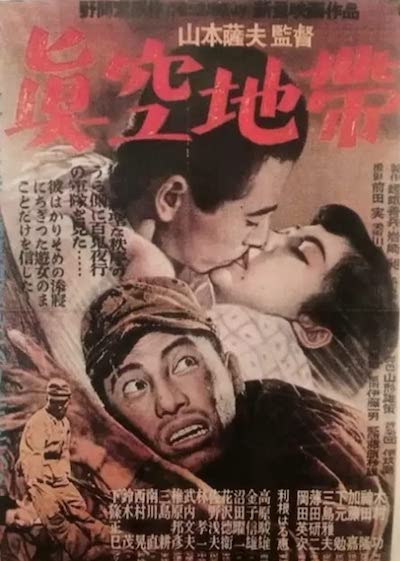
  • Satsuo Yamamoto – Shinkû chitai AKA Vacuum Zone (1952)

    1951-1960DramaJapanSatsuo YamamotoWar

    During the winter of 1944, Kitani, a soldier, returns to his unit in Osaka after a two year absence. None of the men inducted with him are left, and his new comrades greet his sulky attitude with suspicion and resentment. The men have been told that Kitani was in hospital during his absence, whereas he was actually in prison: caught between two officers competing for a lucrative position, Kitani had been accused of stealing a wallet belonging to Hayashi, a First Lieutenant. The resulting inquiry had extended into Kitani’s personal life, with letters written to his lover construed as expressing anti-military sentiments.Read More »

  • Lindsay Anderson – Every Day Except Christmas (1957)

    1951-1960DocumentaryLindsay AndersonShort FilmUnited Kingdom

    1956 proved to be a crucial year in Lindsay Anderson’s career. Not only did he initiate the first Free Cinema screening, but he also wrote one of his most passionate theoretical pieces, “Stand Up! Stand Up!” (Sight and Sound, Autumn 1956), and he started the production of his new film, Every Day Except Christmas.Read More »

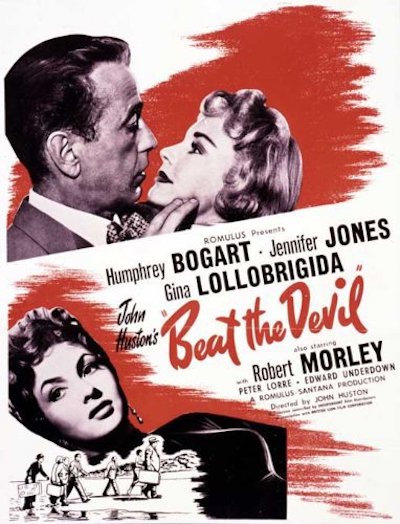
  • John Huston – Beat the Devil (1953)

    1951-1960AdventureComedyJohn HustonUnited Kingdom

    Humphrey Bogart stars as one of five disreputable adventurers who are trying to get uranium out of East Africa. Bogart’s associates include pompous fraud Robert Morley, and Peter Lorre as the German-accented “O’Hara”, whose wartime record is forever a source of speculation and suspicion. Becoming involved in Bogart’s machinations are a prim British married couple (Edward Underdown and blonde-wigged Jennifer Jones). As a climax to their many misadventures and double-crosses, the uranium seekers end up facing extermination by an Arab firing squad. The satirical nature of Beat the Devil eluded many moviegoers in 1953, and the film was a failure. The fact that the picture attained cult status in lesser years failed to impress its star Humphrey Bogart, who could only remember that he lost a considerable chunk of his own money when he became involved in the project. Peter Viernick worked on the script on an uncredited basis. Beat the Devil eventually fell into public domain, leading to numerous inferior editions by second and third-tiered labels.Read More »

Back to top button