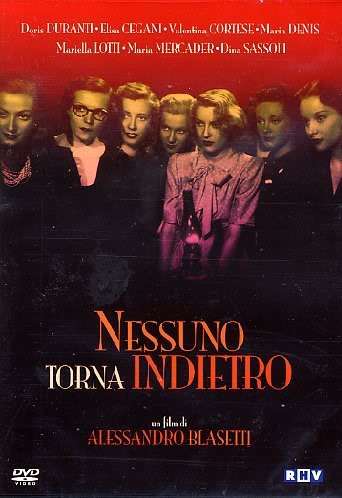

Late fascist chickflick or early lib melo – hard to tell. Early production title was Vagine di ferro.Read More »
Late fascist chickflick or early lib melo – hard to tell. Early production title was Vagine di ferro.Read More »
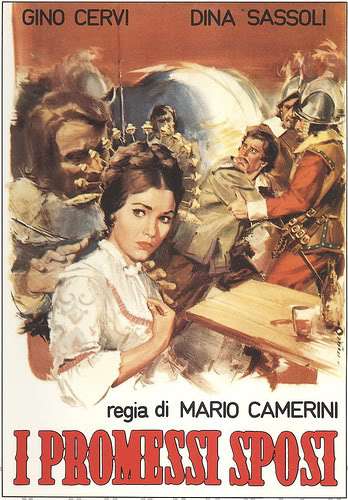
Alessandro Manzoni’s book I Promessi Sposi from 1823 seems to be one of the best kept secrets of the whole Italian literature. While by many considered to be the greatest novel ever written in the Italian language, it doesn’t seem to have a particularly strong reputation abroad. I first heard about it from an Italian friend during a long night of Totò films and beer some months ago, but when doing some googling after watching Camerini’s film during a train trip yesterday, I realized that I actually have a Norwegian translation myself, bought some years back when I spent most of my time going to book sales in Oslo and filling up my parents’ attic with everything I came across.Read More »
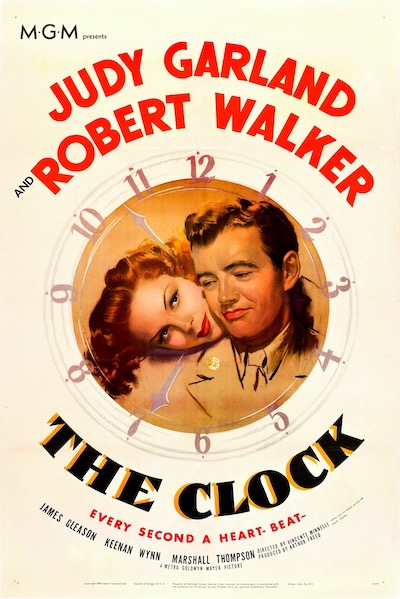
In 1945, during a 48-hour leave, a soldier accidentally meets a girl at Pennsylvania Station and spends his leave with her, eventually falling in love with the lovely New Yorker.Read More »
Quote:
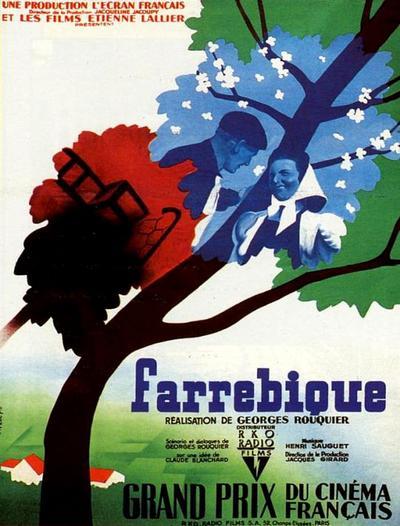
For one year, from 1944 to 1945, Georges Rouquier shared the life of a peasant family, his own, in the Farrebique farm in Goutrens, in the Rouergue region. He shows us life on a farm, marked by the rhythm of seasons, from harvesting in summer to the grandfather’s rituals of slicing the bread for dinner. The film also dwells on the hardships of life on a farm and the transformation brought on by the arrival of electricity, of modern times. Farrebique reveals the beauty of these people, their closeness to their beasts and to nature, facing an often harsh life. Read More »

The Moliere players are in their dressing room, getting ready to go on set. One actor mentions to another that his face reminds him of an opportunist turncoat he knew when he was in the Resistance. He then relates the adventure that he had in the Resistance, running an illegal radio station and dodging the Nazis.Read More »
Quote:
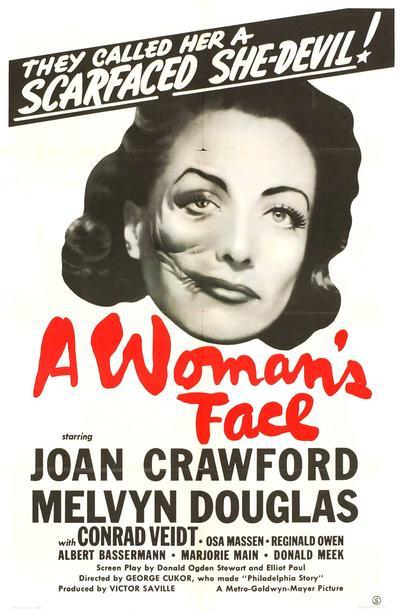
A supposedly superior remake of the 1938 Swedish film of the same name that starred Ingrid Bergman. It’s based on the French play Il etait une fois by Francis De Croisset and written by Donald Ogden Stewart and Elliot Paul. Capable studio director George Cukor (“The Women”/”Susan and God”) does his usual fine job handling actors, creating a finely drawn tense atmosphere as he makes the best of this ridiculous courtroom melodrama into a pleasing film despite the inane dialogue and incredulous machinations in the storytelling. Joan Crawford jumped at the chance to star in this juicy role despite having to play a facially disfigured woman (at least for half the film), which she was advised by even Louis B. Mayer (MGM head) that it could be costly for the glamour actress in the future. Instead it turned out to be one of her more acclaimed roles and did nothing but promote her career further as a serious dramatic actress (she won an Oscar for Mildred Pierce in 1945, which she claims this film had a cumulative effect in helping her win that award). Crawford’s scar makeup was credited to Jack Dawn, who created makeup for such films as The Wizard of Oz (1939) and Dr. Jekyll and Mr. Hyde (1941).Read More »
Synopsis:
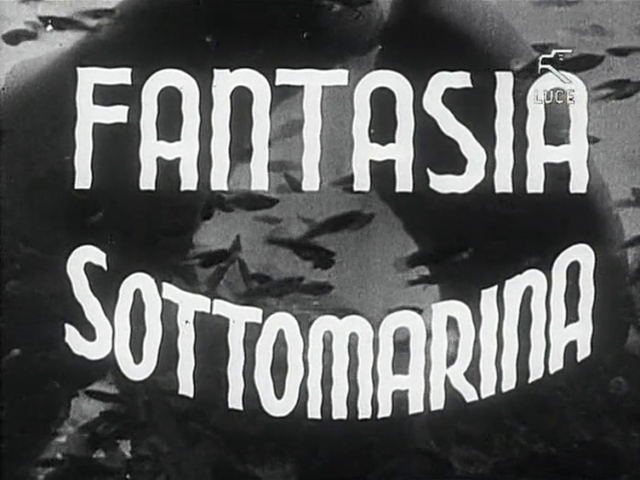
Roberto Rossellini’s first film is a work of deceptive transparency. In its initial moments the film appears to be a documentary about underwater, even deep-sea, species. But soon after, the narration, in the manner of Cocteau, unleashes a powerful “dual reality” onto the images, imbuing them not only with a narrative logic, but a kind of magic. Read More »
Synopsis:
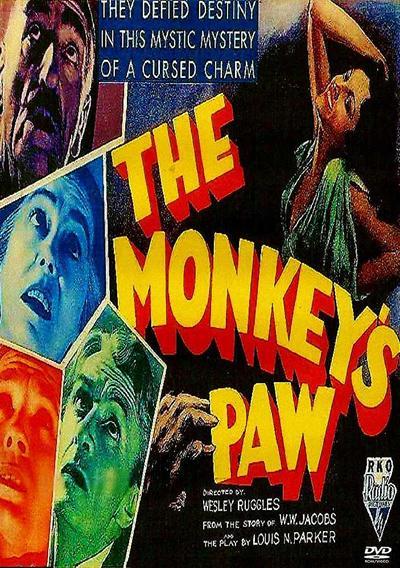
Oft-filmed black-and-white thriller of coincidence or inexorable fate based on the popular play by W.W. Jacobs. The Monkey’s Paw was filmed at Kay Carlton Hill Studios at St Johns Wood in London by low-budget producers Butchers. Despite its atmospheric finale amid the thunder and rain, the films expectant chills fail to materialise leaving only a tale of morality.
A curio shop owner sells a monkey’s paw an antiques dealer (Sydney Tafler) that can grant three wishes, but warns it has its drawbacks and tragedy follows each wish. The paw comes into the possession of Irish shopkeeper Trelawne (Milton Rosmer) who needs to pay off his gambling debts. As a consequence his son Tom is killed in a speedway race; the compensation pays the debt. Mrs Trelawne (Megs Jenkins) wishes her son back to life but her husband counters this by wishing he rest in peace.Read More »

Quote:
Rebecca is a 1940 psychological/dramatic noir thriller directed by Alfred Hitchcock as his first American project, and his first film produced under his contract with David O. Selznick. The film’s screenplay was an adaptation by Joan Harrison and Robert E. Sherwood from Philip MacDonald and Michael Hogan’s adaptation of Daphne du Maurier’s 1938 novel of the same name, and was produced by Selznick.[1] It stars Laurence Olivier as the aristocratic widower Maxim de Winter, Joan Fontaine as his second wife, and Judith Anderson as the housekeeper, Mrs. Danvers.Read More »