1920s

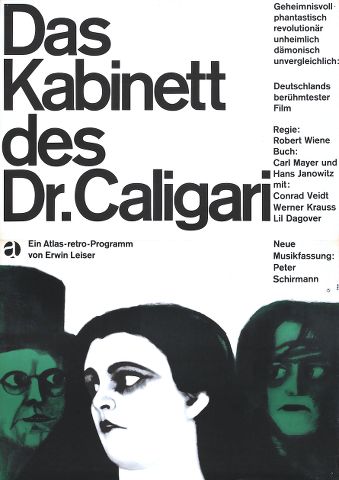
  • Robert Wiene – Das Cabinet des Dr. Caligari AKA The Cabinet of Dr. Caligari [2014 Restored Version] (1920)

    1911-19202011-2020GermanyHorrorRobert WieneSilentWeimar Republic cinema

    29f7c043f76a2bde437fd0d52a185152

    Here is an HDTV rip of the brand new digitally restored version of the absolute masterpiece “The Cabinet of Dr. Caligari”. The film has been restored using the original camera negative, the result premiered on February 9th 2014 at the 64th Berlin International Film Festival.

    New York composer and multi-instrumentalist John Zorn presented a new composition on the Karl Schuke organ at Berlin’s philharmonic to accompany the film. This is the version that has been shown at the festival with his music.
    Read More »

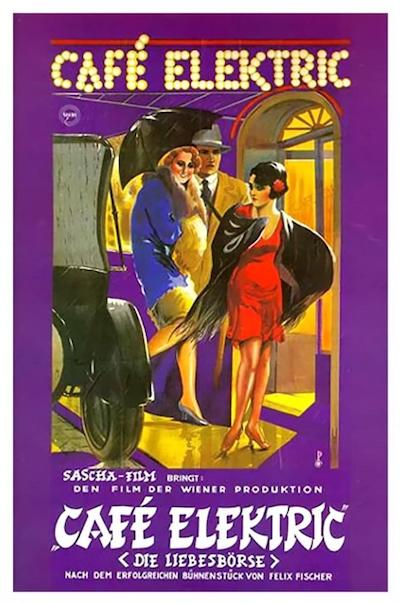
  • Gustav Ucicky – Café Elektric (1927)

    1921-1930AustriaGustav UcickySilent

    Silvia Breuss wrote:
    It is one of those hidden big-city asylums where light-shy existences meet. Many paths lead into the demimonde of Café Elektric, but only a few lead out again. Women looking for the buyers of their bodies in the glow of the street lamps find their way in, as do night owls and all kinds of sinister figures. Truth meets deception here, drive meets dreams and feelings, possession and money meet dependence. Gustav Ucicky’s atmospherically dense “film of manners”, still captivating today in its direct and unsentimental portrayal of the Viennese milieu, with the young Willi Forst and Marlene Dietrich in her first leading role, was intended to show “how easy it is in our time to stray from the right path”. The signpost for three great careers.Read More »

  • Clarence G. Badger – The Ropin’ Fool (1922)

    1921-1930Clarence G. BadgerSilentUSAWestern

    In Ropin’ Fool (1922) Rogers plays Ropes Reilly, a cowboy who ropes anything that moves until a lynch mob decides to use Reilly’s rope for a hanging party, with Reilly as the guest of honor. Motion Picture World wrote: “Plentiful use of slow motion photography shows how it is done and dispels any possible belief that the stunts are faked. No audience can help but marvel as Rogers throws a figure eight around a galloping horse, or lassoes a rat with a piece of string, or brings to term a cat melodiously inclined.” Later Rogers would wryly claim fame as America’s “Poet Lariat.”
    Read More »

  • Amo Bek-Nazaryan – Namus (1926)

    1921-1930Amo Bek-NazaryanArmeniaDramaSilent

    29f7c043f76a2bde437fd0d52a185152

    plot:
    Young lovers Seyran and Susan meet a tragic fate because of patriarchal prejudices of their parents. Although arranged for marriage in early childhood, and despite youngsters’ love, Barkhudar marries his daughter Susan to another man, as a matter of honour.Read More »

  • Marcel L’Herbier – Le vertige (1926)

    1921-1930DramaFranceMarcel L'HerbierSilent

    29f7c043f76a2bde437fd0d52a185152

    Based on a play by Charles Méré, the 1926 French production Le Vertige was released in the U.S. two years later as “The Living Image”, or “The Lady of Petrograd”. The film opens with the overthrow of the Czar during the 1917 Russian revolution. The family of General Count Svirsky (Roger Karl) cower in their home, certain that the mobs of angry peasants will tear them apart. But even in this moment of crisis, Svirsky can find time to murder the young officer who has been having an affair with Countess Svirska (Emmy Lynn). The Countess knows what has happened, but she loyally remains with her husband as they escape to the safety of the French Riviera. It is here that the Countess meets Henri de Cassel (Jaque Catelain), the “living image” of her dead lover. Once again, the General prepares to shoot the Countess’ paramour in cold blood — but this time, the outcome is quite different.From Hal EricksonRead More »

  • Fritz Lang – Metropolis [Full Version 2010] (1927)

    1921-1930ArthouseFritz LangGermanySci-FiWeimar Republic cinema

    29f7c043f76a2bde437fd0d52a185152

    “Metropolis is not one film, Metropolis is two films joined by the belly, but with divergent, indeed extremely antagonistic, spiritual needs. Those who consider the cinema as a discreet teller of tales, will suffer a profound disillusion with Metropolis. Whait it tells us is trivial, pretentious, pedantic, hackneyed romanticism. But if we put before the story the plastic-photogenic basis of the film, then Metropolis will come up to any standards, will overwhelm us as the most marvelous picture book imaginable.”
    — Luis Buñuel: Metropolis. In: Great Film Directors. Edited by Leo Braudy, Morris Dickstein. New York 1978, p. 590Read More »

  • Frank Borzage – 7th Heaven (1927)

    1921-1930Frank BorzageRomanceSilentUSA

    THE SCREEN
    In the William Fox screen version of Austin Strong’s play, “Seventh Heaven,” which was presented last night at the Sam H. Harris Theatre, you can once again meet those lovable characters—Chico, Diane, Papa Boule and Pere Chevillon—in that little patch of Paris within sight of the Eiffel Tower. This picture grips your interest from the very beginning and even though the ending is melodramatic you are glad that the sympathetic but self-satisfied Chico is brought back to his heart-broken Diane.Read More »

  • André Antoine & Léonard Antoine & Albert Capellani – Quatre-vingt-treize aka Ninety-Three (1921)

    1921-1930André AntoineDramaFranceSilent

    Image Hosted by ImageShack.us

    29f7c043f76a2bde437fd0d52a185152

    “Quatre-vingt-treize (Ninety-three, 1914/1921) by Albert Capellani & André Antoine with Paul Capellani, Henry Krauss and Philippe Garnier

    The story takes place in Brittany in 1793 during the Terror. While the Marquess of Lantenac (P. Garnier) joins the Chouans (royalist insurgents), his nephew Gauvain (P. Capellani) becomes a soldier in the Revolutionary army. The third character is the former priest, Cimourdain, who becomes the head of the Revolutionary army. He was the one who opened Gauvain’s eyes to the new ideas by giving him Rousseau to read. In this adaptation of Victor Hugo’s novel the destiny of the three characters are heading for collision. The film shooting was stopped abruptly by the beginning of WWI. A few years later, André Antoine took over as Capellani was unavailable to finish it as he was in America. The film didn’t came out until 1921. Obviously, in the space of 7 years, cinema had moved forward dramatically and Quatre-vingt-treize was undoubtedly dated when it came out.Read More »

  • Luther Reed – Rio Rita (1929)

    1921-1930Luther ReedMusicalSinging CowboysUSAWestern


    29f7c043f76a2bde437fd0d52a185152

    Plot: Capt. James Stewart pursues the bandit “The Kinkajou” over the Mexican border and falls in love with Rita. He suspects, that her brother is the bandit. Written by Stephan EichenbergRead More »

Back to top button