1920s

  • André Antoine – L’Hirondelle et la mésange (1920)

    1911-1920André AntoineDramaFranceSilent


    29f7c043f76a2bde437fd0d52a185152

    André Antoine and the Realist Tradition

    After its humiliating defeat in the 1870 Franco-Prussian War, France went through a social revolution. Over the next twenty years, many of its long-standing artistic traditions, such as the classical style of Academy painting, would be cast off in favor of new approaches, such as Impressionism. Live theater was one of the few holdovers from the pre-war era — formulaic pieces spoken by actors in dull declamatory style. But change was coming, voiced by the prophet of naturalism, novelist Emile Zola. “A work must be based in the real . . . on nature,” Zola wrote in Naturalism in the Theater. Zola explained that a playwright must observe facts, with no abstract characters or invented fantasies. Rising to meet this challenge, actor, and theater director André Antoine (1858-1943) founded the Theatre Libre, essentially a community theater, dedicated to showing new work by innovative writers. Antoine also staged works by controversial playwrights from outside of France, such as Ibsen and Chekhov. Under Antoine’s guidance, French theater became serious and legitimate. What is less known about Antoine is that he was also a film director, and a vital link in the development of the ‘realist tradition’ that has so enriched world cinema(…)Read More »
  • Teppei Yamaguchi – Kurama Tengu [+Extras] (1928)

    Japan1921-1930SilentTeppei Yamaguchi

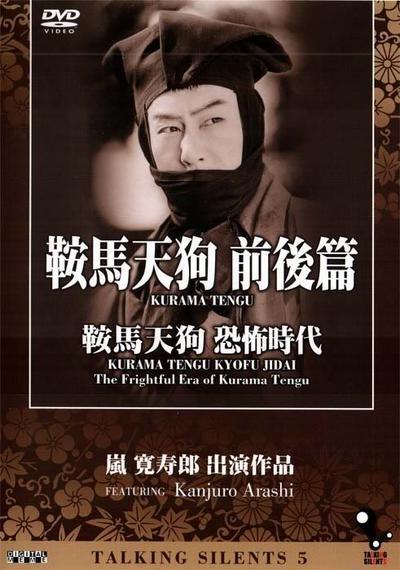
    It is 1862 and many young rebellious samurai oppose the Tokugawa Shogunate, strongest among them is Kurama Tengu with his friends Kichibei and Sugisaku, but facing them is the powerful Isamo Kondo and the Shinsengumi.Read More »

  • D.W. Griffith – Lady of the Pavements (1929)

    Drama1921-1930D.W. GriffithUSA
    Lady of the Pavements (1929)

    Art Cinema Corporation production; distributed by United Artists Corporation. / Produced by Joseph M. Schenck. Screenplay by Sam Taylor, with dialogue by George Scarborough, from the short story “La Paiva” by Karl Gustav Vollmoeller. Set design by William Cameron Menzies. Costume design by Alice O’Neill. Theme song “Where Is the Song of Songs for Me?” by Irving Berlin. Cinematography by Karl Struss. Assistant cameraman, G.W. Bitzer. Intertitles by Gerrit Lloyd. Edited by James Smith. Music arrangement by Hugo Riesenfeld. Read More »

  • Erich von Stroheim & Rupert Julian – Merry-Go-Round (1923)

    1921-1930ClassicsErich von Stroheim and Rupert JulianSilentUSA

    http://ecx.images-amazon.com/images/I/51MSGER9EYL.jpg

    29f7c043f76a2bde437fd0d52a185152

    A nobleman, posing as a necktie salesman, falls in love with the daughter of a circus puppeteer, even though he is already married to the daughter of his country’s war minister.Read More »

  • William A. Seiter – Little Church Around the Corner (1923)

    1921-1930DramaSilentUSAWilliam A. Seiter
    Little Church Around the Corner (1923)

    29f7c043f76a2bde437fd0d52a185152

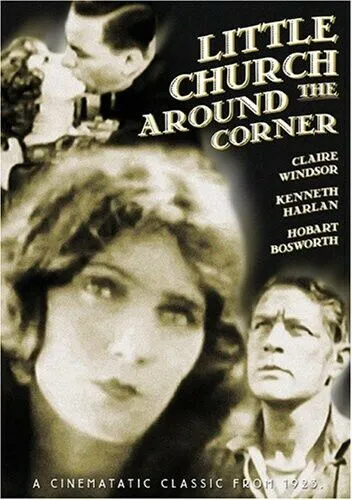
    The Little Church Around the Corner is important as the first major financial success for the fledgling Warner Bros. studios. Kenneth Harlan plays a mining-town clergyman who falls in love with his benefactor’s daughter. He is about to settle into a life of cozy complacency when a group of miners come to his doorstep, asking that the minister plead to the owners for better living conditions. To prove himself to be “one” with the miners, Harlan moves into their shanty community. This causes a rift with his sweetheart’s father, who happens to be one of the owners. A cave-in, an angry mob and a supposed miracle are part and parcel of this 1923 adaptation of the war-horse Marion Russell play, which is directed with a sure, subtle hand by William A. Seiter. ~ Hal EricksonRead More »

  • Joe May – Das Indische Grabmal: Die Sendung des Yoghi AKA Mysteries of India, Part I: Truth (1921)

    1921-1930AdventureGermanyJoe MaySilentWeimar Republic cinema
    Das indische Grabmal erster Teil- Die Sendung des Yoghi (1921)

    Quote:
    The movie begins with the discovery of a yoghi who, after being brought back to life by a maharajah, promises to do anything his saviour’s heart desires. Bizarrely, what the nobleman wants is for the yoghi to transport himself to the west and bring back an architect capable of building a magnificent mausoleum for his princess.Read More »

  • Joe May – Das Indische Grabmal: Der Tiger von Eschnapur AKA Mysteries of India, Part II: Above All Law (1921)

    1921-1930AdventureGermanyJoe MaySilentWeimar Republic cinema

    The jealous & vindictive Rajah of Bengal continues to manipulate the fates of his three English captives in his mad scheme to punish his faithless wife.

    THE Indian TOMB: THE TIGER OF BENGAL is a perfect example of the grand German cinema epics created during the silent era. Berlin film mogul Joe May turned the full resources of his modern 50-acre Maytown studio near Berlin over to the production, using 300 workmen to create the lavish sets necessary to tell such an exotic tale.Read More »

  • Lionel Barrymore – The Unholy Night (1929)

    1921-1930Lionel BarrymoreMysteryThrillerUSA

    29f7c043f76a2bde437fd0d52a185152

    On a dark foggy London night, someone tries to strangle Lord Montague, but he escapes. Only to discover the four other men who did get killed were old regimental comrades in Gallipoli. When Scotland Yard gets Monty to gather the other nine surviving officers at his home, one of them is murdered, and no one else has entered the house. Now, they must determine who the murderer is. Written by Kathy Li Read More »

Back to top button