1920s

  • Man Ray – Emak-Bakia AKA Leave Me Alone (1927)

    1921-1930ArthouseExperimentalFranceMan Ray

    Emak-Bakia shows elements of fluid mechanical motion in parts, rotating artifacts showing his ideas of everyday objects being extended and rendered useless. Kiki of Montparnasse (Alice Prin) is shown driving a car in a scene through a town. Towards the middle of the film Jacques Rigaut appears dressed in female clothing and make-up. Later in the film a caption appears: La raison de cette extravagance (The reason for this extravagance)and it cuts to a car arriving and a passenger leaving with briefcase entering a building, opening the case revealing men’s shirt collars which he proceeds to tear in half. The collars are then used as a focus for the film, rotating through double exposures.Read More »
  • Aleksandr Dovzhenko – Arsenal (1928)

    1921-1930Aleksandr DovzhenkoDramaUSSRWar

    29f7c043f76a2bde437fd0d52a185152

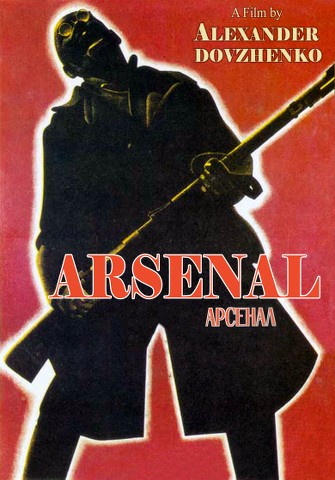
    Set in the bleak aftermath and devastation of the World War I, a recently demobbed soldier, Timosh, returns to his hometown Kiev, after having survived a train wreck. His arrival coincides with a national celebration of Ukrainian freedom, but the festivities are not to last as a disenchanted.

    In Arsenal, Alexander Dovzhenko, perhaps the most radical of the Soviet directors of the silent period, altered the already extended conventions of cinematic structure to a degree greater than had even the innovative Sergei Eisenstein in his bold October. The effect of this tinkering with the more or less accepted proprieties of motion picture construction produced a work that is actually less a film than it is a highly symbolic visual poem. For example, in a more linearly structured piece like October, the metaphors, allusions, and analogies that arise through the construction of the various montages replace rather than comment on essential actions within the film. In Arsenal, however, the symbolism is so purposely esoteric, with seemingly deliberate barriers established to block the viewer’s perception, that the relationship of individual symbols or sequences to the various actions of the film is not immediately clear.Read More »

  • John Grierson – Drifters (1929)

    1921-1930DocumentaryJohn GriersonUnited Kingdom

    29f7c043f76a2bde437fd0d52a185152

    The story of the North Sea herring fisheries, filmed at Lerwick, in the Shetlands, Lowestoft and Yarmouth and in the North Sea.
    ~~~

    — Henry K Miller, From Battleship Potemkin to Drifters, BFI booklet wrote:

    The London Film Society’s screening of Sergei Eisenstein’s Battleship Potemkin (1925) and John Grierson’s Drifters (1929) on Sunday 10 November 1929, at the Tivoli cinema in the Strand, is the most celebrated double-bill in British film history. Potemkin, making its British debut more than three years after it shook the film world, had a formidable reputation to live up to. Drifters, on the other hand, was the first film of a director whose only prior filmmaking experience was the preparation of the American release print of Potemkin.Read More »

  • Anthony Asquith & A.V. Bramble – Shooting Stars (1928)

    DramaA.V. BrambleAnthony AsquithSilentUnited Kingdom

    Synopsis:
    The husband and wife acting team of Mae Feather and Julian Gordon is torn apart when he discovers she is having an affair with the screen comedian Andy Wilks. Mae hatches a plot to kill her husband by putting a real bullet in the prop gun which will be fired at him during the making of their new film, ‘Prairie Love’.Read More »

  • Carl Theodor Dreyer – Du skal ære din hustru AKA Master of the House (1925)

    Drama1921-1930Carl Theodor DreyerDenmarkSilent

    Quote:
    Victor Frandsen is a domestic tyrant. His wife Ida has to work as a slave for him and the rest of the family. She rises early to prepare everything for the day, she toils all day long, and she is often up also in the night, doing some sewing to earn extra money for the household. In daytime she is supported by an old woman called Mads, who was Victors’ nanny when he was a child. Mads is filled with loathing for Victor’s behavior towards his wife, and calls him a brute. She understands that Ida is on the verge of a serious breakdown, and persuades Ida’s mother, Mrs. Kryer, to take Ida away.Read More »

  • Joe Francis – La revue des revues AKA Parisian Pleasures (1927)

    1921-1930DramaFranceJoe FrancisSilent

    29f7c043f76a2bde437fd0d52a185152

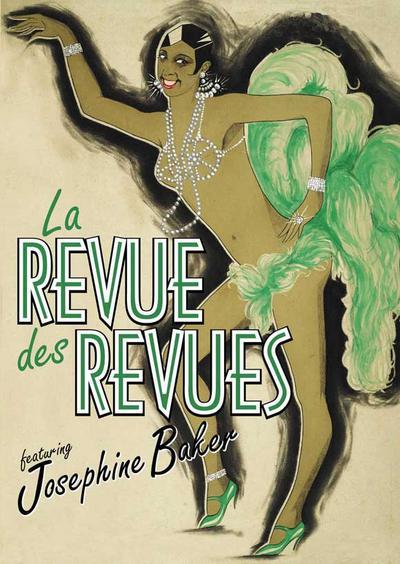
    Gabrielle, an ambitious but innocent would-be young chorine, trumps a music hall publicity stunt to become the new Parisian nightclub Cinderella. But this lighter-than-champagne-bubbles story is only a pretext for LA REVUE DES REVUES’s white-hot, non-stop procession of outrageously and scantily attired exotic dancers, showgirls, and acrobats including the Tiller’s Follies Girls, Ruth Zackey and the Hoffmann Girls, and danseuse russe Lila Nikolska. But it’s Josephine Baker, “the high priestess of primitivism”, who triumphs in two show stopping numbers in which “her clownish backfield-in-motion Charleston shimmy is unlike anything else in the movie and perhaps unlike anything anyone ever did”.Read More »

  • Carl Theodor Dreyer – Der var engang AKA Once Upon a Time (1922)

    Drama1911-19201921-1930Carl Theodor DreyerDenmarkFantasy

    29f7c043f76a2bde437fd0d52a185152

    Quote:
    Once upon a Time (a.k.a. Der var engang) is an atypical film for the Danish filmmaker Carl Theodor Dreyer, a departure from his more usual realistic dramas into the realm of fantasy and fairytale. It was the only film that Dreyer made for the independent film producer Sophus Madsen, a Danish film enthusiast whose only other production was Laurids Skands’s all but forgotten Livets Karneval (1923). The film was adapted from a play by Holger Drachmann, written in 1885, that was itself based on Hans Christian Andersen’s fairytale Svinedrengen and Shakespeare’s The Taming of the
    Shrew. From the outset, this was conceived as a lavish production, but it soon ran into financial difficulties. Even though some scenes were cut – including an extravagant market sequence – the film still ended up with a 150 per cent overspend on its 90,000
    kroner budget.Read More »

  • Henri Desfontaines – Belphégor (1927)

    France1921-1930Henri DesfontainesSilentThriller

    29f7c043f76a2bde437fd0d52a185152

    Restored by “La Cinémathèque Française” in 1988

    Plot :
    A ghost has been seen during the night in the Louvre Museum (Paris), and a guard is found dying near the statue of Belphégor, a god of Moabites and Ammonites. A young reporter, Jacques Bellegarde, begin to investigate but soon he’s being threatened by some letters sent by … Belphégor

    It’s a silent mini-serie in 4 parts, after a popular book of Arthur Bernède, in the style of the 1st Fantômas (in fact, René Navarre was Fantômas in the Louis Feuillade’s movie)

    Nearly 40 years later, a remake of this serie was made with Juliette Greco and met a great success in France, and is much better known that this one.Read More »

  • Jean Epstein – Coeur fidèle AKA The Faithful Heart (1923)

    1921-1930DramaFranceJean EpsteinRomance

    29f7c043f76a2bde437fd0d52a185152

    Quote:
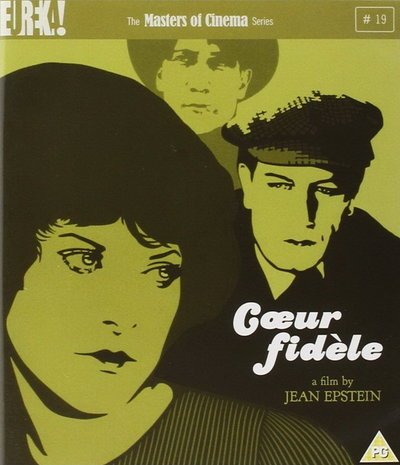
    In Coeur Fidèle’s accompanying 44-page booklet, Jean Epstein, at a 1924 address, argues his film as “romantic” rather than”realist”, the label with which Italian poet Ricciotto Canudo assigned it before his death. The truth is that Epstein’s largely unknown masterpiece provides a fascinating agreement of the two styles, oscillating with seamless precision between reverie and sincerity. Marie (Gina Manès) is in love with Jean (Léon Mathot), a kind-hearted man who works on the Marseille docklands, but Marie’s adoptive parents want to marry her off to the obnoxious and unemployed drunk Petit Paul (Edmond Van Daële), and the scene is set for a sensational melodrama to unfold.Read More »

Back to top button