

Description:
This short film shows the contrast between the good conditions in which a rich woman makes a abortion and the miserable and dangerous condition in which a poor woman has to do an abortion.Read More »
Description:
This short film shows the contrast between the good conditions in which a rich woman makes a abortion and the miserable and dangerous condition in which a poor woman has to do an abortion.Read More »
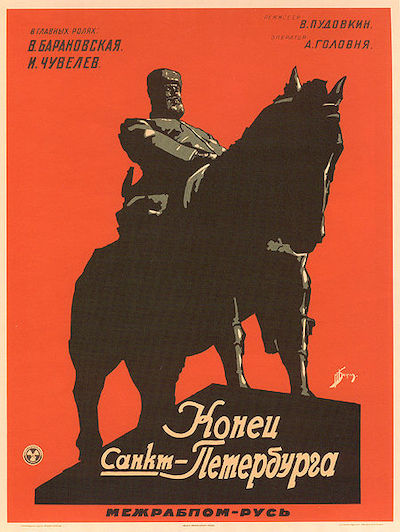
Filmed to commemorate the tenth anniversary of the 1917 Russian revolution, End of St. Petersburg was the second feature-length effort of director V. I. Pudovkin. Utilizing many of the montage techniques popularized by his contemporary Sergei Eisenstein, Pudovkin details the fall of St. Petersburg into the hands of the Bolsheviks during the revolution. Unlike Eisenstein, Pudovkin concentrates on individuals rather than groups (his protagonist is a politically awakened peasant played by Ivan Chuvelyov) humanizing what might otherwise have been a prosaic historical piece. The mob scenes, though obviously staged for ultimate dramatic impact, are so persuasive that they have frequently been excerpted for documentaries about the Russian Revolution, and accepted by some impressionable viewers as the real thing. Filmed just after his 1926 masterwork Mother, The End of St. Petersburg was followed by the equally brilliant Storm Over Asia.
— allmovie.comRead More »
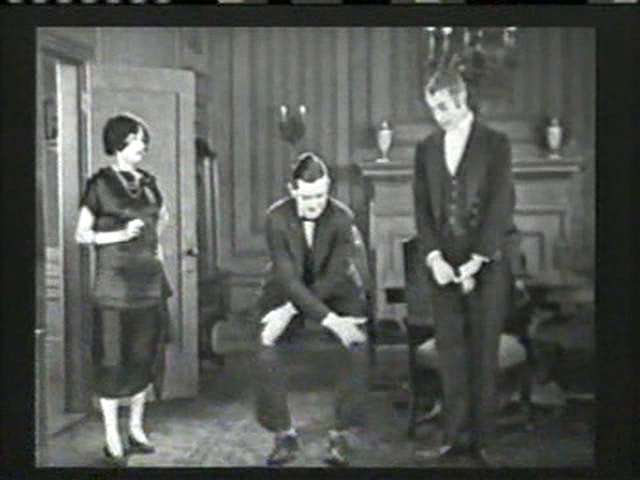
Funny, Entertaining. Charley Chase is great!, 4 April 2005
Author: chris-glo from So.CA
I happened to catch this on TCM one day – what a scream! A very entertaining short. Charley Chase was very talented! My husband and I try to watch the “silents” whenever we can but have mostly watched dramas with the bigger stars such as Valentino, Garbo, Chaney, etc. It is really a shame that the younger people today do not take the time to watch and appreciate the ones really responsible for the success of the movie industry. Back then, without sound to convey feelings with the spoken word, it took, I think, a great more amount of talent as an actor or actress to get the point across in mime. Facial expression and body movements were the only way this could be achieved. Just for fun, watch a new movie with the sound off. I think you would be surprised to find that you cannot follow it very well. Anyway, if you get the chance, check out silent movies. They are better than you think. And Charley Chase? I will be looking for more of his movies.Read More »

Flicker Alley says…
Quote:
Never before released in the United States, this monumental French film is one of the most extraordinary achievements in the whole history of cinema. Written and directed by Abel Gance (Napoleon, J’Accuse), three years in production, and for its time unprecedented in length and complexity of emotion, La Roue pushed the frontiers of film art beyond all previous efforts. Said Gance, “Cinema endows man with a new sense. It is the music of light. He listens with his eyes.”Read More »
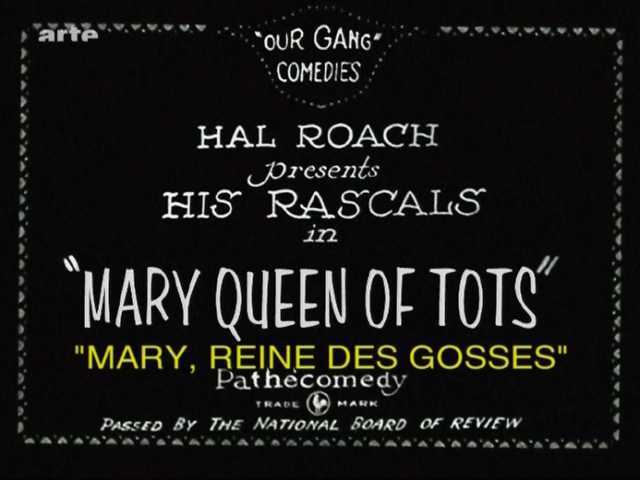
A couple makes dolls modeled on neighborhood kids. A gardener at a mansion buys four of them for Mary, the girl of the house. He’s her only friend: her parents neglect her for work and card games and her governess is humorless. Mary loves the dolls and dreams of them during her nap. While Mary sleeps, the governess throws the dolls in the dust bin. Mary wakes and goes searching – outside she runs into the very same four kids who were the dolls’ models, and she thinks she’s still dreaming. She invites them back to the mansion where she’ll either make fast friends or the gang will need to make a fast getaway when the governess finds them.Read More »
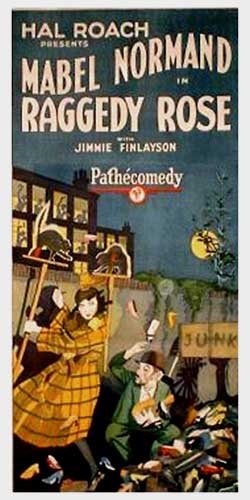
Rose, who works for a penny-pinching junk dealer, dreams of romance with wealthy bachelor Ted Tudor.
Read More »
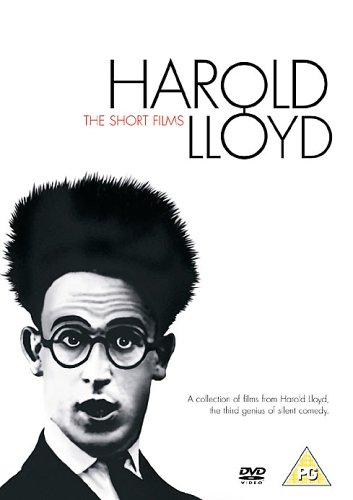
1. Ask Father
2. Billy Blazes Esq
3. Bumping into Broadway
4. From Hand to Mouth
5. Haunted Spooks
6. An Eastern Westerner
7. High and Dizzy
8. Get Out and Get Under
9. Number Please
10. Now or Never
Read More »

By the director of Cabinet of Dr.Caligari, this is the Passion embedded in a contemporary story. An anarchist jailed for an attempted assassination is told the Passion story by the prison chaplain, who seeks to convince him that it is better to sacrifice ones own life than take the life of ones enemy. The framing story, taken from a novel, is believed to have been intended to give the Biblical story an anti-Bolshevist propaganda function. In any case, it was added without the knowledge of the actors in the Passion story, who included some of the major stars of the period Asta Nielsen as Mary Magdalene, Henny Porten as Mary, Grigori Chmara as Jesus, and Werner Krauss as Pontius Pilate -bampfa.berkeley.eduRead More »

Description: Expanding on his editing experiments in Battleship Potemkin (1925), Sergei Eisenstein melded documentary realism with narrative metaphor to depict the pivotal events of the Russian Revolution in October (1927). Commissioned to commemorate the 10th anniversary of the 1917 October Revolution, Eisenstein focused on a few key events from February 1917 to October 1917. Underlining the symbolic importance of those episodes, Eisenstein constructed October as an elaborate “intellectual montage,” deriving meaning from the metaphorical or symbolic relationships between shots. Drawing out narrative time through cutting, Eisenstein turns an opening drawbridge into a sign of the divisive struggle in St. Petersburg. Similarly exaggerating the time that it takes provisional leader Kerensky to climb a palatial staircase, and intercutting shots of Kerensky with a Napoleon statue and a mechanical peacock, Eisenstein satirically reveals Kerensky’s imperial hubris and vanity. Read More »