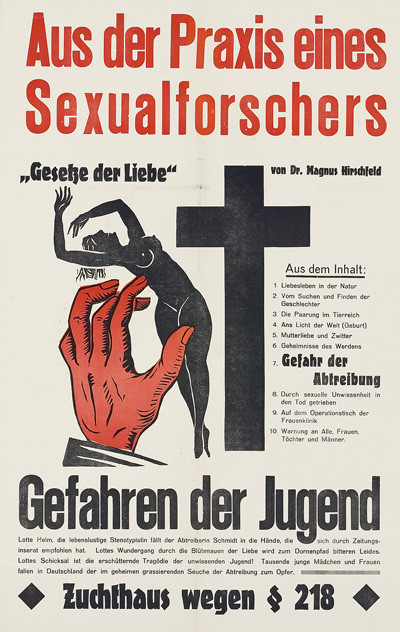

A documentary by Magnus Hirschfeld, which contains a shortened version of Different From the Others (1919).Read More »
A documentary by Magnus Hirschfeld, which contains a shortened version of Different From the Others (1919).Read More »
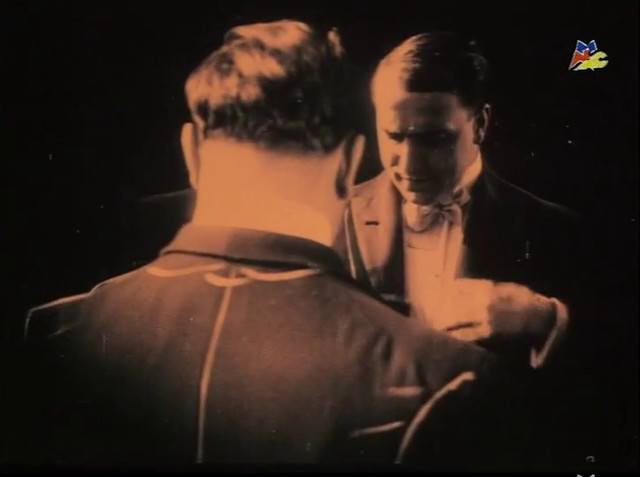
Synopsis:
Socrate, a weird parrot, one day flies away through an open window. The mistress of the parrot imposes on her boyfriend Ajax a terrible condition: if he doesn’t find Socrate, she will marry another man. Ajax immediately starts to look for Socrate, but soon he discovers that the parrot has been captured and sold to a young lady leaving for Havana. Finally Ajax manages to get to Cuba, but once there he finds out that Socrate has already flown away to return to his original owner; she telegraphs Ajax asking him to return to her – but she will wait in vain: Ajax has already fallen in love with the young lady who emigrated to Cuba.Read More »
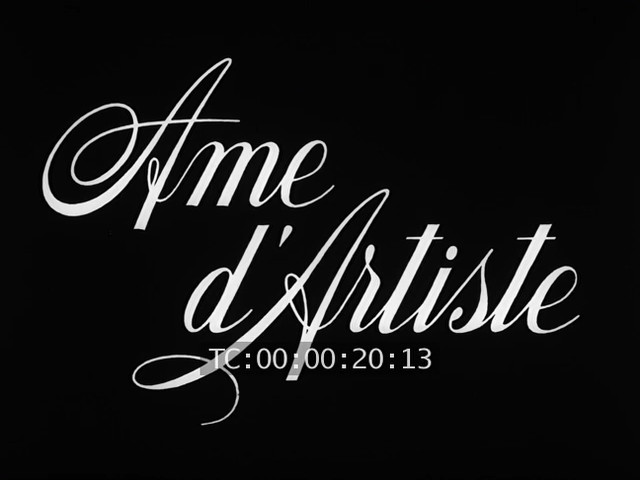
Plot :
Helen Taylor, a favorite of the London public on stage, is torn between the attention of Lord Stamford (principal shareholder of the theater) and Herbert Campbell, a fervent admirer, novel author, who does not hesitate to abandon his wife to follow The star of the scene.Read More »

Quote:
When Union spies steal an engineer’s beloved locomotive, he pursues it single-handedly and straight through enemy lines.Read More »

FILM SYNOPSIS/BRIEF REVIEW:
One of the earliest cinematic adaptation of Chinese classic novel Journey to the West. When seeking for food alone, Tang Xuanzang was kept prisoner by seven spider monsters who took the form of seven beautiful women. The Monkey King and the other two of Xuanzang’s disciples managed to rescue him with the help of Avalokitesvara Bodhisattva/Guanyin. They renounced the desire for lust and continued the quest for Buddhist Scriptures.Read More »

In 1918 a simple Mongol herdsman escapes to the hills after brawling with a western capitalist fur trader who cheats him. In 1920 he helps the partisans fight for the Soviets against the occupying army. However he is captured when the army tries to requisition cattle from the herdsmen at the same time as the commandant meets with the reincarnated Grand Lama. After being shot, the army discovers an amulet that suggests he was a direct descendant of Genghis Khan. They find him still alive, so the army restores his health and plans to use him as the head of a Mongolian puppet regime.Read More »

Quote:
A Superlative War Picture.
An eloquent pictorial epic of the World War was presented last night at the Astor Theatre before a sophisticated gathering that was intermittently stirred to laughter and tears. This powerful photodrama is entitled “The Big Parade,” having been converted to the screen from a story by Laurence Stallings, co-author of “What Price Glory,” and directed by King Vidor. It is a subject so compelling and realistic that one feels impelled to approach a review of it with all the respect it deserves, for as a motion picture it is something beyond the fondest dreams of most people.Read More »

Barbara Wurm, Edition Filmmuseum wrote:
Po zakonu (also know as Dura Lex) was the cheapest film produced in Russia (perhaps even still today); at the same time an absolute masterpiece, the greatness of which stems from its very minimalism. The minimum effort required for the story-development (Kuleshov constantly claimed, he happened upon Jack London’s story “The Unexpected” quite by chance), the minimum number of characters (just three for most of the film), a minimum of inter-titles and lines of dialogue, a minimum of locations; a clearing not far from Moscow (posing as “Alaska”) and a cabin–the perfect setting for a stripped-to-basics chamber play. Even if the juggling of shot composition and length (Kuleshov’s notorious “Americanism”) is not as artistically ambitious as in his previous work, it is still apparent how close-ups dominate inside, whilst outside, in the snowy landscapes and riverscapes, long shots reign, seemingly to the point of halting all movement.Read More »

When a proud noble refuses to kiss the hand of the despotic King James in 1690, he is cruelly executed and his son surgically disfigured into a permanent grin. The son can only make a living as a travelling circus clown – The Laughing Man!Read More »