Ankara – serdtse Turtsii aka Ankara-The heart of Turkey is a Soviet documentary made for the 10th anniversary of the new Turkish Republic in the year 1934.
The story starts over a pastoral view of Turkey, we see some country people going to the new capital : Ankara. Same time, there is Soviet ships passing thru Bosphorus, Istanbul. Soviet military and diplomatic people reach Ankara by train as young turks and scooters. We watch the city by the air… Some archeological views… The new city, the young people, some folkloric plays, modern buildings, gymnasium, modern art school, university studies and finally 10th anniversary stadium ceremony…Read More »
Quote:
Marcel Broodthaers (January 28, 1924 – January 28, 1976) was a Belgian poet, filmmaker and artist with a highly literate and often witty approach to creating art works.
He was born in Brussels, Belgium, where he was associated with the Groupe Surréaliste-revolutionaire from 1945 and dabbled in journalism, film, and poetry. After spending 20 years in poverty as a struggling poet[1], he performed the symbolic act of embedding fifty unsold copies of his book of poems Pense-Bête in plaster, creating his first art object. That same year, 1964, for his first exhibition, he wrote a famous preface for the exhibition catalogue;Read More »
Synopsis:
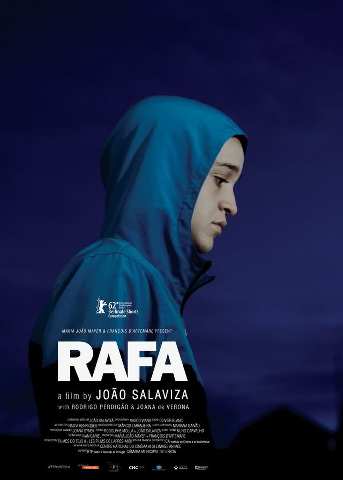
Rafa a 13 years old kid concerned with his mother, held in a police station for driving without a license.The director shows a day in the life of a teenager who lives on a problematic area and discovers that her mother was arrested because of an automobile accident.Read More »
Lina Wertmüller’s harrowing 1976 film stars Giancarlo Giannini as a petty crook with seven unattractive sisters to support, and it features a picaresque, World War II-era journey through a prison asylum, army service, and a Nazi concentration camp. Wertmüller is more indulgent in highbrow sadomasochism than she is real profundity, but there’s no denying that the film is powerful in its story of subjugation and survival. A climactic scene in which Giannini saves his skin at the camp by seducing its disgusting female commandant is unnervingly honest. Giannini became a ’70s international icon partially on the basis of this work.Read More »
“This film was conceived in honor of the 20th anniversary of the death of one of the greatest directors in the history of cinema – Andrei Tarkovsky. The young filmmaker Dmitry Trakovsky sets out in search of his favorite director’s legacy. His journey leads him to fifteen moving interviews in California, Italy, Sweden, and finally, Russia, as he attempts to come closer to the meaning of one of Tarkovsky’s most enigmatic beliefs… that death doesn’t exist. The result is the acclaimed documentary MEETING ANDREI TARKOVSKY, which takes an in-depth and poetic look at the late Russian filmmaker who created under the oppressive censorship of the Soviet government. It explores the life and films of Tarkovsky through diverse interviews and stories told by friends, colleagues and others who have been influenced by his art, providing a rare glimpse into Tarkovsky’s working methods and personal philosophy of humanity.”Read More »
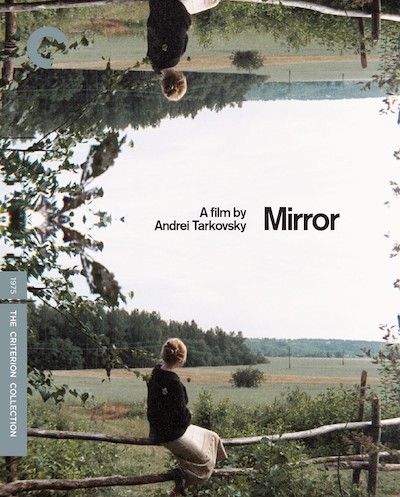
SYNOPSIS With Zerkalo (The Mirror), legendary Russian filmmaker Andrei Tarkovsky crafts perhaps his most profound and compelling film. What started off for Tarkovsky as a planned series of interviews with his own mother evolved into a lyrical and complex circular meditation on love, loyalty, memory, and history. Time shifts and generations merge as a single extraordinary actress (Margarita Terekhova) plays the narrator’s former wife as well as his mother. Tarkovsky’s memories as well as those of his mother are intermingled as a dark, sumptuous, and dreamlike pre-World War II Russia is evoked, accompanied throughout by the voice of Tarkovsky’s father reading his own elegiac poetry. The spectacle of nature and its ubiquitous and ever-shifting presence is captured by Tarkovsky’s camera as if by magic–the family cabin nestled deep in the verdant woods, a barn on fire in the middle of a gentle rainstorm, a gigantic wind enveloping a man as he walks through a wheat field–all creating indelible images with deep if mysterious emotional resonance. As the timeline shifts between the narrator’s generation and his mother’s, newsreel footage of Russian wars, triumphs, and disasters are juxtaposed with imagined scenes from the past, present, and future, crafting a silently lucid cinematic panopticon of memory, history, and nature. (Rotten Tomatoes)Read More »
Quote:
During earthworks, the utility crew discovers a German ammunition depot left over from the war. 30 tons of explosives lay in the ground for 15 years. According to the instructions, it is impossible to demine – it is dangerous to touch them. But it is also impossible to blow up – there are residential areas around. The case is entrusted to the group of Captain Galich. By 10 a.m. the next day, the entire population is evacuated to the outskirts of the city, and in the ominous pit, seven people begin a game with death.Read More »
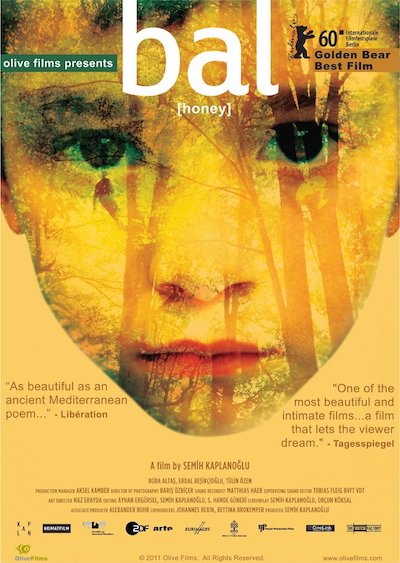
Quote: In a competition where no title had won widespread approval, a superb film finally arrived, drawing more than a few tears of emotion from Berlin festival-goers: acclaimed director Semih Kaplanoglu’s German/Turkish co-production Honey. The third instalment in the Yusuf trilogy, closes a journey backwards in time that began with Egg, followed by Milk.Read More »
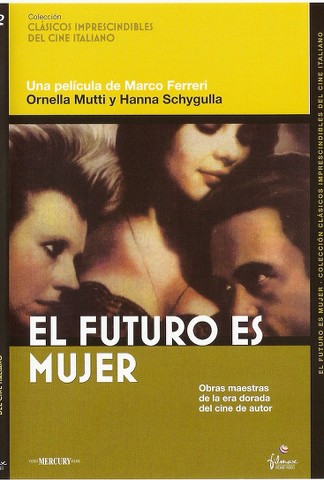
Plot summary
This is the story of a couple who do not want to have children of their own, and a pregnant, single woman who needs a home for awhile, the relationship between the three protagonists is strange, at the very least. After Anna (Hanna Schygulla) and Gordon (Niels Arestrup) invite the expecting Malvina (Ornella Muti) to live with them, Anna becomes neurotically jealous and attempts suicide but is thwarted and in the end decides she really wants to be there for the baby when he/she comes into the world. Rather than trying to get rid of Malvina and the baby, both Gordon and Anna are in agreement on keeping it.Read More »