About the Book
Cahiers du Cinema is the most prestigious and influential film journal ever published. An anthology devoted entirely to its writings, in English translation, is long overdue.
The selections in this volume are drawn from the colorful first decade of Cahiers, 1951-1959, when a group of young iconoclasts racked the world of film criticism with their provocative views an international cinema–American, Italian, and French in particular. They challenged long-established Anglo-Saxon attitudes by championing American popular movies, addressing genres such as the Western and the thriller and the aesthetics of technological developments like CinemaScope, emphasizing mise en scéne as much as thematic content, and assessing the work of individual filmmakers such as Hawks, Hitchcock, and Nicholas Ray in terms of a new theory of the director as author, auteur, a revolutionary concept at the time. Italian film, especially the work of Rossellini, prompted sharp debates about realism that helped shift the focus of critical discussion from content toward style. The critiques of French cinema have special interest because many of the journal’s major contributors and theorists Godard, Truffaut, Rohmer, Rivette, Chabrol were to become same of France’s most important film directors and leaders of the New Wave.Read More »
-
Jim Hillier – Cahiers du Cinéma: The 1950s: Neo-Realism, Hollywood, New Wave (1985)
1981-1990BooksJim HillierUSA -
Philippe Grandrieux – La Vie Nouvelle AKA A New Life (2002)
1981-1990BooksJim HillierUSAAbout the Book
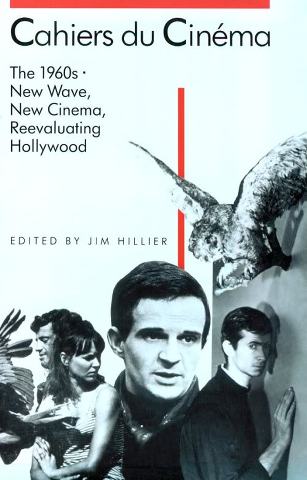
In the turbulent sixties, the provocative French film journal Cahiers du Cinema was at its most influential and controversial. The first successes of the New Wave by major Cahiers contributors such as Jean-Luc Godard, Fran?ois Truffaut, Jacques Rivette, Eric Rohmer, and Claude Chabrol focused international attention on the revitalization of French cinema and its relation to film criticism; and in the early 1960s the journal’s laudatory critiques of popular American movies were attaining the greatest notoriety.
As the lively articles, interviews, and polemical discussions in this volume reveal, the 1960s saw the beginnings of significant new directions in filmmaking and film criticism changes in which the New Wave itself was a major factor. The auteur theory that the journal had championed in the 1950s began to be rethought and revalued. At the same time, along with a reassessment of American film, Cahiers began to embrace new, often oppositional forms of cinema and criticism, culminating in the political and aesthetic radicalism of the ensuing decade.
The selections, translated under the supervision of the British Film Institute, are annotated by Hillier, and context is provided in his general introduction and part introductions. For an understanding of the important changes that took place in cinema and film criticism in the 1960s and beyond, this book is essential reading.Read More » -
André Bazin – What is Cinema? Vol 1 & 2 (1967 – 1971)
André BazinBooksFranceAbout the Books
André Bazin’s What Is Cinema? (volumes I and II) have been classics of film studies for as long as they’ve been available and are considered the gold standard in the field of film criticism. Although Bazin made no films, his name has been one of the most important in French cinema since World War II. He was co-founder of the influential Cahiers du Cinéma, which under his leadership became one of the world’s most distinguished publications. Championing the films of Jean Renoir (who contributed a short foreword to Volume I), Orson Welles, and Roberto Rossellini, he became the protégé of François Truffaut, who honors him touchingly in his forword to Volume II. This new edition includes graceful forewords to each volume by Bazin scholar and biographer Dudley Andrew, who reconsiders Bazin and his place in contemporary film study. The essays themselves are erudite but always accessible, intellectual, and stimulating. As Renoir puts it, the essays of Bazin “will survive even if the cinema does not.”Read More » -
Philippe Grandrieux – La Vie Nouvelle AKA A New Life (2002)
Drama2001-2010ArthouseFrancePhilippe GrandrieuxSynopsis
reassurance.blogspot.com wrote:
La vie nouvelle, with its schizophrenic camera and piercing audio frequency, provokes a dangerous sensation. It pulsates like a tremor, as if we’re entering a universe after some unnamed, unmentioned nuclear disaster. While it’s easy to make visual association to familiar images of horror like Night of the Living Dead when the film opens on a dark pasture with zombie-like peasants, Salò; or The 120 Days of Sodom while a group of Russian criminals strip a group of beautiful youths naked or Twin Peaks: Fire Walk with Me as characters malevolently scream into the air, Grandrieux’s vision is wholly unique.Read More »
-
Christoffer Boe – Hr. Boe & Co.’s Anxiety (2001)
2001-2010ArthouseChristoffer BoeDenmarkShort FilmChristoffer Boe studied at Copenhagen University before being accepted at the Danish Film School’s director’s course in 1997. He has directed three short movies. One of them, Anxiety, received the Prix Découverte de la Critique Française and was screened in Critics’ Week in 2002.Read More »
-
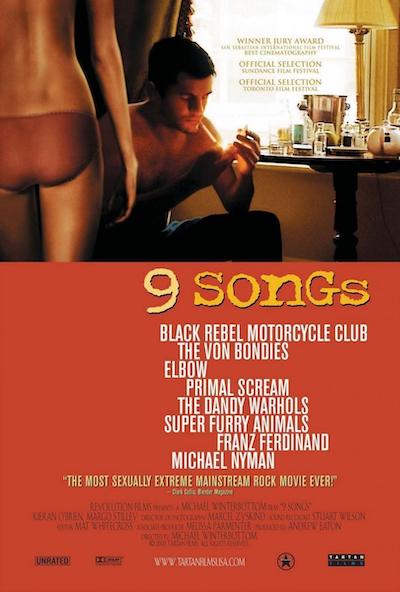
Michael Winterbottom – 9 Songs (2004)
2001-2010ArthouseDramaMichael WinterbottomUnited KingdomNY Times:
The notion that our sexual behavior is the purest expression of our deepest selves is delicately explored in “9 Songs,” Michael Winterbottom’s lyrical, graphically explicit chronicle of an ordinary love affair between two attractive people. The movie isn’t the first art film to show real as opposed to simulated sex, but it’s the first to scrutinize at length one couple’s bedroom etiquette in a search for their identities. If anything, “9 Songs,” conceived and directed by Mr. Winterbottom, the British filmmaker responsible for movies like “In This World” and “Welcome to Sarajevo,” that boldly enter the topical fray, proves that showing what people do in bed may not reveal all that much. The truth lies hidden in their minds.Read More » -
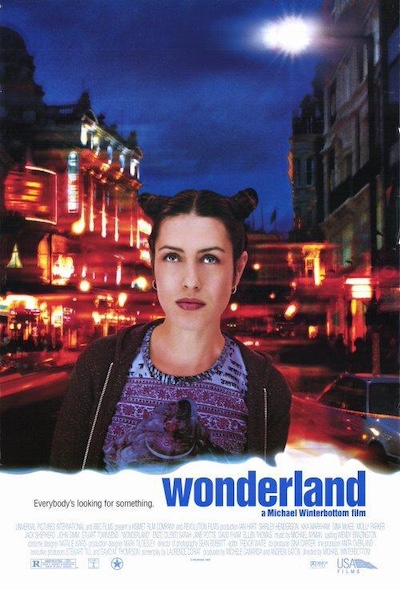
Michael Winterbottom – Wonderland (1999)
Drama1991-2000Michael WinterbottomUnited Kingdom
Wonderland (1999) 
The members of a British working-class family see their lives starting to come apart as the Nation prepares to celebrate Guy Fawkes Day (named for an anarchist who tried to blow up Parliament) in Michael Winterbottom’s drama Wonderland. Eileen (Kika Markham) and Bill (Jack Shepherd) are a married couple with four grown children. Bill has lost his job and is drifting through life, unsure of what to do. He’s also having sexual problems with Eileen, who is being driven insane by their noisy neighbors. Neither Bill nor Eileen have seen their son Darren (Enzo Cilenti) for a long time, and his birthday is a heartbreaking experience for them. (Darren, on the other hand, would prefer to celebrate his birthday by spending the night in a hotel with his girlfriend rather than seeing his parents.) Bill and Eileen also have three daughters, Nadia (Gina McKee), Debbie (Shirley Henderson) and Molly (Molly Parker). Nadia works in a cafe and has trouble meeting men; she’s signed up with a dating agency, but has yet to meet anyone she likes.Read More »
-
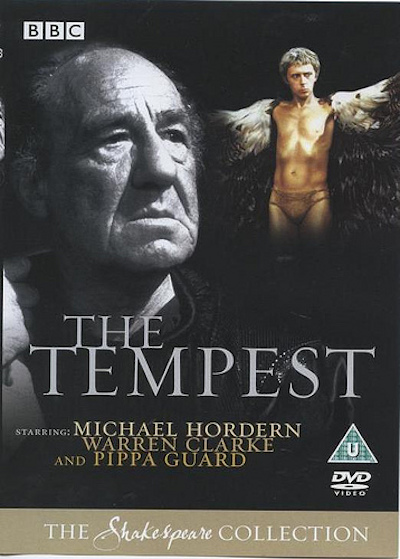
John Gorrie – The Tempest (1980)
1971-1980BBCDramaJohn GorrieTVUnited KingdomWilliam Shakespeare

Making its debut with Romeo and Juliet on 3 December 1978, and concluding nearly seven years later with Titus Andronicus on 27 April 1985, the BBC Television Shakespeare project was the single most ambitious attempt at bringing the Bard of Avon to the small screen, both at the time and to date.Read More »
-
Jerzy Kawalerowicz – Maddalena (1971)
1971-1980DramaItalyJerzy Kawalerowicz
The film Maddalena tells the story of a woman who is desperate to find real love in a real steady relationship on the one hand; and a priest who is doubting his ability to cope with celibacy on the other hand. When Maddalena decides the priest is the man that she wants, an atmosphere of erotic tension and self-questioning about true Faith fill up the air. The film is long forgotten (thus the five), but the score for the film, parts of which were used in other films, is considered by some as one of Morricone’s finest, and quite rightly so. The already mentioned title part ‘Come Maddalena’, which mixes jazzy drumming with a modest church organ, the lyrical voices of Edda dell’Orso and a scatting choir, is probably one of the most evocative and thrilling parts of film music I have ever heard. Long before the world had ever heard of lounge music and chill-out, maestro Morricone must have sent the shivers down many a spine… as he has done so many times before and after.Read More »