• Wim van der Linden – Rape (1966)

    1961-1970Amos Vogel: Film as a Subversive ArtExploitationNetherlandsShort FilmWim van der Linden

    29f7c043f76a2bde437fd0d52a185152

    “This beautiful example of far-fetched blasphemy accompanies a happy, ugly nun into the woods for her constitutional, replete with charming bird noises. Praying to and fondling a priapic mushroom, she is unaware of the evil rapist shadowing her. When the rape occurs, it is in long shot, hidden from view, under a huge tree. Articles of clothes and her cross sail through the air; the tree – entirely dominating the screen – sways rhythmically and repeatedly. A few minutes later it stops; then another tree, a few feet away, begins to sway in identical fashion. The rapist finally emerges, exhausted.”

    Amos Vogel, Film as a Subversive ArtRead More »

  • Various – Animated Soviet Propaganda (1924 – 1984)

    AnimationPoliticsUSSRVarious

    Free Image Hosting at www.ImageShack.us

    CONTENTS:

    DISC 1: AMERICAN IMPERIALISTS

    BLACK AND WHITE (1933) Whenever the collection criticizes American racism, its credibility goes way up. We start with this shocking, graphic exaggeration (?) of America as a land where slavery still rules.

    MISTER TWISTER (1963) This poem-based tale uses cute animation to tell the story of a racist American who rejects a St. Petersburg hotel room because a black man is in the next room. This is a fine film, except for the fact that racism can be found in any country. I don’t see why Russia should call herself an exception.Read More »

  • Uli Edel – Der Baader Meinhof Komplex (2008)

    Drama2001-2010GermanyPoliticsUli Edel

    Germany in the 1970s: Murderous bomb attacks, the threat of terrorism and the fear of the enemy inside are rocking the very foundations of the yet fragile German democracy. The radicalised children of the Nazi generation lead by Andreas Baader, Ulrike Meinhof and Gudrun Ensslin are fighting a violent war against what they perceive as the new face of fascism: American imperialism supported by the German establishment, many of whom have a Nazi past. Their aim is to create a more human society but by employing inhuman means they not only spread terror and bloodshed, they also lose their own humanity. The man who understands them is also their hunter: the head of the German police force Horst Herold. And while he succeeds in his relentless pursuit of the young terrorists, he knows he’s only dealing with the tip of the iceberg. Written by Constantin FilmRead More »

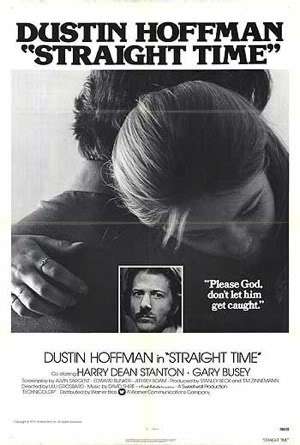
  • Ulu Grosbard – Straight Time (1978)

    1961-1970CrimeDramaUlu GrosbardUSA

    Free Image Hosting at www.ImageShack.us

    29f7c043f76a2bde437fd0d52a185152

    Description: While it rolled in and out of theaters quickly during its brief release in 1978 and hasn’t gained much of a reputation since, Straight Time was one of Dustin Hoffman’s best films of the 1970s, and seen today it still stacks up as one of the finest performances he’s ever given onscreen. Hoffman is a fascinating bundle of misdirected energy and guy-wire tension as Max Dembo, an ex-con whose efforts to go straight seem doomed to fail, though his own impulses hardly keep him on the straight and narrow. Hoffman is perfectly natural and compelling as a blue-collar criminal, and he’s lucky to have a superb supporting cast. M. Emmet Walsh has never been better as Earl Frank, a duplicitous parole officer, and Theresa Russell delivers an absorbing and ultimately heart-breaking turn as Jenny, a girl who falls in love with Dembo; Gary Busey, Harry Dean Stanton, and Sandy Baron are similarly at the top of their form here. Ulu Grosbard’s direction (he took over from Hoffman, who began the project but changed his mind about directing after a few days of shooting) is lean, intelligent, and atmospheric, and the screenplay (by Jeffrey Boam and Edward Bunker, based on Bunker’s novel No Beast So Fierce) manages to make Dembo’s story tragic and believable without ever asking the audience to forgive or forget his complicity in his crimes. Straight Time is an overlooked and understated masterwork, and well worth searching out on home video.Read More »

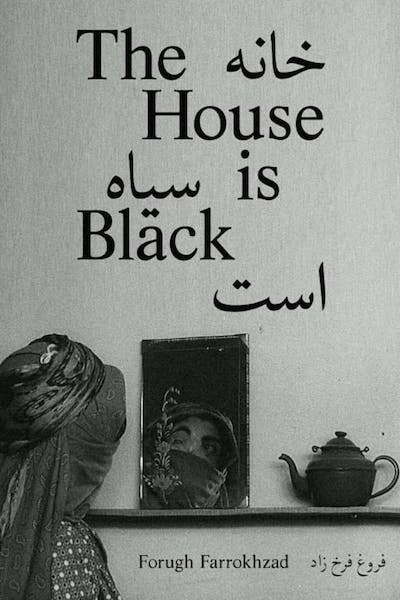
  • Forugh Farrokhzad – The House is Black aka Khaneh siah ast (1963)

    1961-1970Amos Vogel: Film as a Subversive ArtDocumentaryForugh FarrokhzadIranShort Film

    From Village Voice: In 1962, beloved and controversial poetess Forugh Farrokhzad went to Azerbaijan and made this short film on the grounds of a leper colony, presaging in 22 minutes the entirety of the Iranian new wave and the international quasi-genre of “poetic nonfiction.” It’s a blackjack of a movie, soberly documenting the village of lost ones with an astringently ethical eye, freely orchestrating scenes and simply capturing others, while on the soundtrack Farrokhzad reads her own poetry in a plaintive murmur—this in the same year as Vivre sa Vie and La Jetée. (Chris Marker has long been a passionate fan, as has Abbas Kiarostami, whose The Wind Will Carry Us owes its title and climactic verse to Farrokhzad.) It was the only substantial piece of cinema Farrokhzad ever made. Five years later, having already attained near legendary status in Iran for her writing, she was killed in a car crash at the age of 32, guaranteeing her posthumous fame as a feminist touchstone for generations of angry Persian women.Read More »

  • Jafar Panahi – Offside (2006)

    2001-2010ComedyDramaIranJafar Panahi

    Since women are banned from soccer matches, Iranian females masquerade as males so they can slip into Tehran’s stadium to see the game between Iran and Bahrain. The ones who are caught and arrested are taken to a holding area and guarded by soldiers. One sympathetic soldier agrees to watch the game through a peephole and recount the action to the impatient fans.Read More »

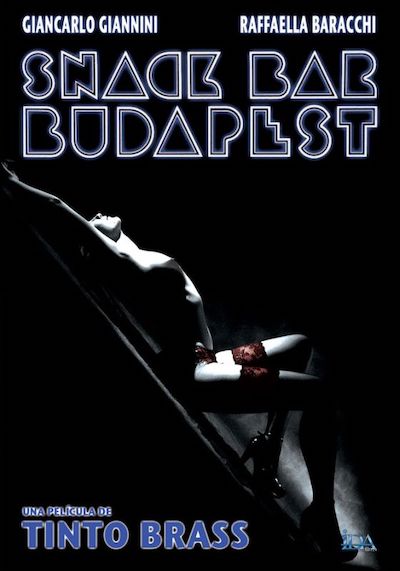
  • Tinto Brass – Snack Bar Budapest (1988)

    1981-1990CultEroticaItalyTinto Brass

    A disbarred lawyer, recently released from prison and now involved with organized crime, checks into the Snack Bar Budapest where he is instructed to make contact with the up-and-coming local kingpin, a 19-year-old punk-pimp-gangster named Molecola (Italian for “molecule”); a Buffalo-trained politician trying to run out the local shops and turn the town into a giant casino-entertainment complex, with the Snack Bar as the centrepiece.Read More »

  • Roy Andersson – Någonting har hänt aka Something Happened (1987)

    Arthouse1981-1990Roy AnderssonShort FilmSweden

    Free Image Hosting at www.ImageShack.us

    29f7c043f76a2bde437fd0d52a185152

    Quote:
    In Roy Andersson’s film work, the ambition is to come as close to the truth as possible. In some instances this objective has put Andersson in a difficult position with those who commission works from him. One example is the film Something Happened – an information film about AIDS, commissioned by the Swedish National Board of Health and Welfare – on which he began work in 1986. When Andersson in 1987 had three-fourths of the film completed, the Board forced him to stop production. The official explanation was that the film was too dark in its message, and it went unseen by the public for a number of years.Read More »

  • Roy Andersson – Besöka sin son AKA Visiting One’s Son (1967)

    Arthouse1961-1970Roy AnderssonShort FilmSweden

    Quote:
    Mother, father and sister visit the adult son in the family in his small apartment for a dinner. The father gives one critical view after the other about his sons life.

    Roy Anderssons school shorts has not got the same aesthetics as his most well-known works; “You, the Living”, “World of Glory” and “Songs from the Second Floor”. But it is easy to compare them to his other early works, such as “A Swedish Love Story” and “Giliap”. This is the first of major three school films Roy Andersson made. All released recently by Scanbox and SFI in a dvd collection containing the best known Andersson shorts.Read More »

Back to top button