• Various – The Rare Books Collection (1473 – 1793)

    BooksVarious

    Free Image Hosting at www.ImageShack.us

    01. Georg von Peuerbach, Theoricae novae planetarum, Nürnberg 1473

    Quote:
    Peuerbach’s renowned work on the theory of planets – actually a lecture script
    by his student Regiomontan – was written in 1460, one year before his death.
    The Theoricae novae planetarum are based on the familiar teachings of
    Ptolemy, Al-Battani, Al-Farghani and caliph Al-Mammun’s astronomer, whose
    name is unknown. The word “novae” in the title is not meant to refer to a
    completely new theory but only to emphasize that this work is a compilation of
    the latest contemporary scientific knowledge.

    Peuerbach’s work gradually replaced leading textbooks of the time such as
    Sphaera materialis by Johannes de Sacrobosco. By 1653 the Theoricae novae
    was printed no less than 56 times, which made it to one of the most significant
    scientific books in the Renaissance. Even Kepler and Kopernikus founded
    their theories on this work.Read More »
  • Jay Weidner – Kubrick’s Odyssey: Secrets Hidden in the Films of Stanley Kubrick – Part One: Kubrick and Apollo (2011)

    2001-2010DocumentaryJay WeidnerPhilosophyUSA

    Image Hosted by ImageShack.us

    29f7c043f76a2bde437fd0d52a185152

    Quote:
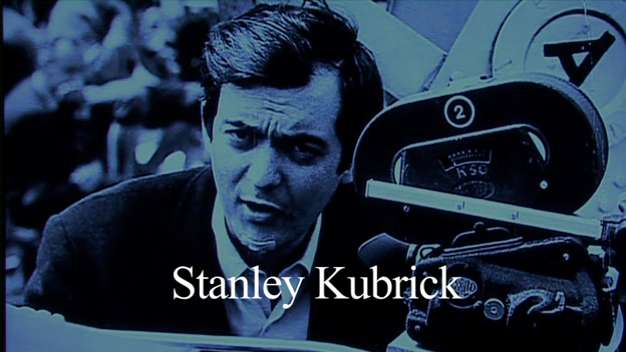
    This provocative and insightful film is the first in a series of documentaries that will reveal the secret knowledge embedded in the work of the greatest filmmaker of all time: Stanley Kubrick. This famed movie director who made films such as 2001: A Space Odyssey, A Clockwork Orange, The Shining and Eyes Wide Shut, placed symbols and hidden anecdotes into his films that tell a far different story! than the films appeared to be saying.In Kubrick’s Odyssey, Part I, Kubrick and Apollo, author and filmmaker, Jay Weidner presents compelling evidence of how Stanley Kubrick directed the Apollo moon landings. He reveals that the film, 2001: A Space Odyssey was not only a retelling of Arthur C. Clarke and Stanley Kubrick’s novel, but also a research and development project that assisted Kubrick in the creation of the Apollo moon footage. In light of this revelation, Weidner also explores Kubrick’s film, The Shining and shows that this film is, in actuality, the story of Kubrick’s personal travails as he secretly worked on the Apollo footage for NASA.

    “Weidner produces devastating proof that the landing was shot in a studio on Earth.”
    –David IckeRead More »

  • Audrius Stonys – Antigravitacija AKA Antigravitation (1995)

    1991-2000Audrius StonysDocumentaryLithuania

    Quote:
    this poem of inexorable yearning, people look out, up, away from their little spot in the universe. The snowy miniature tableaux of boxy houses, dray horses and children tugging sleds seem oddly comforting in contrast to the exposed heights of the town bridge, the church tower and the mountaintop. This quiet meditation lulls you, then sweeps you up into the heavens.

    After we finished shooting “Earth of the blind” I was holding the impression of man climbing a big chimney for two years. How does the world look like from such empyrean? What holds man between earth and sky? How does the world look like from roofs of churches? These questions were the starting point.Read More »

  • Georges Méliès – L’ Impressionniste fin de siècle (1899)

    1891-1900FranceGeorges MélièsSilentThe Birth of Cinema

    29f7c043f76a2bde437fd0d52a185152

    Although Georges Méliès’ The Conjuror (L’ Impressionniste fin de siècle) was was one of his earliest movies, it’s also an excellently realized example of Méliès’ basic style of cinematic magic.

    The Conjuror revisits a scene that Méliès had explored before, and is basically a cinematic adaptation of the traditional magic trick “making the assistant disappear”. Méliès first presented this scene in his 1896 film The Vanishing Lady, which used simple camera stop-substitution to achieve the affect (no motion involved, and no in-camera dissolve). Méliès revisited the idea in his 1898 film The Magician, which made further use of the substitution effect, which by that time was only one of many effects that Méliès was using in his films.Read More »

  • Jesus Franco – Sinfonía Erótica (1980)

    1971-1980CultEroticaJesus FrancoSpain

    29f7c043f76a2bde437fd0d52a185152

    All of us Jess Franco fans know that he was a musician before being a filmmaker, yet we don’t know much about his musical tastes. Jazz apart, what musical genre or what composers does he prefer?

    The choice of using Franz Liszt’s scores in some of his films could give us our first answer. Many Franco fans will remember the trumpet solo in the night-club where Miss Death performs her shows (MISS MUERTE, 1965): it’s a transcription from Franz Liszt’s Dream of Love No.3 in A Flat Major (as a matter of fact a nocturne), one of those piano “Love Melodies”, once very popular, that all good-family ladies and girls liked to play in their houses. Franco has used this sentimental melody numerous times, in the most disparate transcriptions. It will be just the Dream of Love No.3, strummed by Lina Romay on a small piano, which will magically open a strong-box full of gold bars in the last scene of LA NOCHE DE LOS SEXOS ABIERTOS (1981).Read More »

  • Kosuke Suzuki – Enjo-kôsai bokumetsu undô aka Stop the Bitch Campaign (2001)

    2001-2010AsianExploitationJapanKosuke Suzuki

    29f7c043f76a2bde437fd0d52a185152

    Description
    Tokyo’s Valentine Call is a special kind of phone club. Older salarymen pay to wait for calls from teenage girls, discreet meetings are arranged, and handfuls of yen are exchanged for a quick session of enjo kosai, or paid sex with a high school girl. Plenty of girls are doing it—some to make money for fancy, fashionable clothes and accessories, others to set a trap to rob and brutalize the old perverts. But the Valentine Call staff, horny young Ogisu and the vaguely sinister, makeup-coated Mr. Kuni, have a nasty plan of their own. Listening in on the enjo kosai calls, they conspire to trick the girls into giving them free sex. Mr. Kuni even has a twisted concept behind this scheme. He calls it enboku, his campaign to humiliate the teenage girls, drive them away from prostitution and purify Japan. The enboku plan goes great at first, but then the girls start to wise up to the pair’s tricks and plan their revenge, while Mr. Kuni sets out to take his cruel campaign to even more diabolical extremes…Read More »

  • Antoni Martí i Gich – Hic Digitur Dei (1976 – 1977)

    1971-1980Antoni Martí i GichExperimentalMusicalSpain

    Image Hosted by ImageShack.us

    Written by the celebrated Catalan author Quim Monzo and his collaborator, Roser Fradera, Hic Digitur Dei is a decadent musical set in the last days of Franco’s dictatorship. Starring Rosa Novell, Pep-Maur Serra, Xabier Elorriaga, Maruja Torres, Montserrat Carulla, Alfred Luchetti, among others.Read More »

  • Carlos Saura – Ana y los lobos aka Ana and the Wolves (1973)

    1971-1980ArthouseCarlos SauraDramaSpain

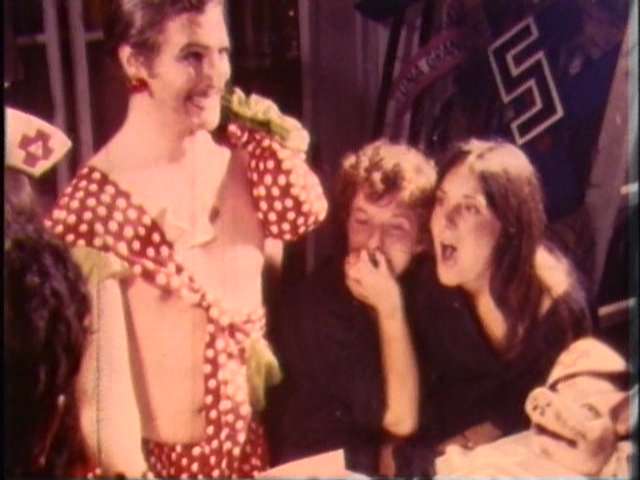
    The young but traveled Ana arrives in a manor in the countryside of Spain to work as nanny of three girls and finds a dysfunctional family: the matriarch is a sick old woman obsessed by death and having constant nervous breakdown; her son José was raised dressing girl’s clothes until his First Communion and is obsessed by military clothes and stuffs; Juan, the father of the three girls, is a pervert since his childhood that writes pornographic letters to Ana; his wife Luchy has suicidal tendencies; and the mystic and religious eremite Fernando, who was inflicted to flagellation in his childhood, lives recluse in a cave. The presence of Ana disturbs the three brothers with tragic consequences.Read More »

  • Ken Russell – Lisztomania (1975)

    1971-1980FantasyKen RussellMusicalRock n' Roll MusicalsUnited Kingdom

    A send-up of the bawdy life of Romantic composer and piano virtuoso Franz Liszt (Roger Daltrey), with ubiquitous phallic imagery and a good portion of the movie devoted to Liszt’s “friendship” with fellow composer Richard Wagner (Paul Nicholas). This movie begins during the time when Franz would give piano performance to a crowd of shrieking teenage fans while maintaining affairs with his mistresses. He eventually seeks Princess Carolyn of St. Petersburg (Sara Kestelman) (at her invitation), elopes, and, after their marriage is forbidden by the Pope (Sir Ringo Starr), he embraces the monastic life as an abbé.Read More »

Back to top button