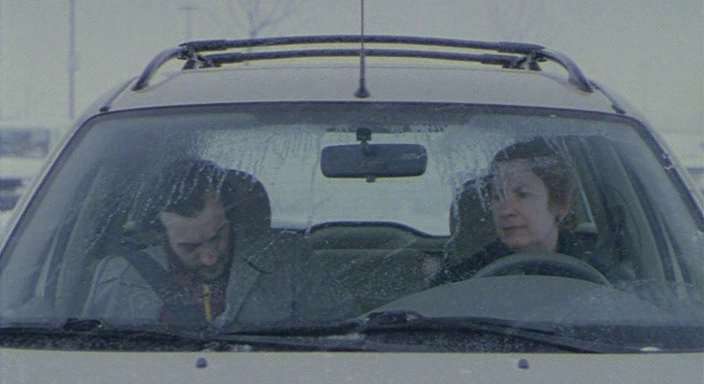

A young man goes shopping with his mother after a tumultuous night out. The conversation taking place on route is filled with uncomfortable dialogue between two generations.Read More »
A young man goes shopping with his mother after a tumultuous night out. The conversation taking place on route is filled with uncomfortable dialogue between two generations.Read More »
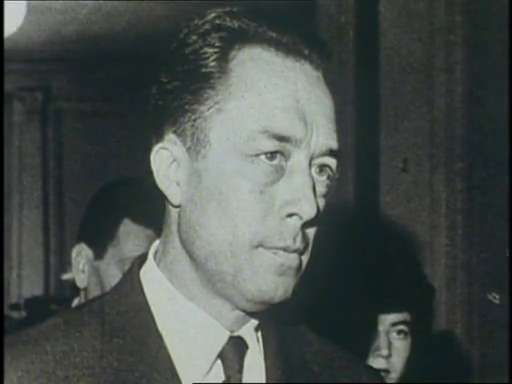
Portrait de l’écrivain Albert CAMUS à travers des témoignages de ses confrères, de ses familiers et de ses compagnons de résistance : Louis Guilloux, Jean Pelegri, Mouloud Mammeri, Edmond Charlot, Jacqueline Bernard, Jules Roy, Jean Daniel, Francis Jeanson, Suzanne Agnelli . La vie de l’auteur est retracée et les principaux thèmes de son oeuvre sont évoqués : la Méditerranée et l’amour de la nature, le divorce entre l’homme et le monde, la révolte contre l’oppression et la revendication de liberté. Lecture de réflexions de Camus sur l’art du comédien par Catherine Sellers, extraits répétition des “Justes” par Ludmilla Mikaël, Yves Fabrice, Niels Arestrup.Read More »
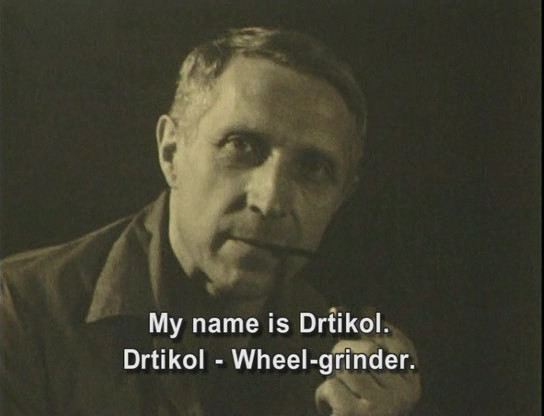
Photographer Frantisek Drtikol
The documentary film “The Photographer Frantisek Drtikol” by the director Jiri Holna (28 min, 2002) drawn from Drktikol’s diaries and private correspondence, includes the recollections of Drtikol’s daughter Ervina Bokova, as well as part of a short film by Drtikol from 1920.
“Man can never be lazy and indifferent to flashes of beauty:
he must collect them, keep them and treat them well,
because in a while they disappear as footprints in sand.”
This documentary is about world-famous Czech photographer, painter and philosopher Frantisek Drtikol (1883-1961).Read More »

Synopsis
Alex, Lino and Liz, three sons of diplomats, live together in Brasilia enjoying the freedom inside an empty apartment with no parents, seemingly unaware of the world outside. Their lives change irrevocably when they meet ‘X’, a person with no name or past, who suggests taking the idea of living every day as it was the last one. For that to happen they form a new movement – THE CONCEPTION, having a revolutionary creed: Death to the ego, be a new character every day, lose your memories, abolish money, have excesses all the time. The world becomes a great theatre, the conceptualist is someone that makes up characters which last only 24 hours.Read More »
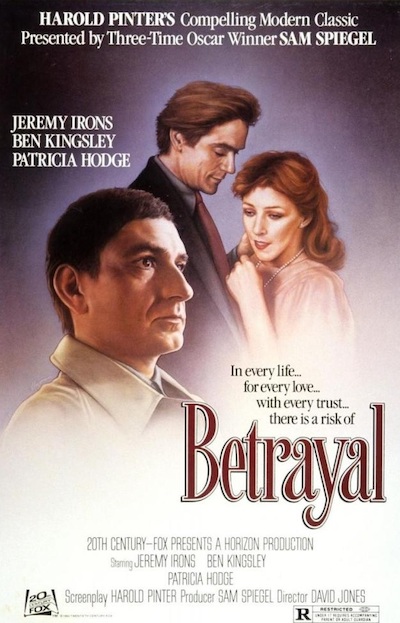
The film version of what is widely regarded as one of Nobel Prizewinner Harold Pinter’s greatest plays. Betrayal traces a seven year affair played out in reverse – from its poignant end to its illicit first kiss. This version is from it’s first British TV screening and is upped to celebrate 50 years of Harold Pinter plays. In 1958 Harold Pinter wrote the following:
“There are no hard distinctions between what is real and what is unreal, nor between what is true and what is false. A thing is not necessarily either true or false; it can be both true and false.” The film is little more than the stage play on celluloid and has great performances from Ben Kingsley, Patricia Hodge and Jeremy Irons. The silence after the opening credits is intentional.Read More »
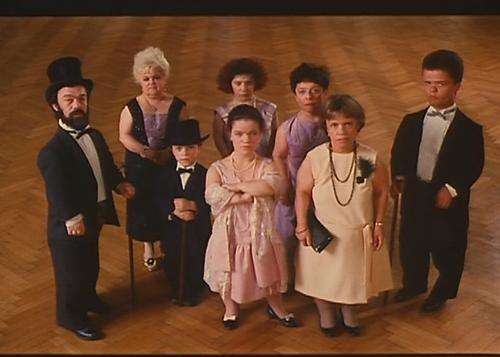
SYNOPSIS: The theme of death is heavily interwoven in Smolder’s surreal salute to Belgian painter Antoine Wiertz, Pensees et visions d’une tete coupee / Thoughts and Visions of a Severed Head, a Hieronymus Bosch-type artist whose work centered on humans in various stages in torment, as depicted in expansive canvases with gore galore. Smolders has basically taken a standard documentary and chopped it up, using quotes from the long-dead artist, and periodic statements by a historian (Smolders) filling in a few bits of Wiertz’ life.
The museum designed to house the painter’s work is like a great multi-roomed barn, displaying paintings as small as a counter, or as big as a three-storey building. Inside the museum, Smolders stages a tour for arriving guests: nattily dressed dwarves who accentuate the painter’s mad visions and ego that bleed from the more disturbing works dealing with suicide, infanticide, piles of baby bodies, and monsters opening up their innards while half-naked humans are torn apart by tentacled monsters…Read More »

Making its debut with Romeo and Juliet on 3 December 1978, and concluding nearly seven years later with Titus Andronicus on 27 April 1985, the BBC Television Shakespeare project was the single most ambitious attempt at bringing the Bard of Avon to the small screen, both at the time and to date.
Producer Cedric Messina was already an experienced producer of one-off television Shakespeare presentations, and was thus ideally qualified to present the BBC with a daunting but nonetheless enticingly simple proposition: a series of adaptations, staged specifically for television, of all 36 First Folio plays, plus Pericles (The Two Noble Kinsmen was considered primarily John Fletcher’s work, and the legitimacy of Edward III was still being debated).
The scale of Messina’s proposal, far greater than that of previous multi-part Shakespeare series such as An Age of Kings (BBC, 1960) and Spread of the Eagle (BBC, 1963), required an American partner in order to guarantee access to the US market, deemed essential for the series to recoup its costs. Time-Life Television agreed to participate, but under certain controversial conditions – that the productions be traditional interpretations of the plays in appropriately Shakespearean period costumes and sets, designed to fit a two-and-a-half-hour time slot.Read More »

This film comes from the Schloss Archive of His Highness, Herr Graf Ferdinand von Galitzien:

Quote:
Born Franz Wygand Wüstenhöfer in Malstatt (Saarland), Hofer began his career as a stage actor and playwright in 1909. A year later he began working as a screenwriter for Messter’s Henny Porten series and for directors such as Viggo Larsen—Die schwarze Katze [The Black Cat] (1910)—and Walter Schmidthässler—Das Weib ohne Herz [The Woman Without a Heart] and Der Zug des Herzens [The Pull of the Heart] (both 1912).Read More »
from allmovie guide.com
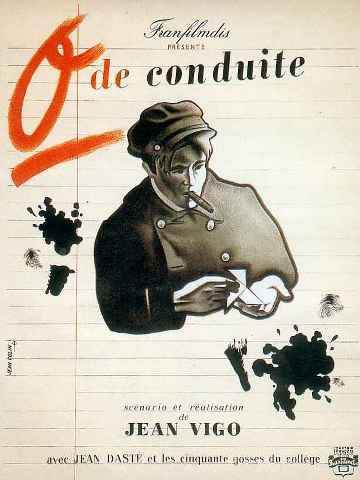
The shortest of French filmmaker Jean Vigo’s two feature-length films, Zero for Conduct (Zero de Conduite) is also arguably his most influential. The overtly autobiographical plotline takes place at a painfully strict boys’ boarding school, presided over by such petit-bourgeous tyrants as a discipline-dispensing dwarf. The students revolt against the monotony of their daily routine by erupting into a outsized pillow fight. Their final assault occurs during a prim-and-proper school ceremony, wherein the headmasters are bombarded with fruit. Like all of Vigo’s works, Zero for Conduct was greeted with outrage by the “right” people. Thanks to pressure from civic and educational groups, this exhilaratingly anarchistic film was banned from public exhibition until 1945. Among the future filmmakers influenced by Zero for Conduct was Lindsay Anderson, who unabashedly used the Vigo film as blueprint for his own anti-establishment exercise If…. Read More »