• Denis Trofimov – Sacrifices of Andrei Tarkovsky (2012)

    2011-2020Andrei TarkovskyDenis TrofimovDocumentaryRussia

    Dedicated to the 80th anniversary of the director. The film uses unique materials related to the years Tarkovsky spent in Italy: Florence, where he lived, and where his museum now exists, at a place called Banja Vignoni, where “Nostalgia” was filmed in the house of the Italian screenwriter Tonino Guerra.

    The film will include rare unique images: young Tarkovsky on the set, fragments of the documentary “Time of travel”, which was filmed in Italy by Andrei Tarkovsky with Tonino Guerra. For the first time viewers will see the location of filming of “Stalker” in Estonia…Read More »

  • Theodoros Angelopoulos – Trilogia I: To Livadi pou dakryzei AKA Trilogy: The Weeping Meadow (2004)

    2001-2010DramaEpicGreeceTheodoros Angelopoulos

    This is the first film of Theo Angelopoulos’ trilogy. The story starts in 1919 with some greek refugees from Odessa arriving somewhere near Thessaloniki. Among these people are two small kids, Alexis and Eleni. Eleni is an orphan and she is also taken care by Alexis’ family. The refugees build a small village somewhere near a river and we watch as the kids grow up and fall in love. But difficult times of dictatorship and war are coming…Read More »

  • Theodoros Angelopoulos – Mia aioniotita kai mia mera AKA Eternity and a Day (1998)

    1991-2000DramaGreeceTheodoros Angelopoulos

    Quote:
    “Eternity and a Day” won an overdue Palme d’Or at last year’s Cannes International Film Festival for the Greek director Theo Angelopoulos, whose style of drifting metaphysical reverie is at its most accessible here. All things being relative, this is a dreamy, lulling film but also a more concise and straightforward one than the magnificently grandiose “Ulysses’s Gaze”, the Angelopoulos opus that directly preceded it. “Eternity and a Day” is simpler, the haunting poetic valedictory of an artist whose memory leads him across the landscape of his life during his last day on earth.Read More »

  • Theodoros Angelopoulos – To vlemma tou Odyssea Aka Ulysses’ Gaze (1995)

    Arthouse1991-2000EpicGreeceTheodoros Angelopoulos

    Quote:
    Starring Harvey Keitel, just a year after his turn in the American masterpiece Pulp Fiction and two years after the controversial indie double whammy of Bad Lieutenant and Reservoir Dogs, Ulysses’ Gaze would win multiple awards the world over, including the Special Jury Prize at the Cannes Film Festival (the film would not take the Palme d’Or, the festival’s highest honor, prompting Angelopoulos to shockingly declare, “If this is what you have to give me, I have nothing to say.”).Read More »

  • Giorgos Lanthimos – Kinetta (2005)

    2001-2010ArthouseDramaGiorgos LanthimosGreece

    29f7c043f76a2bde437fd0d52a185152

    Synopsis

    filmfestival.gr wrote:
    Kinetta. A defunct Greek resort town, inhabited during the off-season by migrant workers. A plain-clothes cop, with a passion for automobiles, tape recorders and Russian women, investigates a series of recent murders in the area. He enlists the help of a photo-store clerk, a loner type who is a part-time videographer, and a young hotel maid, who will be performing the role of the female victims. This oddball trio engages in a succession of murder re-enactments, directed by the cop with exhaustive attention to detail but questionable scientific purpose.

    filmref.com wrote:
    “Something of a hybrid between Tsai Ming-liang’s eccentric, temp morts snapshots of human idiosyncrasy crossed with the glacially paced visual abstraction of Sharunas Bartas by way of Philippe Grandrieux’s murky, destabilized, and defocused gaze”
    Read More »

  • Theodoros Angelopoulos – Topio stin omichli aka Landscape in the Mist (1988)

    Drama1981-1990ArthouseGreeceTheodoros Angelopoulos

    Synopsis:
    The movie portrays the journey of two children in search of their father, whom they believe lives in Germany. On the way they meet many people, including a troupe of actors (a reference to Angelopoulos’ early movie The Travelling Players), and encounter dangers.Read More »

  • Galata Mevlevileri – The Sema Ceremony (2007)

    2001-2010Galata MevlevileriPerformancePhilosophyTurkey

    PEACE VOICES RISING FROM GALATA
    Sema symbolising a going and return, a spiritual voyage to the perfection is a salutation from the secret brave men in the heart. This voyage composed of seven parts embraces with love and affection all humanity, all living creatures by turning from right to left around the heart.

    Galata Mevlevi Music and Sema Group from Galata Mevlevihane organising sema ceremonies fulfills its mission of peace representative thanks to the shows held on the whole world. The group organising a sema ceremony and conversation meeting to the honour of the Queen of Spain in the past years took part in the activities of “World Aid Committee to the Helpless Children” arranged by UNESCO in Brussels.Read More »

  • Ernest Pintoff – Jaguar Lives! (1979)

    1971-1980ActionErnest PintoffThrillerUSA

    29f7c043f76a2bde437fd0d52a185152

    During a mission a secret agent called Jaguar loses his partner in a explosion. So after the disaster he goes back to his sensei to continue his training. But after a while he is called back on a mission involving that of a international drug dealer that might have had a hand in his friend / partner’s death. This leads Jaguar on a whirlwind trip across the glob, where he encounters many foes before he confronts his main man. Read More »

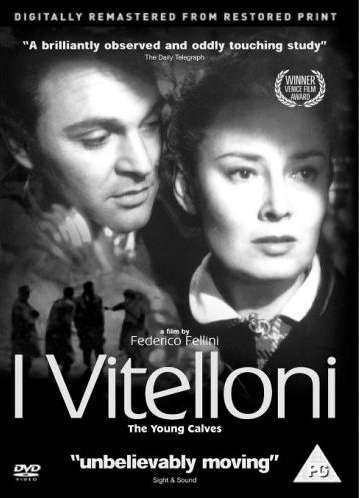
  • Federico Fellini – I vitelloni (1953)

    1951-1960ArthouseDramaFederico FelliniItalian Neo-RealismItaly

    Free Image Hosting at www.ImageShack.us

    29f7c043f76a2bde437fd0d52a185152

    Quote:
    Federico Fellini’s second feature, *I Vitelloni* (literal trans.: “fatted veal calves”; figurative trans.: “the guys”), is an honest, unpretentious work from the Master before he became besotted with his own self-indulgence.

    It’s autobiographical in several indirect ways. The depictions here of young men who are not quite so young anymore, living with their mothers, settling for dead-end jobs or simply not working, and generally languishing their lives away, are based on Fellini’s own observations of such fellows in his boyhood home of Rimini. Autobiographical too in its sense of style: the movie is inescapably stamped by the Neo-Realism of Fellini’s apprenticeship. The grimy faces of working-class people, crumbling tenements, and weed-choked rail-yards are all here. But with a difference: Fellini casts a critical eye on this scene, eschewing the usual Neo-Realist appeal to our presumed socialist sympathies. *I Vitelloni* is not a political film in the usual mid-century Italian manner. Fellini gives us a quintet of heroes who, for the most part, aspire to be bourgeois big-shots of their shabby seacoast town. Not content with that, he makes them lazy, as well . . . and then he asks us to root for them, to actually like them! Needless to say, the intelligentsia of the period didn’t warm to this film, even as the film-going public in Europe loved it, recognizing themselves and their friends and their own hometowns in it.Read More »

Back to top button