Quote:
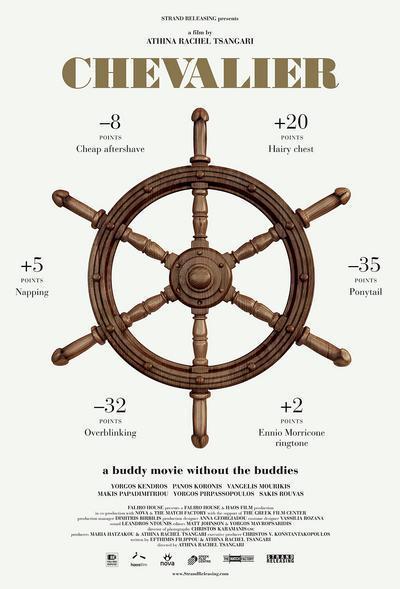
Manhood-measuring contests — in every imaginable sense of the phrase — are taken to brazenly literal extremes in “Chevalier,” the long-awaited third feature from Greek multi-tasker Athina Rachel Tsangari. Markedly different in focus and emotional temperature from her 2010 breakthrough, “Attenberg,” this committedly deadpan comedy of manners, morals and men behaving weirdly boasts a contained conceit seemingly ripe for unfettered absurdism: On a luxury yacht in the Aegean Sea, six male acquaintances embark on a rigorous series of personal and physical challenges, mercilessly grading each other to determine who is “the Best in General.” That Tsangari resists escalating the conflict, counting on subtle political insinuations to emerge as these perplexing social Olympics wear on, will leave as many viewers enervated as amused, but it’s an expertly executed tease.Read More »
-
Athina Rachel Tsangari – Chevalier (2015)
2011-2020ArthouseAthina Rachel TsangariComedyGreece -
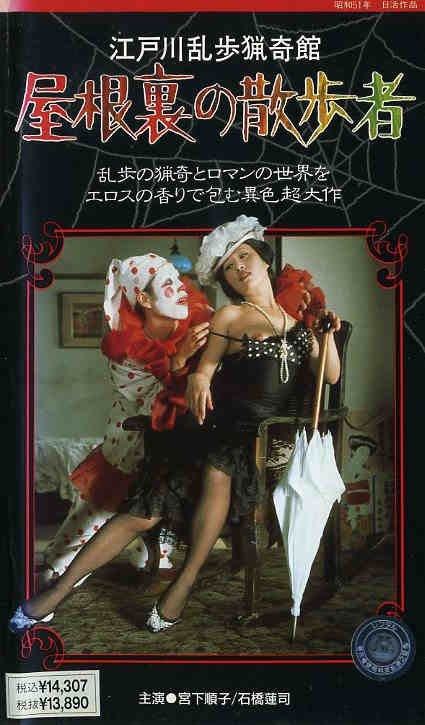
Noboru Tanaka – Edogawa Ranpo ryôki-kan: Yaneura no sanposha AKA Watcher in the Attic (1976)
1971-1980CrimeHorrorJapanNoboru TanakaWatcher in the Attic is a 1976 Japanese film in Nikkatsu’s Roman porno series, directed by Noboru Tanaka and starring Junko Miyashita.
In 1923 Tokyo Lady Minako is the owner of a shabby boarding house with a collection of bizarre characters for tenants. Gōda, one of her tenants, spends most of his time in the attic spying on the other tenants through holes he has drilled into the ceiling. During one of his peeping sessions, Gōda witnesses the murder of one of the tenants at the hand of Lady Minako. Gōda becomes obsessed with Lady Minako, and determines to commit a grotesque murder in order to prove to her that he is her soul mate. He kills another tenant – a priest – by dripping poison into his mouth through the ceiling. A series of grotesque murders follow. The film ends apocalyptically with the Great Kantō earthquake which kills both of them during their intercourse. Read More »
-
Robert Houston & Kenji Misumi – Shogun Assassin (1980)
1961-1970ActionAsianJapanKenji MisumiRobert HoustonA sort of remake of Lone Wolf and Cub for the western market condensing the series in one film. In 1980, Americans David Weisman (producer) and Robert Houston (director) stumbled upon the Japanese Lone Wolf and Cub films (in turn based on a hugely successful manga comic book), and realised that while Western Audiences at the time would lap up the violent battles, they might not be ready for the Chanbara genre’s comparatively slow pacing and period politics. They decided to take the best bits of Lone Wolf and Cub parts 1 and 2, and add their own dubbing and simplified plot. Shogun Assassin was born, and is probably responsible to this day for the Chanbara movie’s arrival in the West. Best approached as an introduction to the Lone Wolf and Cub legend.Read More »
-
Allan King – Warrendale (1967)
1961-1970Allan KingAmos Vogel: Film as a Subversive ArtCanadaDocumentaryQuote:
King’s feature debut, Warrendale, about a collection of volatile children from the titular Toronto-based rehabilitation center, has been compared to the works of Pennebaker, Maysles, and Rouch within the cinema vérité and Direct Cinema movements. But King’s approach to capturing the children’s emotional ebbs and flows as they experience anger, guilt, and finally tragedy, seems arguably more human, hypnotically attuned to the delicate sensitivities of people’s movements and sounds. As the adult caregivers attempt to build trust with these damaged children, King focuses on the intimate moments of counseling, reassurance, and discourse structuring the narrative. That these sequences often devolve into hysterical fits and seizures makes the film all the more forceful, showing the dark undercarriage of childhood trauma without any buffer or safety net. The film’s striking emotional centerpiece, a family-style meeting between counselors and children about the sudden death of the house cook, is a breathtaking display of collective heartbreak and rejuvenation that creates a frenzy of repressed rage. In a single moment, King’s camera becomes engulfed in an emotional war zone, pinned down but never overwhelmed by honest, raw expression, always able to capture the small moments on the fringes of the frame.Read More » -
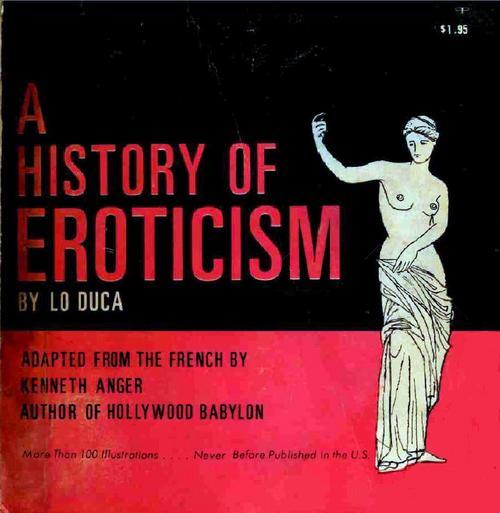
Joseph-Marie Lo Duca & Kenneth Anger – A History of Eroticism (1966)
1961-1970BooksJoseph-Marie Lo Duca and Kenneth AngerKenneth AngerUSAJoseph-Marie Lo Duca was an Italian-born journalist, novelist, art critic, and film historian best known as the co-founder in 1951 of the influential French magazine Cahiers du Cinéma with André Bazin, Jacques Doniol-Valcroze and Léonide Keigel. Lo Duca was born in Milan, Italy to a family of Sicilian origin. Fascinated from an early age with reading and writing, he published his first novel, La sfera di platino (“The Sphere of Platinum”) in 1927. In 1942, having assembled a wealth of rare documents and objects related to cinema, Lo Duca established the Musée Canudo at the Palais de Chaillot in Paris with the goal of founding the International Museum of Cinema in Rome. The project for the Rome museum, however, did not survive the war. In 1948, he published Le dessin animé (“The Animated Cartoon”) with a preface by Walt Disney. His Histoire du cinéma (1942) was translated into twelve languages while Technique du cinéma (1948) became a noted reference work.Read More »
-
Lucy Carter – Auschwitz: The Forgotten Evidence (2004)
2001-2010DocumentaryLucy CarterUnited KingdomWhen an Allied photo-reconnaissance plane flew over southern Poland in the summer of 1944, following a bombing raid on 20 August, it took extraordinary images of the Nazis’ most evil extermination camp: Auschwitz Birkenau. From these photos, it is possible to see in detail how the SS organised their factory of death in which about 12,000 people were being murdered daily. But the pictures were not analysed at the time. Instead they were simply filed away.Read More »
-
Tan Oral – Sansür AKA Censorship (1970)
1961-1970AnimationPoliticsTan OralTurkeyQuote:
A cameraman chases a white rabbit and comes upon police brutality. Recording it and screening the footage will result in immediate censorship. A murder of flying censorship scissors will cut the film to pieces. The cameraman will cut the tree on which the censorship scissors dwell, and a shoot comes up from the stump. The cameraman will record this shoot. Written by Turhan KaradenizRead More » -
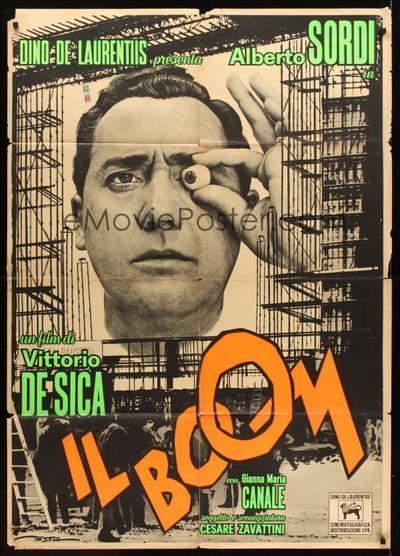
Vittorio De Sica – Il boom (1963)
1961-1970ComedyCommedia all'ItalianaItalyVittorio De SicaWritten by John Parrot On 20th April 2012,
By the release of Il Boom in 1963, the Italian economy had seen spectacular growth since 1951 in a growth spurt christened ‘il boom’. The country had left behind both neo-realism and penury. Life may have been sweeter for many people but, as we in the 2010s know, il boom is usually followed by il bust. Even if the Italian economy had been able to defy gravity and travel on a one-way trajectory to the stars, Vittorio De Sica would have been there to bring everyone back down to earth. Il Boom, starring one of Italy’s biggest comic movie stars, Alberto Sordi, looks beneath the glossy surface of the economic miracle to the festering truth of the matter.Read More »
-
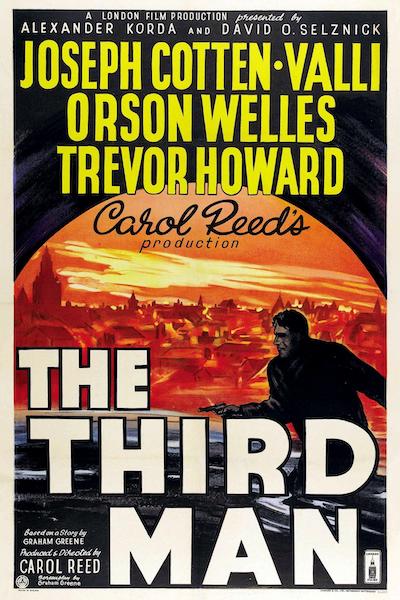
Carol Reed – The Third Man (1949)
1931-1940Carol ReedFilm NoirMysteryUnited KingdomAn out of work pulp fiction novelist, Holly Martins, arrives in a post war Vienna divided into sectors by the victorious allies, and where a shortage of supplies has led to a flourishing black market. He arrives at the invitation of an ex-school friend, Harry Lime, who has offered him a job, only to discover that Lime has recently died in a peculiar traffic accident. From talking to Lime’s friends and associates Martins soon notices that some of the stories are inconsistent, and determines to discover what really happened to Harry Lime.Read More »