• Jean-Claude Biette – Loin de Manhattan (1982)

    Drama1981-1990ComedyFranceJean-Claude Biette

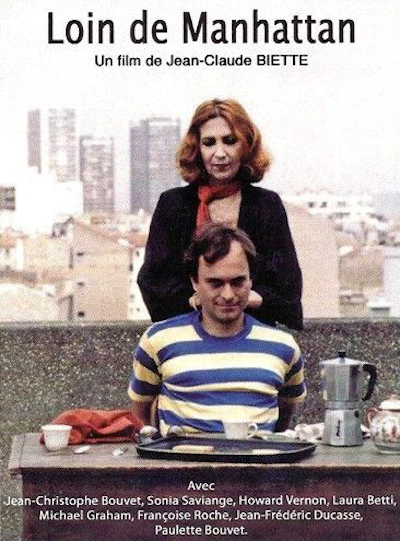
    Writer-director Jean-Claude Biette’s 1982 French comedy drama Loin de Manhattan is intriguing and densely scripted, with playful performances and teasing results. It stars Jean-Christophe Bouvet, Sonia Saviange, Howard Vernon, and Laura Betti. In Biette’s complex screenplay, Christian (Jean-Christophe Bouvet), the employee of a Paris art gallery, gets the help of his friend Ingrid (Sonia Saviange) to try to solve the mystery of why famous painter René Dimanche (Howard Vernon) did not produce a single painting in eight years.Read More »

  • Ettore Scola – C’eravamo tanto amati AKA We All Loved Each Other So Much (1974)

    1971-1980ClassicsComedyEttore ScolaItaly

    29f7c043f76a2bde437fd0d52a185152

    Quote:
    C’eravamo tanto amati, a tribute to Vittorio De Sica, is not only about the difficult, frustrating post-World War II years of three men whose class differences overwhelm the close bond they formed while fighting for the Resistance. It is also a complex survey of thirty years of Italian cinema and its relationship to Italian history, photographed in various appropriate cinematic styles.
    link
    Read More »

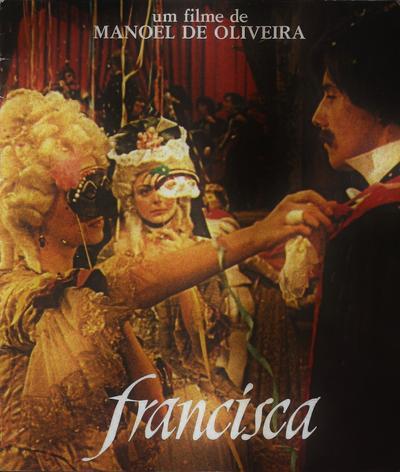
  • Manoel de Oliveira – Francisca (1981)

    1981-1990ArthouseCultManoel de OliveiraPortugal

    29f7c043f76a2bde437fd0d52a185152

    Quote:
    Portuguese director Manoel de Oliveira made this amazing film in 1981, at the age of 72; as powerful as it is stark, it suggests a blending of the modernist, minimalist techniques of Jean-Marie Straub with the elusive spiritual subject matter of Max Ophuls. In 19th-century Portugal, a rising young novelist falls in love with the daughter of an English army officer, provoking the obscure envy of an aristocratic friend, who resolves to marry the girl himself and make her suffer for her betrayal. The baroque plot is presented in a series of single-take tableaux, which do not attempt to embody the drama as much as allude to it, leaving the dense and passionate feelings to take shape entirely in the spectator’s mind. Oliveira limits himself to showing only what can truly be shown: not the story but a representation of the story, not the emotions but their material manifestations as they have crossed the decades. A masterpiece of the modern cinema, difficult but extremely rewarding.

    Review by Dave Kehr of the Chicago Reader:Read More »

  • Werner Schroeter – Nuit de chien AKA This Night (2008)

    2001-2010DramaGermanyWerner Schroeter

    29f7c043f76a2bde437fd0d52a185152

    Quote:
    Werner Schroeter is one of the German new wave’s prophets without honour. He was too confrontationally weird to take his place alongside Fassbinder, Wenders and Herzog in the international distribution sweepstakes and the disturbingly freaked-out Nuit de Chien goes a long way to suggesting why.

    The film posits Pascal Greggory as a man fleeing a nameless fascist dictatorship currently in the throes of a power struggle. Fleeing the nation, he can’t seem to find his wife and in searching for her winds up in brothels, alleys and avenues of power. As in the best magic realism, the country is a place of surreal dislocation, with people doing appalling things apparently against their personal dispositions and making peace with insane circumstances.Read More »

  • Philippe Lesage – Les démons AKA The Demons (2015)

    2011-2020CanadaDramaPhilippe Lesage

    29f7c043f76a2bde437fd0d52a185152

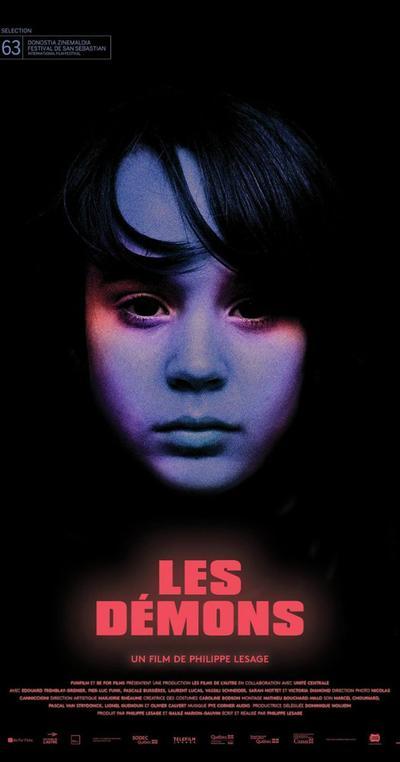
    A young boy begins to experience the adult world as he enters adolescence.

    A daring, exquisite study of agitated child psychology that marks Quebecois filmmaker Philippe Lesage as a name to watch.

    Fevered imagination and nightmarish reality brush shoulders to disconcerting effect in “The Demons,” Quebecois filmmaker Philippe Lesage’s extraordinary examination of childhood fears festering in broad suburban daylight. Putting his documentary training to disciplined use as he teases out the largely internalized insecurities — sexual, social and practical — of his 10-year-old protagonist.Read More »

  • Luis Buñuel – Un chien andalou (1929)

    1921-1930FranceLuis BuñuelShort FilmSilent

    29f7c043f76a2bde437fd0d52a185152

    In a dream-like sequence, a woman’s eye is slit open–juxtaposed with a similarly shaped cloud obsucuring the moon moving in the same direction as the knife through the eye–to grab the audience’s attention. The French phrase “ants in the palms,” (which means that someone is “itching” to kill) is shown literally. A man pulls a piano along with the tablets of the Ten Commandments and a dead donkey towards the woman he’s itching to kill. A shot of differently striped objects is repeatedly used to connect scenes. Written by Ryan T. CaseyRead More »

  • Jean-Pierre Lajournade – Les Souffrances du jeune Werther (1968)

    1961-1970ArthouseFranceJean-Pierre LajournadeTV

    29f7c043f76a2bde437fd0d52a185152

    Free adaptation of Goethe. 68’s spleen and rebellion with Garrel Brothers…

    Adaptation libre du roman épistolaire éponyme et premier roman de Goethe qui fut publié anonymement et parut en 1774. Il met en scène le suicide de son héros. Il est ici transposé à l’époque contemporaine et mêle interprétations et images d’archives (d’origine non identifiée), dans une narration qui bouscule les codes classique du genre. Ce téléfilm offre une relecture critique de l’oeuvre de Goethe à travers une remise en cause de la société bourgeoise. Le film montre la révolte hors de toute dimension spectaculaire. La présentation de Werther répond à un mouvement de libération ambiant et exprime une volonté de soulèvement, par tous les canaux que propose l’art, face à une morale vieillissante et un système pesant. Ce Werther fut réalisé en 1968, année de révolte.Read More »

  • Ivo van Hove & La Comédie-Française – Les Damnés AKA The Damned (2016)

    2011-2020DramaFranceIvo van HoveLa Comédie-FrançaisePerformance

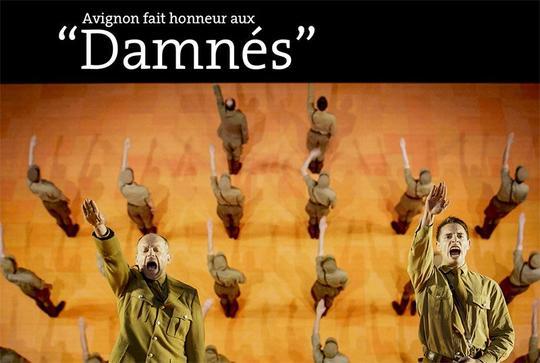
    Ivo van Hove’s first staging with the Troupe marks the entry into the repertoire of the scenario of The Damned. In two decades, the artistic director of the Toneelgroep in Amsterdam, whose field of exploration encompasses the world of theatre, film and opera, has explored a vast repertoire of works, from Sophocles and Shakespeare to Molière, Koltès, Cassavetes or Arthur Miller. The intention in this production is not to adapt the cult film, directed byVisconti, but “to return to the screenplay in order to stage it for theatre”. What Ivo van Hove retains from this sharply drawn chronicle of a family of industrialists during the Nazi seizure of power in 1933 in Germany is the ideological depravity of a company willing to makes the most poisonous alliances to benefit its own economic interests. “In my view, it is the celebration of evil”, says the director, whose work “always combines strong theatricality with the exploration of complex psychological zones and refined emotions”. Read More »

  • Ingmar Bergman – Ingmar Bergman Bris Soap Commercials (1951)

    1951-1960Ingmar BergmanShort FilmSweden

    In 1951 there was a conflict in the Swedish film industry. The production companies had declared a ban on filming in protest against the high rate of tax on entertainment. Recently remarried, Ingmar Bergman, found himself with three families to support, and his contract with the Gothenburg City Theatre had expired. In order to earn any income whatsoever that year, he agreed to direct nine commercial for Bris soap on behalf of Swedish Unilever. It seems more than a coincidence that Sweden’s most famous film director should be the one to take the country’s advertising to a higher plane: the Bris films were the most lavishly funded that the country had ever seen.Read More »

Back to top button