Quote:
Known as the alleged world capital of the gypsy or Romany peoples, Shutka, Macedonia thrives on one goal: to be the champion of everything known to humankind. This “anthropological documentary comedy” looks at how people crave to be the best at what they do: no matter if that is hunting down vampires, collecting obsolete Turkish music on audio tapes, training geese to fight, or exterminating evil Genies. Winner of numerous awards world-wide and in its native country, this film is a wonderful examination of people, their quirks, and the wild and zany world within contemporary Serbia/Montenegro. Highly recommended for both entertainment and anthropological interest.Read More »
-
Aleksandar Manic – Knjiga rekorda Sutke AKA The Shutka Book of Records (2005)
2001-2010Aleksandar ManicDocumentaryNetherlands -
Andrzej Zulawski – La fidélité AKA Fidelity (2000)
1991-2000Andrzej ZulawskiArthouseDramaFranceSynopsis
A talented young photographer, Claire is hired by a Canadian tabloid magnate, Mac Roi, to improve his company’s image. Claire knows that her mother once had an affair with this charismatic man and suspects that she may be his daughter. She meets Clève, an honest 30-something publisher whose company has just been bought up by Mac Roi. Claire is so taken by Clève’s unassuming charms that she agrees to marry him. But when she takes an interest in Némo, a photographer involved with illicit tracking, Clève starts to become very jealous…
Films de France.comRead More » -
Alfred Hitchcock – Rear Window (1954)
1951-1960Alfred HitchcockMysteryThrillerUSAQuote:
Alfred Hitchcock spent his entire career experimenting with, and perfecting, the storytelling structure of the thriller. He had a legitimate “prestige” film with his first American production, “Rebecca,” but even that more than qualifies to be considered in the same genre vein as “Vertigo,” “Psycho,” “North By Northwest” or “Strangers on a Train.” This particular attention to genre is likely why Hitchcock did not receive an Oscar until the Honorary one he got at the end of his life, but that snub has always been attributed more to the stuffiness of the Academy than any lack of worthiness on Hitch’s part.Read More » -
Dziga Vertov – Kino-Pravda No. 4 (1922)
1921-1930DocumentaryDziga VertovSilentUSSRQuote:
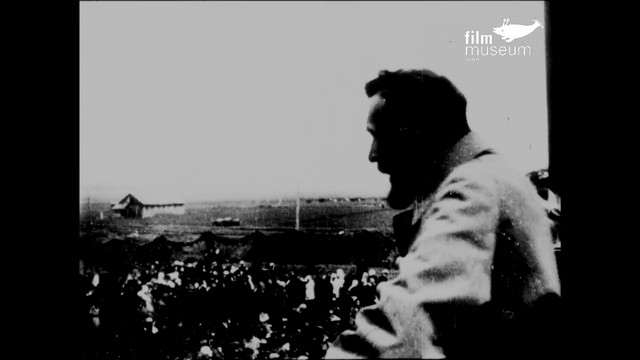
Between 1922 and 1925, a total of 23 issues of Dziga Vertov’s newsreel series Kino-Pravda (Kino-Truth) appeared (albeit irregularly and in very few copies). Vertov’s goal was to create a kind of “screen newspaper”; the title is a tribute to the newspaper Pravda founded by Lenin. Just like the Kinonedelja newsreel series (1918–19), the Kino-Pravda issues offer a fascinating insight into the early Soviet Union and demonstrate the rapid development of Vertov’s film language.The 22 surviving issues (No. 12 is lost) have been digitized and subtitled in German and English by the Austrian Film Museum in 2017/18 and are now available online.Read More »
-
Dziga Vertov – Kino-Pravda No. 3 (1922)
1921-1930DocumentaryDziga VertovSilentUSSRQuote:
Between 1922 and 1925, a total of 23 issues of Dziga Vertov’s newsreel series Kino-Pravda (Kino-Truth) appeared (albeit irregularly and in very few copies). Vertov’s goal was to create a kind of “screen newspaper”; the title is a tribute to the newspaper Pravda founded by Lenin. Just like the Kinonedelja newsreel series (1918–19), the Kino-Pravda issues offer a fascinating insight into the early Soviet Union and demonstrate the rapid development of Vertov’s film language.The 22 surviving issues (No. 12 is lost) have been digitized and subtitled in German and English by the Austrian Film Museum in 2017/18 and are now available online.Read More »
-
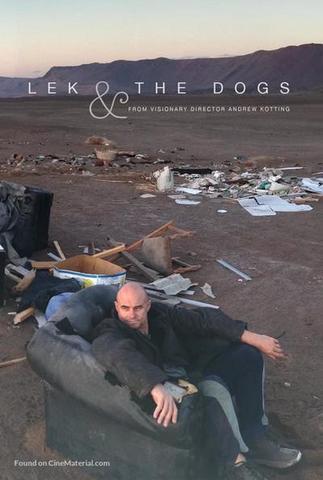
Andrew Kotting – Ivan and the Dogs AKA Lek and the Dogs (2017)
2011-2020Andrew KottingExperimentalFantasyUnited KingdomSynopsis
In his adaptation of Hattie Naylor’s play Ivan and the Dogs, experimental filmmaker Andrew Kötting travels to the Chilean desert to recreate the life of the young boy who left his Moscow apartment to live with a pack of wild dogs. A crossover between narrative film and contemporary art piece.
Read More » -
Dziga Vertov – Kino-Pravda No. 2 (1922)
1921-1930DocumentaryDziga VertovSilentUSSRQuote:
Between 1922 and 1925, a total of 23 issues of Dziga Vertov’s newsreel series Kino-Pravda (Kino-Truth) appeared (albeit irregularly and in very few copies). Vertov’s goal was to create a kind of “screen newspaper”; the title is a tribute to the newspaper Pravda founded by Lenin. Just like the Kinonedelja newsreel series (1918–19), the Kino-Pravda issues offer a fascinating insight into the early Soviet Union and demonstrate the rapid development of Vertov’s film language.The 22 surviving issues (No. 12 is lost) have been digitized and subtitled in German and English by the Austrian Film Museum in 2017/18 and are now available online.Read More »
-
Dziga Vertov – Kino-Pravda No. 1 (1922)
1921-1930DocumentaryDziga VertovSilentUSSRQuote:
Between 1922 and 1925, a total of 23 issues of Dziga Vertov’s newsreel series Kino-Pravda (Kino-Truth) appeared (albeit irregularly and in very few copies). Vertov’s goal was to create a kind of “screen newspaper”; the title is a tribute to the newspaper Pravda founded by Lenin. Just like the Kinonedelja newsreel series (1918–19), the Kino-Pravda issues offer a fascinating insight into the early Soviet Union and demonstrate the rapid development of Vertov’s film language.The 22 surviving issues (No. 12 is lost) have been digitized and subtitled in German and English by the Austrian Film Museum in 2017/18 and are now available online.Read More »
-
Sogo Ishii – Mizu no naka no hachigatsu AKA August in the Water (1995)
1991-2000DramaFantasyJapanSogo IshiiQuote:
Taking in the whole spectrum of pre-millennial new age phenomena, the bizarre August in the Water (whose English language release title is a direct translation of the Japanese, though is not to be confused with Yoichiro Takahashi’s identically titled Mizu No Naka No Hachigatsu, a 1998 coming of age drama which did the Festival circuit under the English language title of Fishes in August) is a bit of a mixed bag. Thematically, it’s a real inspiration. The X-Files notwithstanding, this sort of imaginative pseudo-scientific fantasy stands fairly uniquely amongst contemporary cinematic output. Visually the film is also a wonder, with impressive use of natural lighting in the bright exteriors, and beautifully composed Zen-like static shots of the assorted esoteric ephemera alternating with rapid multiple-angle edits and abstracted close-ups of the natural phenomena.Read More »