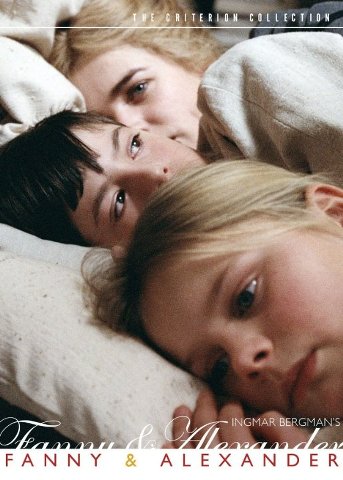
• Ingmar Bergman – Fanny och Alexander [Theatrical Version] (1982)

    1981-1990ArthouseDramaIngmar BergmanSweden

    29f7c043f76a2bde437fd0d52a185152

    Plot Synopsis from ALLMOViE:

    Though he made allusions to his own life in all of his films, Fanny and Alexander was the first overtly autobiographical film by Ingmar Bergman. Taking his time throughout (188 minutes to be exact), Bergman recreates several episodes from his youth, using as conduits the fictional Ekdahl family. Alexander, the director’s alter ego, is first seen at age 10 at a joyous and informal Christmas gathering of relatives and servants. Fanny is Alexander’s sister; both suffer an emotional shakedown when their recently-widowed mother (Ewa Froling) marries a cold and distant minister. Stripped of their creature comforts and relaxed family atmosphere, Fanny and Alexander suddenly find their childhood unendurable. The kids’ grandmother (Gunn Wallgren) “kidnaps” Fanny and Alexander for the purpose of showering them with the first kindness and affection that they’ve had since their father’s death. This “purge” of the darker elements of Fanny and Alexander’s existence is accomplished at the unintentional (but applaudable) cost of the hated stepfather’s life. Ingmar Bergman insisted that Fanny and Alexander, originally a multipart television series pared down to feature-film length, represented his final film, though within a year after its release he was busy with several additional Swedish TV projects, and he returned to make one more theatrical release movie before his death – the 2003 Saraband. Oscars went to Fanny and Alexander for Best Foreign Film, Best Cinematography (Sven Nykvist), Best Costume Design and Best Art Direction/Set Decoration.Read More »

  • Andrey Konchalovskiy – Pervyy uchitel AKA The First Teacher (1965)

    1961-1970Andrey KonchalovskiyDramaUSSR

    29f7c043f76a2bde437fd0d52a185152

    Synopsis:
    Soviet Union, near the Chinese border, 1923. A stranger has just come in this little country village. He is a teacher, sent by the Communist Party to teach the ignorant masses. But the countrymen are to help him, and even to let their children go and “sleep” at school instead of giving a hand. There is only, Altynai, an orphan, to seem fascinated by the teacher and his knowledge.Read More »

  • Dorota Kedzierzawska – Wrony AKA Crows (1994)

    1991-2000ArthouseDorota KedzierzawskaDramaPoland

    29f7c043f76a2bde437fd0d52a185152

    Quote:
    A kidnapped happiness

    In Wrony (Crows, 1994), the central place is given once again to a little girl, this time set against the background of a small town. It also is a film about love, but this time about the absence of it. Wrona, the skinny and mouthy girl of a fragile build with a face of both an innocent and a scamp, kidnaps another little girl (Maleństwo) from the neighbourhood. She does so in order to find someone to love and to be loved herself.
    Read More »

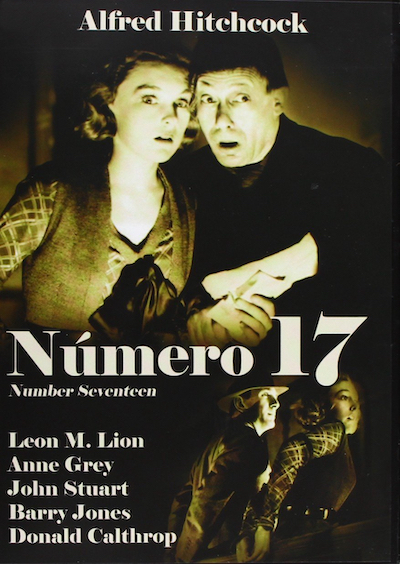
  • Alfred Hitchcock – Number Seventeen (1932)

    1931-1940Alfred HitchcockMysteryThrillerUnited Kingdom

    A gang of thieves gather at a safe house following a robbery, but a detective is on their trail.Read More »

  • Alfred Hitchcock – Aventure malgache (1944)

    1941-1950Alfred HitchcockShort FilmUnited KingdomWar

    29f7c043f76a2bde437fd0d52a185152

    The Moliere players are in their dressing room, getting ready to go on set. One actor mentions to another that his face reminds him of an opportunist turncoat he knew when he was in the Resistance. He then relates the adventure that he had in the Resistance, running an illegal radio station and dodging the Nazis.Read More »

  • Jörn Donner – Perkele! Kuvia Suomesta aka Fuck Off! – Images of Finland (1971)

    1971-1980DocumentaryFinlandJörn Donner

    Free Image Hosting at www.ImageShack.us

    29f7c043f76a2bde437fd0d52a185152

    Fuck Off!! – Images of Finland (1970) was a documentary which focused on people living on the margins of the society, poor, and politically active workers.
    Read More »

  • Marina Razbezhkina – Vremya zhatvy AKA Harvest Time (2004)

    2001-2010ArthouseDramaMarina RazbezhkinaRussia

    29f7c043f76a2bde437fd0d52a185152

    Synopsis:
    Winner of a Golden Plaque award at the Chicago International Film Festival “for its complex and poetic evocation of an ambiguous period in Soviet history,” Marina Razbezhkina’s debut film HARVEST TIME is a beautiful portrait of a woman living in a small Russian village after World War II. More than a story of survival against ethics, or individuality against collectivity, HARVEST TIME is a piercing meditation on family unity. Read More »

  • Ermanno Olmi – Il villaggio di cartone AKA The Cardboard Village (2011)

    Drama2011-2020Ermanno OlmiItaly

    29f7c043f76a2bde437fd0d52a185152

    Quote:
    Leave it to an old master to strip a complex question down to its basics, leave aside all the anxiety and handwringing, and discover compassion as a basic reflex, a core value of a Europe few seem to recall. Michael Sicinski for Cargo: “Ermanno Olmi’s The Cardboard Village stars Michael Lonsdale (fresh from his turn in Xavier Beauvois’s Of Gods and Men) as an elderly Italian priest in the final days before his retirement, watching as his church is deconsecrated, the pews pushed into a corner by a forklift, Christ deposed from the cross by a crane. In the night, the priest takes to the pulpit and addresses the absent congregation. ‘Where have you all gone?’ he asks? Unbeknownst to him, the town’s North African immigrants, hunted by the carabinieri, take up in the back storeroom. Eventually they build a tent city in the empty nave. The younger priest (Rutger Hauer) tries to convince the old man that it is too dangerous to harbor the refugees. ‘When charity is a risk,’ he says, ‘is precisely when it is necessary to offer charity.'”Read More »

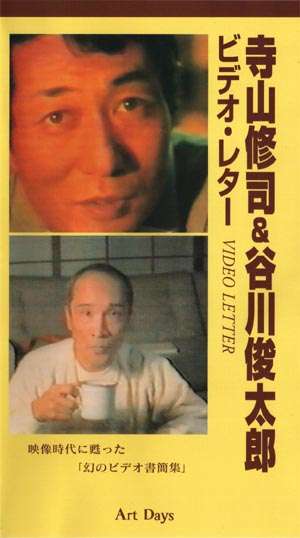
  • Shuji Terayama & Shuntaro Tanikawa – Video Letters 1982-1983 (1982)

    1981-1990AsianJapanPhilosophyShuji Terayama and Shuntaro Tanikawa

    http://img842.imageshack.us/img842/4623/jakelxy1.jpg

    Shuji Terayama (December 10, 1935—May 4, 1983) was an avant-garde Japanese dramatist, writer, director, and photographer, noted for such films as Emperor Tomato Ketchup and Fruits of Passion.
    In 1967, Terayama started an experimental cinema and gallery called ‘Universal Gravitation,’ which is in fact still in existence at Misawa as a resource center. The Terayama Shuji Memorial Hall, which has a large collection of his plays, novels, poetry, photography and a great number of his personal affects and relics from his theatre productions, can also be found in Misawa.
    source: artandpopularcultureRead More »

Back to top button