• Éric Rohmer – Le genou de Claire AKA Claire’s Knee (1970)

    1961-1970Amos Vogel: Film as a Subversive ArtComedyDramaEric RohmerFrance

    29f7c043f76a2bde437fd0d52a185152

    Quote:
    “Why would I tie myself to one woman if I were interested in others?” says Jerôme, even as he plans on marrying a diplomat’s daughter by summer’s end. Before then, Jerôme spends his July at a lakeside boardinghouse nursing crushes on the sixteen-year-old Laura and, more tantalizingly, Laura’s long-legged, blonde stepsister, Claire. Baring her knee on a ladder under a blooming cherry tree, Claire unwittingly instigates Jerôme’s moral crisis and creates both one of French cinema’s most enduring moments and what has become the iconic image of Rohmer’s Moral Tales.Read More »

  • Jorge Sanjinés – Yawar mallku AKA Blood Of The Condor (1969)

    Drama1961-1970BoliviaJorge SanjinésPolitics

    Quote:
    When Bolivian campesinos discover American doctors sterilizing women without their consent, they seek revenge­­ –– only to be repressed by the military. Filmed in Quechua in a remote Kaata village, it was banned by government censors, until a heated campaign forced them to relent. It went on to win acclaim abroad while provoking demonstrations, a Senate investigation and the expulsion of the Peace Corps at home. The film’s lack of success with indigenous audiences drove Sanjinés turn to collective filmmaking.Read More »

  • Agnieszka Holland – Goraczka AKA Fever (1981)

    1981-1990Agnieszka HollandDramaPolandPolitics

    29f7c043f76a2bde437fd0d52a185152

    This undeservedly obscure film directed by Agnieszka Holland was her second feature, coming between the better-known Aktorzy Prowincyonalni (Provincial Actors) that launched her career and Kobieta Samotna (A Woman Alone). All three were made in her homeland before the Communist government’s crackdown on Solidarity that led to her going into exile in France.Read More »

  • Jonas Carpignano – A Ciambra (2017)

    2011-2020DramaItalyJonas Carpignano

    29f7c043f76a2bde437fd0d52a185152

    Synopsis:
    In A CIAMBRA, a small Romani community in Calabria, Pio Amato is desperate to grow up fast. At 14, he drinks, smokes and is one of the few to easily slide between the region’s factions – the local Italians, the African refugees and his fellow Romani. Pio follows his older brother Cosimo everywhere, learning the necessary skills for life on the streets of their hometown. When Cosimo disappears and things start to go wrong, Pio sets out to prove he’s ready to step into his big brother’s shoes but soon finds himself faced with an impossible decision that will show if he is truly ready to become a man. Read More »

  • Kornél Mundruczó – Jupiter holdja AKA Jupiter’s Moon (2017)

    2011-2020DramaHungaryKornél MundruczóSci-Fi

    29f7c043f76a2bde437fd0d52a185152

    Quote:
    A young immigrant is shot down while illegally crossing the border. Terrified and in shock, wounded Aryan can now mysteriously levitate at will. Thrown into a refugee camp, he is smuggled out by Dr Stern, intent on exploiting his extraordinary secret. Pursued by enraged camp director Laszlo, the fugitives remain on the move in search of safety and money. Inspired by Aryan’s amazing powers, Stern takes a leap of faith in a world where miracles are trafficked for small change.Read More »

  • Dziga Vertov – Kino-Pravda No. 8 (1922)

    1921-1930DocumentaryDziga VertovSilentUSSR

    29f7c043f76a2bde437fd0d52a185152

    Quote:
    Between 1922 and 1925, a total of 23 issues of Dziga Vertov’s newsreel series Kino-Pravda (Kino-Truth) appeared (albeit irregularly and in very few copies). Vertov’s goal was to create a kind of “screen newspaper”; the title is a tribute to the newspaper Pravda founded by Lenin. Just like the Kinonedelja newsreel series (1918–19), the Kino-Pravda issues offer a fascinating insight into the early Soviet Union and demonstrate the rapid development of Vertov’s film language.

    The 22 surviving issues (No. 12 is lost) have been digitized and subtitled in German and English by the Austrian Film Museum in 2017/18 and are now available online.Read More »

  • Dziga Vertov – Kino-Pravda No. 7 (1922)

    1921-1930DocumentaryDziga VertovSilentUSSR

    29f7c043f76a2bde437fd0d52a185152

    Quote:
    Between 1922 and 1925, a total of 23 issues of Dziga Vertov’s newsreel series Kino-Pravda (Kino-Truth) appeared (albeit irregularly and in very few copies). Vertov’s goal was to create a kind of “screen newspaper”; the title is a tribute to the newspaper Pravda founded by Lenin. Just like the Kinonedelja newsreel series (1918–19), the Kino-Pravda issues offer a fascinating insight into the early Soviet Union and demonstrate the rapid development of Vertov’s film language.

    The 22 surviving issues (No. 12 is lost) have been digitized and subtitled in German and English by the Austrian Film Museum in 2017/18 and are now available online.Read More »

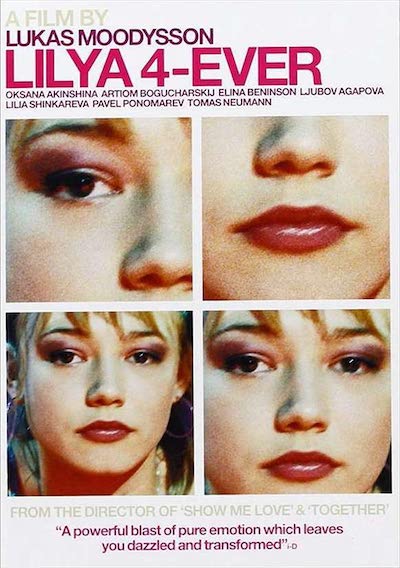
  • Lukas Moodysson – Lilja 4-ever (2002)

    2001-2010DramaLukas MoodyssonSweden

    Sixteen-year-old Lilja and her only friend, the young boy Volodja, live in Russia, fantasizing about a better life. One day, Lilja falls in love with Andrej, who is going to Sweden, and invites Lilja to come along and start a new life.Read More »

  • Joel Seria – Mais ne nous delivrez pas du mal AKA: Don’t Deliver Us from Evil [+Extras] (1970)

    1961-1970EroticaExperimentalFranceJoël Séria

    29f7c043f76a2bde437fd0d52a185152

    IMDB wrote:
    Shocking and disturbing

    This obscure French film, still unavailable in English, is a more fictionalized and much more exploitative version of the same real-life murder later covered in Peter Jackson’s “Heavenly Creatures”. The two girls in this movie, however, are decidedly less sympathetic than the heroines of the later movie and they commit not only murder, but every form of religious sacrilege, as well as some unforgivable cruelty to some birds belonging to a poor, retarded handyman. It is thus pretty hard to feel much sympathy toward them (even if I could understand most of what they were saying).
    Read More »

Back to top button