Unheard melodies may be sweet, but unsolved mysteries are about as satisfying as a windowful of succulent food that you can’t afford. Jacques Rivette’s “Out One/Spectre”—which played Saturday and Sunday at the New York Film Festival—is frustrating for two reasons: first, because 4½ hours of hidden motivations is hard on the soul; second, because some of the characterizations and performances are tantalizingly good — hence you really want to understand these people and what drives them. (The movie has been edited down from a 13-hour version that was —and then wasn’t—intended for television.)Read More »
-
Jacques Rivette – Out 1: Spectre (1974)
1971-1980ArthouseDramaJacques Rivette -
Koreyoshi Kurahara – Nikui an-chikushô aka I Hate But Love (1962)
1961-1970ActionComedyJapanKoreyoshi Kurahara
In the high-octane, unorthodox romance I Hate But Love (Nikui anchikusho), a celebrity (played by megastar Yujiro Ishihara), dissatisfied with his personal and professional lives, impulsively leaves fast-paced Tokyo to deliver a much-needed jeep to a remote village. When his controlling manager, the woman he loves (Ruriko Asaoka), follows, the two must reconcile while dodging reporters.Read More »
-
Nikita Mikhalkov – Utomlyonnye solntsem 2 aka Burnt by the Sun 2 (2010)
2001-2010DramaNikita MikhalkovRussiaWarPlot:
Epic film about WWII, a sequel to Burnt by the Sun (1994). Evil Stalin is terrorizing people of Russia while the Nazis are advancing. Russian officer Kotov, who miraculously survived the death sentence in Stalin’s Purge, is now fighting in the front lines. His daughter, Nadia, who survived a rape attempt by Nazi soldiers, is now a nurse risking her own life to save others. In the war-torn nation even former enemies are fighting together to defend their land. People stand up united for the sake of victory. The deadly war comes at very high cost: the Nazis are killing people, burning villages, raping women, bombing churches, destroying bridges. Hoping to survive, Kotov and his daughter are having visions of each other, but their dreams fade amidst massive bombardment. Fire and smoke eclipses the sun. The land around becomes lifeless, defenseless and littered with the dead. Then the dead are covered by snow. Life is over. Only a butterfly is flying above the weapons and corpses, alluding to eternity.Read More » -
Ben Safdie & Joshua Safdie – Heaven Knows What (2014)
2011-2020Ben Safdie and Joshua SafdieDramaUSABased on the experiences of Arielle Holmes — a homeless teenager with a ferocious Jersey accent — the film stars Holmes as Harley, a fictionalized version of herself: a heroin-hooked panhandler unable to get either the junk or her wicked boyfriend Ilya (wan Hollywood star Caleb Landry Jones, startlingly unrecognizable) out of her system. Locked into the relentlessly repetitive cycle of the addict’s life — the never-ending search to score, the squabbles with dealers and fellow junkies, the violence ever ready to erupt as either farce or tragedy — she is still driven by a strange (and surely self-destructive) desire for beauty, the explosive moments of rapture that puncture the drabness of her existence.Read More »
-
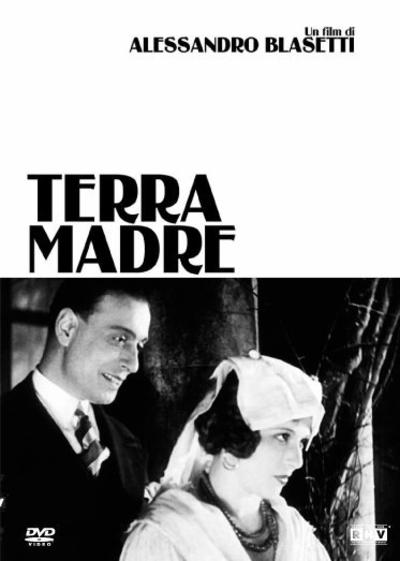
Alessandro Blasetti – Terra madre (1931)
1931-1940Alessandro BlasettiDramaItalian Cinema under FascismItaly

PLOT SYNOPSIS
After many years in the city, the Duke Marco, accompanied by his lover Daisy and by a cohort of frivolous and condescending friends, pays a visit to the country estate in which he grew up, and that he now owns after his father’s death. The Duke slowly comes to acknowledge how deeply connected he feels towards the ancestral land and its humble people, but he is torn between his duties as a landowner and the whims of Daisy, who pushes him to sell the estate to an unscrupulous businessman. To complicate matters, the Duke gets increasingly fond of Emilia, the young and outspoken daughter of the head farmer.Read More » -
Mario Soldati – La provinciale aka The Wayward Wife (1953)
Drama1951-1960ItalyMario SoldatiDescription: The Wayward Wife (Italian: La provinciale) is a 1953 Italian drama film taken from an Alberto Moravia’s novel and directed by Mario Soldati. It was entered into the 1953 Cannes Film Festival.
Gemma, daughter of a lodger, is in love with her half-brother, but since she cannot marry him she ends up marrying a teacher. She doesn’t love him and betrays him but is blackmailed by a Romanian countess who forces her to become a prostitute. She’s desperate but in the end she asks her husband for help. She has learned to love him in the meantime.Read More »
-
Elo Havetta – Slávnost v botanickej záhrade AKA Celebration in the Botanical Garden (1969)
Arthouse1961-1970ComedyElo HavettaSlovakia

Quote:
One of the lead characters is Maria, an inn keeper; always a bride but never a wife. She meets the newcomer Pierre, who disturbs the peace of the small village and teaches the locals how to enjoy life. The film is full of fireworks of lovely colours, and a warm feeling. It is like a carousel of humour and human situations that carry us away, from the very first frame to the unexpected ending, making the viewer laugh gaily. Using a mosaic approach to the traditional narrative line, the film director creates a picture of fairly anarchic glee. “Celebration in the Botanical Garden” is a world of fantasy, full of summer fun, good humour and delight. E. Havetta´s debut was inspired by naïve art, French impressionism, and silent slap-stick as well as Western Slovakian folk traditions.Read More » -
Albert Lamorisse – Crin blanc: Le cheval sauvage AKA White Mane (1953)
1951-1960Albert LamorisseClassicsDramaFrancePopMatters Review :
Renowned French filmmaker Albert Lamorisse is best known for his brilliant 1956 film, The Red Balloon, winner of both an Oscar (for screenplay) and the Palme d’Or award at the 1956 Cannes Film Festival. It is a short, whimsical and adventurous children’s fable about a young Parisian boy who happens upon a large, seemingly lost, red balloon and the playful, friendship, love, and dependency that develops between the two. The Red Balloon, while simple in concept, is a story suffused with the expansive wonder and pure innocence of a child’s imagination.Read More » -
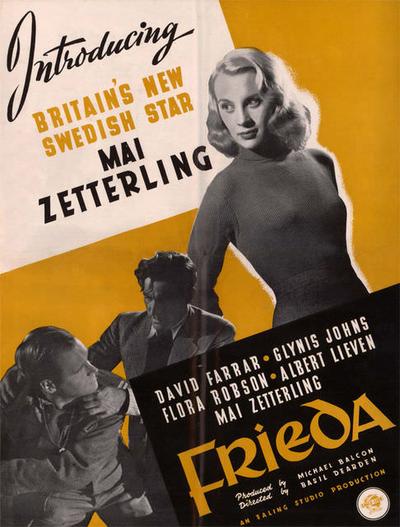
Basil Dearden – Frieda (1947)
1941-1950Basil DeardenDramaUnited KingdomWar‘In the final year of WW2 a British airman marries the German girl who helped him escape from a POW camp and brings her home to meet his stolid middle-class family. Will they – and by implication, British society – come to accept this representative of the Herrenvolk?’
— Philip Kemp.Read More »