The second film to be made from Woody Allen’s successful stage comedy (following a 1969 feature starring Jackie Gleason), Don’t Drink the Water is a made-for-television adaptation directed by and starring Allen himself. The fish-out-of-water premise remains the same: Allen plays Walter Hollander, a caterer from New Jersey who takes his family on vacation to a fictional Eastern European country. The trip turns sour when, thanks to a series of misunderstandings involving some inopportune snapshots, they are accused of espionage. The family goes on the run, taking refuge in the American Embassy. There, with the help of a wily young diplomat, they try to figure out a way to return to America without sparking an international incident. Though this version is set 25 years later than the original film, the changes are mostly cosmetic: the visual style is hand-held and more frantic, and the script replaces numerous references to the Cold War with a few glancing nods to present-day politics. Another notable change, the addition of an opening montage parodying newsreels, was reportedly the result of network pressure after Allen’s initial cut proved too short for the planned time slot.Read More »
-
Woody Allen – Don’t Drink the Water (1994)
1991-2000ComedyUSAWoody Allen -
François Ozon – Action vérité aka Truth or Dare (1994)
1991-2000ArthouseFranceFrançois OzonShort FilmInnocence gives way to experience. Two girls and two boys, probably about 14 or 15 years old, play a game of truth or dare. The questions and the challenges deal with sex; it’s innocent and harmless, but at each turn, each youth tries to raise the ante. Then, Paul gives a dare to Rose, and the result brings on a sudden and complete silence.Read More »
-
Daniel Clowes – Eightball (1989-2004)
ComicsDaniel ClowesUSAEightball is an alternative comic book series written and drawn by Daniel Clowes. The first issue was published by Fantagraphics Books in 1989. It has, since the 1990s, consistently been among the best-selling independently authored comics.
Alienation is a recurring theme in the series. Clowes is also known for nuanced dialog and character delineation that is distinctly at odds with the broad approach stereotypically associated with comics.
The first extended piece serialized in Eightball was Like a Velvet Glove Cast in Iron. This work featured a disjointed, surrealistic storyline. Subsequently, Eightball has featured fewer short comedic and surreal stories in favor of longer storylines with more focus on character and interpersonal relationships. Ghost World, released as a graphic novel after being serialized in Eightball, is an example of this later approach. Ghost World was adapted by Clowes into a full-length feature film; Clowes (with his collaborator, director Terry Zwigoff) was nominated for an Academy Award for screenplay writing.Read More »
-
Robert Altman – Short Cuts [+Extras] (1993)
Drama1991-2000ArthouseRobert AltmanUSAQuote:
From two American masters comes a movie like no otherQuote:
While helicopters overhead spray against a Medfly infestation a group of Los Angeles lives intersect, some casually, some to more lasting effect. Whilst they go out to concerts and jazz clubs and even have their pools cleaned, they also lie, drink, and cheat. Death itself seems never to be far away, even on a fishing trip.Read More » -
Isaac Julien – Derek [+Extras] (2008)
2001-2010ArthouseDocumentaryIsaac JulienQueer Cinema(s)United KingdomQuote:
An artist spends his or her existence examining life through their art, so why is it often so hard to use art to examine the artist’s life in turn? We’ve all seen biopics that merely scratch the surface of a creative existence, either spending too much time focusing on the travails of the individual and leaving their creations by the wayside, or flat studies of the work alone that seemingly forget that there was a person behind the words or images.Isaac Julien’s new documentary Derek tries to have the best of everything in its portrait of painter and visionary filmmaker Derek Jarman, and for the most part, it succeeds. As a tribute to the man, Julien and his collaborators, producer Colin MacCabe and actress Tilda Swinton, let the viewer behind the curtain to see who Jarman was and what fueled his inspired works; at the same time, we see pieces of that work, and we learn what it meant to him as a person and to the culture at large.Read More »
-
Roy Ward Baker – — And Now the Screaming Starts! (1973)
1971-1980HorrorRoy Ward BakerThrillerUnited Kingdom

In 1795, in England, the young woman Catherine (Stephanie Beacham) moves to the house of her fiancé Charles Fengriffen (Ian Ogilvy) in the country to get married with him. When she arrives, she feels interest in the portraits of the Fengriffen family, particularly in the one of Charle’s grandfather Henry Fengriffen (Herbert Lom), which seems to have a sort of evil entity possessing it. While admiring Henry’s face, a severed hand attacks Catherine through the picture on the wall. Later, she gets married with Charles, beginning her journey of mystery, eerie apparitions, secrets and deaths, and having her days filled with fear and the nights with horrors in a cursed family.Read More »
-
Francesco Rosi – Uomini contro AKA Many Wars Ago (1970)
1961-1970DramaFrancesco RosiItalyWarOn the Italian/Austrian front during World War I, a disastrous Italian attack upon the Austrian positions leads to a mutiny among the decimated Italian troops. (IMDb)Read More »
-
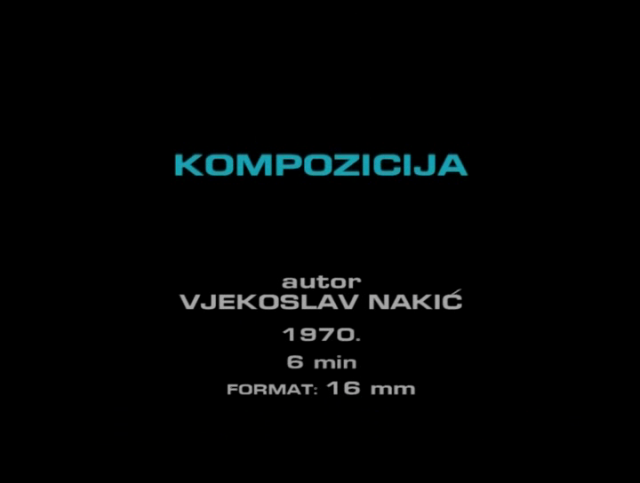
Vjekoslav Nakic – Kompozicija (1970)
1961-1970ArthouseExperimentalVjekoslav NakicYugoslaviaYugoslavian Cinema under TitoAn experimental film with no plot. Consists mostly of static shots portraying train wagons. The word COMPOSITION in Serbian has a triple meaning here – a train composition, composition of a shot, and music composition. Regarding the third meaning, the “soundtrack” of the film is a 5 second loop that keeps repeating itself over and over again.Read More »
-
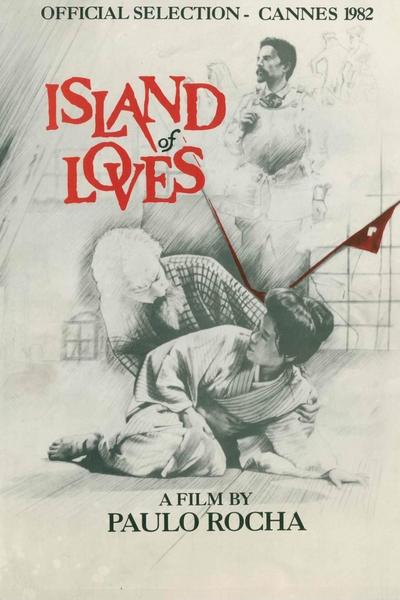
Paulo Rocha – A Ilha dos Amores AKA The Island of Love [CUT] (1982)
1981-1990ArthouseDramaPaulo RochaPortugalQuote:
The film traces the life and times of Wenceslau de Moraes (b. Lisbon 1854, d. Tokushima 1929), the great Portuguese writer who lived in the Far East. 1891: Moraes breaks with his mistress and leaves Portugal for Macao, never to return. 1895: While in Macao, he becomes fascinated by Japan, leaving his Chinese wife and their two children. 1912: Moraes is living and writing in Robe, in the south of Japan, as Portuguese Consul, with his Japanese wife Oyone. 1913-16: Deeply affected by the death of Oyone, Moraes quits his post and goes to live in poverty, near the tomb of his wife. However, he soon becomes involved with a young niece of Oyone’s, Ko-Haru, who eventually dies of tuberculosis. 1916-29: Moraes is transformed into a ghostly figure, wandering at night around the graves of Oyone and Ko-Haru. He writes his most mature works at this time, while his literary fame continues to grow in Portugal. 1929: Moraes dies under obscure circustances.Read More »