• Rainer Werner Fassbinder – Querelle (1982)

    Drama1981-1990ArthouseGermanyQueer Cinema(s)Rainer Werner Fassbinder

    Quote:
    More a dream about than a dramatisation of Genet’s novel, this is glorious and infuriating in equal parts. The port of Brest is built and lit more like one of Burroughs’ Cities of the Red Night, murderous deity Querelle’s ambisexual encounters are suffused with a sweaty, tangible eroticism, and Fassbinder’s ‘version’ stays faithful to Genet’s nightmare poetry. But its narrative detachment, weighty monologues, Resnais-like anachronisms, and (most irritating of all) listless rationale turn it into a lurid hymn to teenybop nihilism. All in all, perhaps an entirely appropriate parting shot from a drug-crazed German faggot. – TimeOut LondonRead More »

  • Katsuhiro Otomo & Yoshiaki Kawajiri & Rintaro – Meikyû monogatari AKA Neo-Tokyo (1987)

    1981-1990AnimationArthouseJapanKatsuhiro OtomoRintaroYoshiaki Kawajiri

    29f7c043f76a2bde437fd0d52a185152

    From AMG:
    Neo-Tokyo consists of three fast-paced tales set in a surreal cyberpunk landscape. Most of the tales center around either cops pursuing criminals or criminals running from the cops — none of the stories has a great deal of psychological depth. What makes this film an essential part of the animae canon is its particularly wonderful and inventive envisioning of the Tokyo of the future (which, in America, always seems like the Tokyo of today). As the late twentieth century counterpart to early modernist city symphonies and mid-century noirs, Neo-Tokyo has a good deal to say about 21st century metropolitan life and its effects on the human condition. It’s merely icing on the cake that it does so with a fabulous blend of humor and technological terror. –Read More »

  • Morgan Fisher – Standard Gauge (1984)

    USA1981-1990ExperimentalMorgan Fisher

    29f7c043f76a2bde437fd0d52a185152

    Standard Gauge
    1984, 16mm, colour, sound, 35 min

    “While on one level, Standard Gauge is Fisher’s homage to 35mm and to the diverse cinematic world it made possible, the irony of its having been filmed in 16mm reveals a conceptual paradox central to the film, and which unites it with the webs of irony and paradox evident in his earlier work. (…) As Fisher explains in his program notes, the thirty-two minute shot “is virtually the maximum length of a scene in 16mm, and is longer by far than 35mm is capable of.” For all its potentials and accomplishments, standard gauge is limited, and in ways that a non standard gauge-a gauge quite marginal to mainstream film history-is not”. (Scott MacDonald)Read More »

  • Franco Piavoli – Il Pianeta Azzurro AKA The Blue Planet [+Extras] (1982)

    1981-1990ArthouseDocumentaryFranco PiavoliItaly

    29f7c043f76a2bde437fd0d52a185152

    Synopsis
    The film follows the cycle of the seasons upon a rural landscape, from the reawakening of life following the Winter thaw to the blossoming of Spring, the heat of Summer working in the fields and the twilight of Autumn. Man is confronted by nature through the succession of seasons and in the essential moments of his existence: youth, love, food, work, pain.Read More »

  • Henrikas Sablevicius – Atspindziai AKA Reflections [Restored] (1968)

    1961-1970ArthouseFantasyHenrikas SableviciusUSSR

    29f7c043f76a2bde437fd0d52a185152

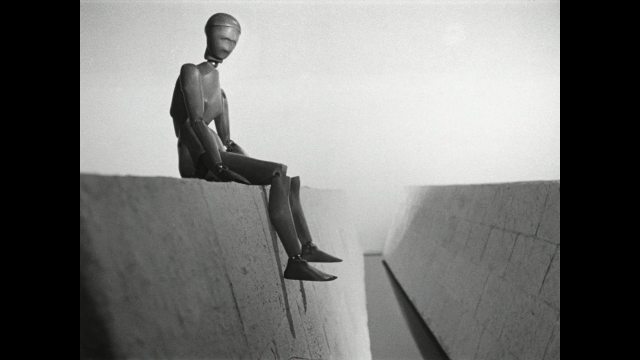
    “Reflections” is a film created by Henrikas Šablevičius and the national television. Back then, the movie was seen as unconventional in the context of Lithuanian cinema: it employs a surrealistic etude of no clear narrative and has an extreme form. Thus, immediately after the release it was banned and had been unnoticed for almost two decades. By bringing graphic artist Stasys Krasauskas’ works to life in the conditional spaces of “Reflections”, the director, only by means of images, creates a story about human’s duality, the search for self, liberation, accepting the agency of the past and a limited opportunity to choose.Read More »

  • Lawrence B. McGill – How Molly Malone Made Good (1915)

    1911-1920ComedyLawrence B. McGillSilentUSA

    29f7c043f76a2bde437fd0d52a185152

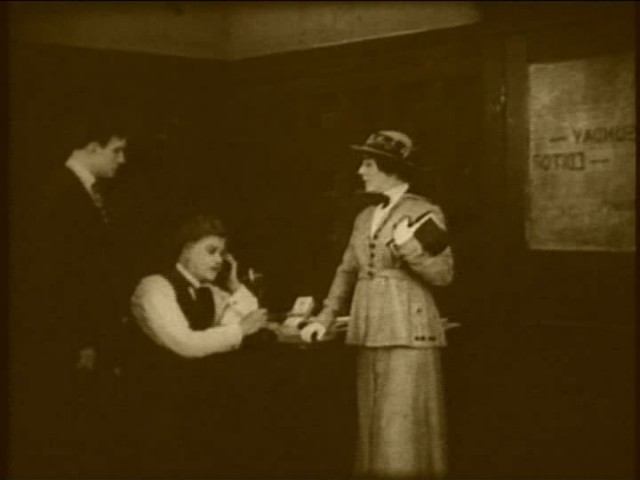
    This 1915 film stars Marguerite Gale as the title character, a journalist trying to make her name by interviewing celebrities for the New York Tribune. Picture quality is quite good, although the print is a little dark on the whole. A number of celebrities play themselves, including noted drag performe Julian Eltinge, and burlesque star Mabel Fenton. Read More »

  • Hal Ashby – Being There (1979)

    Drama1971-1980ComedyHal AshbyUSA

    Roger Ebert / May 25, 1997
    On the day that Kasparov was defeated by Deep Blue, I found myself thinking of the film “Being There” (1979). The chess champion said there was something about the computer he did not understand, and it frightened him. There were moments when the computer seemed to be . . . thinking. Of course, chess is not a game of thought but of mathematical strategy; Deep Blue has demonstrated it is possible to be very good at it without possessing consciousness.Read More »

  • Frédérique Devaux & Michel Amarger – Cinexperimentaux #9: Stephen Dwoskin (2006-2010)

    Documentary2001-2010ExperimentalFranceFrédérique Devaux and Michel Amarger

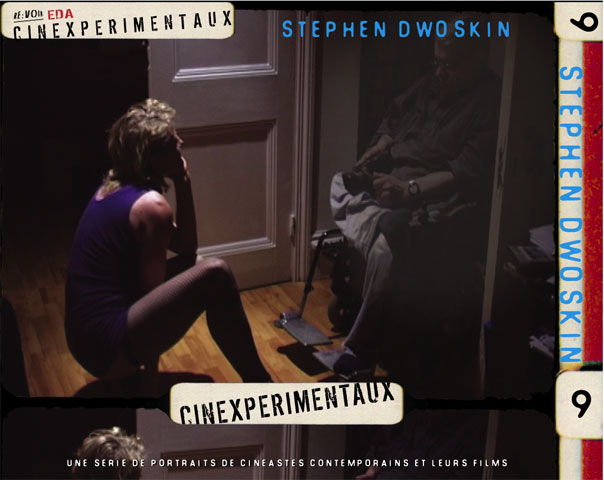
    Stephen Dwoskin was born in New York in 1939 and began making independent shorts there in 1961. In 1964 he followed his research work to London where he settled and participated in the founding of the London Filmmaker’s Co-op. His experimental films, for which he himself does the camera work, play with ideas of desire, sexual and mental solitude and the passage of time. In his films he also explores representation in cinema, performances, personal impressions and his own physical handicap which has been a source of inspiration for him throughout his career. His sensitive and emancipating works have been the subject of various international presentations.Read More »

  • Eddie Romero – Ganito kami noon… Paano kayo ngayon? AKA This is how we were, How are you doing now? (1976)

    1971-1980AdventureClassicsEddie RomeroPhilippines

    29f7c043f76a2bde437fd0d52a185152

    (from Cinemarehiyon)
    The picaresque adventures of a young, naive country bumpkin named Kulas (de Leon) and his whimsical encounters with denizens of various nationalities – Spanish, American, Chinese, indio – is a metaphor for the Filipino quest for identity at a time when nationhood was still an imagined concept. Set during the liminal period when the Philippines was in transition from Spanish to American colonial rule, this masterwork shows Romero at his best and most exuberant as a filmmaker. It swept most of the awards at the 1976 Metro Manila Film Festival, and was subsequntly voted best picture at the very first Urian Awards in 1977.Read More »

Back to top button